Last updated: 25 August 2026
Almost everyone who comes to us about straightening their teeth arrives with the same quiet worry: “Do I really have to wear metal braces as an adult?” The good news is that you have a genuine choice. Fixed braces and clear aligners both move teeth, both can deliver a straight, healthy bite, and both have been doing so for years — they simply go about it in different ways. At Morsia Dental in Antalya, we have guided patients from across the UK and Europe through both routes, and the honest truth is that neither one is universally “better”. The right option is the one that fits the way your teeth need to move and the way you actually live.
This guide sets the two side by side — speed, comfort, cost, visibility and the kinds of cases each one handles well — so you can walk into a consultation already knowing the right questions to ask. We will not oversell either system, because the deciding factor is usually your own bite, and that is something a clinical assessment settles far better than any article can.
The core difference in one sentence
Fixed braces use brackets bonded to your teeth and a wire that the orthodontist adjusts to guide movement; clear aligners are a series of removable, see-through trays, each one nudging your teeth a fraction closer to the target. That single distinction — fixed and worn by your dentist’s hand versus removable and worn by you — shapes almost everything else about the experience.
Braces stay put and keep working whether you think about them or not. Aligners only work while they are in your mouth, which puts a meaningful share of the responsibility on you. That is not a drawback so much as a trade-off, and it is worth being honest with yourself about which kind of person you are before you choose.

Side-by-side comparison
Here is how the two approaches stack up on the factors patients ask us about most. Treat the figures as a starting point for a conversation, not a verdict — your own mouth always has the final say.
| Factor | Fixed braces | Clear aligners |
|---|---|---|
| Visibility | Visible (less so with ceramic) | Nearly invisible |
| Removable? | No – fixed until removed by us | Yes – you take them out to eat & clean |
| Best for | Complex bite & rotation cases | Mild to moderate crowding & gaps |
| Depends on patient discipline | Low – works without effort | High – needs 20–22 hrs wear daily |
| Eating & cleaning | Some food limits, careful brushing | Eat normally, brush as usual |
| Typical treatment time | Around 12 to 24 months | Around 6 to 18 months |
| Indicative cost (UK) | £2,000 to £5,000 | £2,500 to £5,500 |
| Indicative cost (Antalya) | £700 to £1,800 | £1,200 to £2,800 |
The figures above are indicative ranges shared for information only and are not a quote or a price guarantee. Costs vary with the complexity of your case, the brand of aligners or braces, the number of arches treated and the length of treatment. We can only give you an exact cost after a clinical assessment, so please contact the clinic to arrange one.
When fixed braces tend to make sense
Braces earn their place because they are powerful. A bonded bracket and wire can apply controlled force in ways that are difficult to replicate, which is why we still reach for them in tougher cases — severe crowding, teeth that need rotating, or bites where the upper and lower jaws do not meet correctly. There is also nothing for the patient to forget: once they are on, they work around the clock.
We tend to lean towards fixed braces when a patient:
- Has significant crowding, rotation or a more demanding bite correction to make
- Would rather not depend on remembering to wear a tray for most of the day
- Is a teenager or a busy adult who simply wants the appliance working for them
- Needs the kind of precise, three-dimensional control that complex movements call for
Modern braces are also far more discreet than the metal mouthfuls many adults remember. Ceramic, tooth-coloured brackets soften the look considerably, which makes them an easier sell for patients who were dreading the appearance more than the treatment itself.
When clear aligners tend to make sense
Clear aligners have transformed adult orthodontics, and it is easy to see why. They are nearly invisible, you take them out to eat and brush, and there are no wires to irritate your cheeks or trap food. For mild to moderate crowding, spacing and many everyday alignment issues, they do an excellent job — and a great many of the patients we see fall squarely into that category.
We often discuss aligners with a patient who:
- Has mild to moderate crowding or spacing rather than a complex bite problem
- Wants a discreet option for work, social life or simply their own comfort
- Is disciplined enough to wear the trays for the 20 to 22 hours a day they need
- Likes the idea of eating and cleaning exactly as they do now
The catch — and we always say it plainly — is that aligners only move teeth while they are in. Leave them in the case through lunch, dinner and an evening out, and the timeline slips. If you know yourself to be forgetful, that is worth weighing honestly. You can read more about how the trays are planned and fitted on our page covering clear aligners in Antalya, including how we map the movements before treatment begins.
Speed and comfort: what to expect day to day
On speed, aligners often finish a touch quicker for straightforward cases — typically somewhere around six to eighteen months — while braces commonly run from about a year to a couple of years for more involved work. But this is not a fair race across the board: complex cases that braces handle in eighteen months might not suit aligners at all. The faster timeline only holds when the case genuinely fits the appliance.
On comfort, both feel strange at first and both settle. Braces can rub the inside of the lips and cheeks in the early weeks, eased by a little orthodontic wax. Aligners feel tight for a day or two each time you change trays, which is the sensation of the teeth being asked to move — mildly uncomfortable rather than painful, and a sign the system is doing its job. Neither route is truly effortless, and we would be wary of anyone who promised it would be.
What about gaps, and what aligners cannot fix
One of the most common reasons people look into orthodontics is a gap they have never warmed to — often between the front teeth. Both braces and aligners can be excellent at closing a gap between teeth when the cause is alignment, gently drawing the teeth together over the course of treatment.
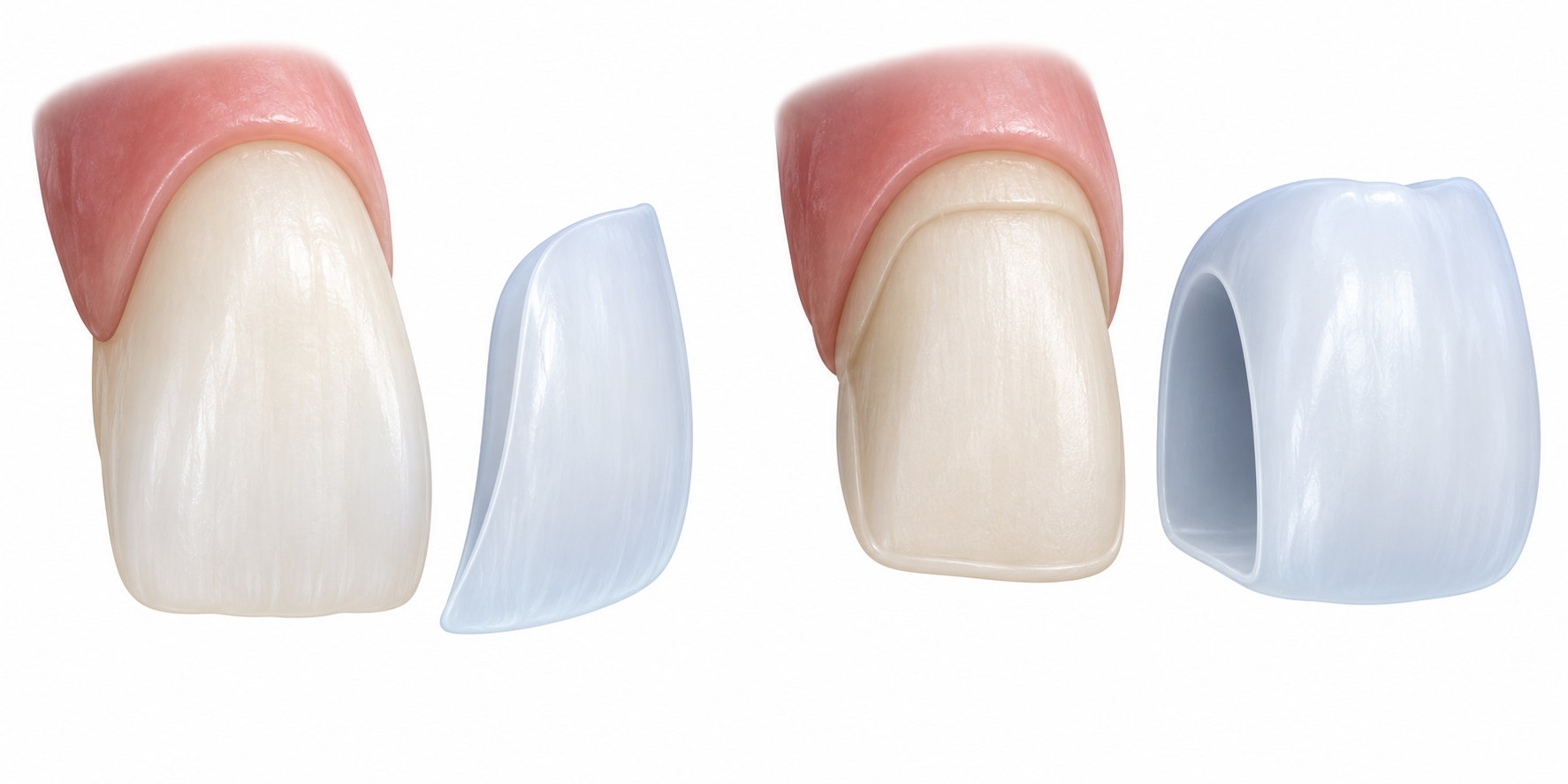
Orthodontics moves teeth; it does not reshape, whiten or rebuild them. If your concern is the colour, shape or proportion of your teeth rather than their position, straightening alone may not get you there. In those cases veneers can address the surface appearance, and some patients combine a short course of alignment with cosmetic work for the result they are picturing. Where several things need attention at once — position, shape and shade together — a planned full smile makeover may be the more sensible framing, with orthodontics forming one stage of a larger plan rather than the whole answer.
Cost: why Antalya changes the maths
In the UK, fixed braces typically run from around £2,000 to £5,000, and clear aligner treatment from roughly £2,500 to £5,500, depending on the brand and the complexity involved. The same treatment in Antalya generally lands at a fraction of that, and the gap rarely reflects cut corners — it reflects lower clinic running costs, not a lower standard of care. At Morsia Dental we work with established aligner systems and German and Swiss materials, the same internationally recognised names you would expect at home.
That said, the price you compare matters. A genuine like-for-like comparison should include the planning, the appliances or trays, the adjustment visits and your retainers afterwards — not a single headline number. Retainers in particular are easy to overlook, yet they are what protects your result for the long term. We set all of this out transparently before anything begins, so there are no surprises partway through.
The factor that actually decides it: your bite
Patients often arrive with a preference already formed, and we understand why — the internet loves a clean comparison, and “invisible” sounds better than “metal”. But the choice is rarely yours to make on appearance alone. Dr. Dt. Aykut Onol and our orthodontic team base the recommendation on a proper examination, scans and a look at how your teeth actually meet. A case that aligners handle beautifully in one mouth may genuinely need the control of braces in another.
This is also why we are cautious about absolute promises. Orthodontics has an excellent track record, but outcomes still depend on your starting point, your biology, how well you follow the plan and how diligently you wear your retainers afterwards. Results vary from person to person, which is exactly why a proper assessment comes before any plan — and why we will sometimes recommend the option a patient did not arrive expecting.
Don’t forget retainers
Whichever route you take, the work is not quite finished when the braces come off or the last aligner is done. Teeth have a long memory and will drift back towards where they started if nothing holds them. That is what retainers are for — a fixed wire behind the teeth, a clear removable retainer worn at night, or both. We build this stage into every orthodontic plan, and we are upfront that skipping it is the single most common way people lose a result they worked months to achieve.
So, which is right for you?
If you take one thing from this comparison, let it be this: the better question is not “braces or aligners?” but “what does my bite need, and how do I want to live while it is being corrected?” Braces are the dependable, powerful choice for complex movements and for anyone who would rather not manage a removable tray. Aligners are the discreet, flexible choice for mild to moderate cases in disciplined hands. The right call sits where your anatomy, your goals and your daily routine meet — and it is a call best made together, with your teeth in front of us.
If you are weighing up your options, you can send us recent photos of your smile or your dental records and arrange an online consultation. We will give you an honest view of which option suits you, with no pressure either way.
Frequently Asked Questions
Are clear aligners as effective as braces?
For mild to moderate crowding, spacing and many everyday alignment issues, clear aligners can be every bit as effective as braces. Where they differ is on complex cases — significant rotations or demanding bite corrections often need the precise control that fixed braces provide. The honest answer depends on your specific case, which is why we recommend a clinical assessment before deciding. Results vary from person to person.
How much do braces and clear aligners cost in Antalya compared with the UK?
There is no single figure for orthodontic treatment, because the plan is drawn up individually after a clinical assessment. What shapes it is the complexity of the case, whether fixed braces or clear aligners are used, the material chosen, the number of aligner sets or wire adjustments involved and how many appointments the treatment needs. For an assessment of your own case, please contact the clinic.
Which option is faster, braces or aligners?
For straightforward cases, clear aligners often finish a little quicker — commonly around six to eighteen months — while braces tend to run from about a year to a couple of years for more involved work. The faster timeline only holds when the case genuinely suits aligners, though. A complex bite that braces correct efficiently may not be a good fit for trays at all, so speed should never be the only deciding factor.
Will I need to wear a retainer after treatment?
Yes. Teeth naturally tend to drift back towards their original positions, so a retainer is what holds your result in place. This may be a fixed wire behind the teeth, a clear removable retainer worn at night, or a combination of both. We build retainers into every orthodontic plan, because skipping this stage is the most common way people lose a straight smile they worked hard for.
Can braces or aligners close a gap between my front teeth?
Often, yes. When a gap is caused by the position of the teeth, both braces and clear aligners can gently draw them together over the course of treatment. If the gap relates to tooth size or shape rather than alignment, a cosmetic option such as veneers may suit you better, sometimes alongside a short course of straightening. A consultation lets us identify the cause and recommend the right approach for you.
İlgili İçerikler
References
The clinical information in this article was cross-checked against the peer-reviewed publications listed below.
- Alhamwi AM et al. Duration of orthodontic treatment with clear aligners versus fixed appliances in crowding cases: a systematic review. Clin Oral Investig, 2024. PMID: 38607436
- Martin C et al. Retention procedures for stabilising tooth position after treatment with orthodontic braces. Cochrane Database Syst Rev, 2023. PMID: 37219527
- Alhafi ZM et al. Quality and stability of orthodontic treatment outcomes with clear aligners versus fixed appliances: a systematic review and meta-analysis. Eur J Orthod, 2025. PMID: 41127933
This content is for general information only and does not replace an in-person examination, diagnosis or treatment. Please consult a dentist about your own situation.