Composite veneers in Turkey use tooth-coloured resin placed on the visible surface of a tooth and shaped by a dentist. They are different from porcelain veneers, crowns and small-area composite bonding. The right option depends on an examination, not on a material name or a package description.
Clinical profile: Dr. Dt. Aykut Önol, Prosthetics Specialist. This guide provides general information, not an individual diagnosis or a clinical review record. Your treating dentist must assess suitability.

What composite veneers are
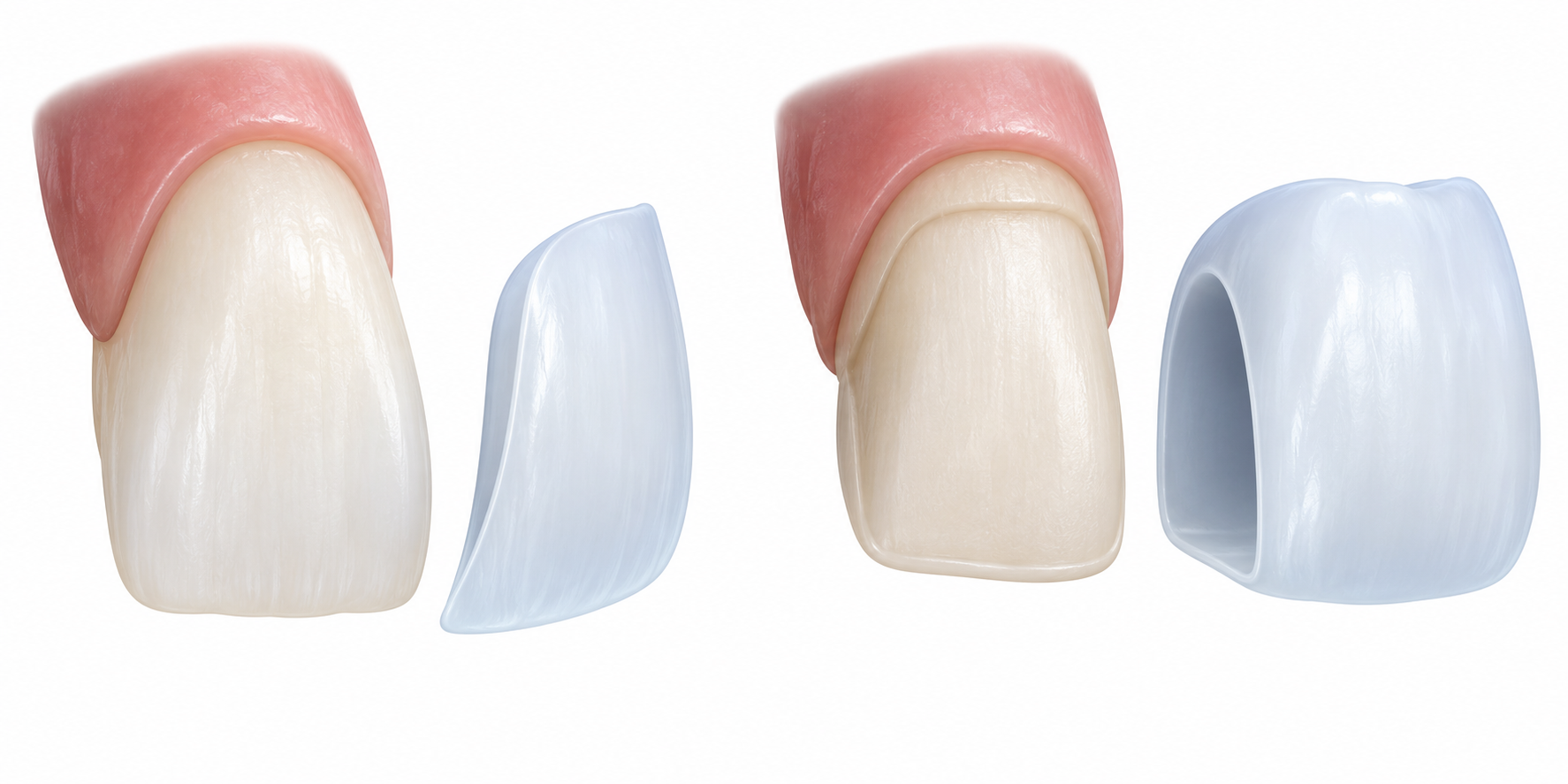
A composite veneer is a broader layer of resin over the visible face of a tooth. The material is built up, shaped, cured and polished in the mouth. Limited composite bonding uses the same broad material family for a defined repair such as a small chip or gap; the treatment area and design objective are different.
Composite can be conservative, but “no preparation” is not a universal promise. A dentist may need to adjust a surface, create space, manage an old restoration or choose another treatment. Ask exactly what will be changed on each tooth before agreeing to treatment.
Composite veneer, bonding, porcelain or crown?
| Option | What it changes | Questions to settle in an examination |
|---|---|---|
| Limited composite bonding | A defined chip, edge, small gap or local shape issue | Is the defect small enough for a local repair, and how will the bite load it? |
| Composite veneer | A larger visible front surface or several teeth | How much resin is needed, how will proportions be checked, and how will staining or repair be managed? |
| Porcelain veneer | A laboratory-made ceramic shell bonded to the front surface | What preparation is required, which enamel remains, and what happens if the shell chips or must be replaced? |
| Crown | More extensive coverage for a structurally weakened tooth | Is a crown clinically indicated, or would a more conservative option protect more sound tooth structure? |
What should be checked first?
Before cosmetic treatment, the clinician should assess the teeth, gums, bite, existing fillings or crowns, tooth colour and the requested change. Active decay, inflammation, significant structural loss, an unstable bite or severe alignment concerns may change the sequence or make another option more appropriate. Whitening, orthodontics, periodontal care, a repair or no treatment at all may be part of the discussion.
Do not treat a general web description as a suitability decision. The useful question is not “Which material is best?” but “Which option fits this tooth, this bite, this goal and this maintenance plan?”
How treatment planning works for international patients
Send only the records the clinic requests through its approved channel. Before booking flights, ask what can be assessed remotely and what must wait for an in-person examination. A written plan should identify each tooth, the proposed surface or restoration, any preparation, alternatives, expected appointments and what would cause the plan to change.

Questions to ask before travelling
- Who will examine and treat me, and what is that person’s role?
- Which teeth and surfaces are included in the written plan?
- What records, photographs or radiographs are needed before travel?
- What preparation is proposed, and which alternatives were considered?
- How will colour, shape, bite and speech be checked before the final finish?
- What maintenance, polishing or repair may be needed, and who handles it after I return home?
- What happens if decay, gum inflammation, a bite problem or a different structural issue is found?
Care and limitations
Composite surfaces can wear, chip or discolour. The risk depends on the restoration, bite, habits, diet, oral hygiene and finishing quality. Use a soft brush, clean between the teeth, avoid using front teeth as tools and ask a dentist how to manage grinding or a rough edge. A repair may be possible, but repeated damage needs an examination rather than an automatic replacement.
There is no universal service-life number that applies to every composite veneer. Ask for the clinic’s follow-up plan and what is included if the restoration needs adjustment. Do not treat a price, package, review, before-and-after image or fixed travel schedule as a clinical guarantee.
Sources and related reading
- American Dental Association MouthHealthy: Veneers — general context on veneers, suitability, preparation and care.
- Morsia: crowns, veneers or implants — related restoration comparison.
- Morsia: composite bonding in Antalya — related limited-repair topic.
Information on this page is not a substitute for an examination by a dentist who has assessed your teeth and gums.