Full mouth dental implants in Turkey is an umbrella term for rebuilding one arch or both arches with implant-supported teeth. It does not describe one fixed operation or a standard number of implants. The plan depends on which teeth can be predictably retained, the condition of the gums and bone, the opposing bite, the proposed prosthesis and the practical arrangements for review.
An individual plan requires an in-person dental assessment and appropriate imaging. You can learn about Dr. Dt. Aykut Önol, Prosthetics Specialist, on Morsia Dental’s team page.
What full-mouth implant treatment can mean
Some enquiries mean a fixed bridge replacing one failing arch. Others mean both arches, extractions, or a removable prosthesis retained by implants. Those are different treatments. A written proposal should state the arch or arches, which natural teeth are being retained or removed, the implant-supported design, the provisional arrangement and the definitive prosthesis.
One arch or both arches
Treating one arch is not simply half of a two-arch plan. The implant distribution, restorative space, bite relationship, laboratory work, appointments and maintenance requirements can all change. If natural teeth remain, the alternatives should be discussed before irreversible extraction. The ITI consensus for complete-arch fixed prostheses specifically recommends considering preservation of teeth as part of informed consent.
Fixed bridge or removable overdenture
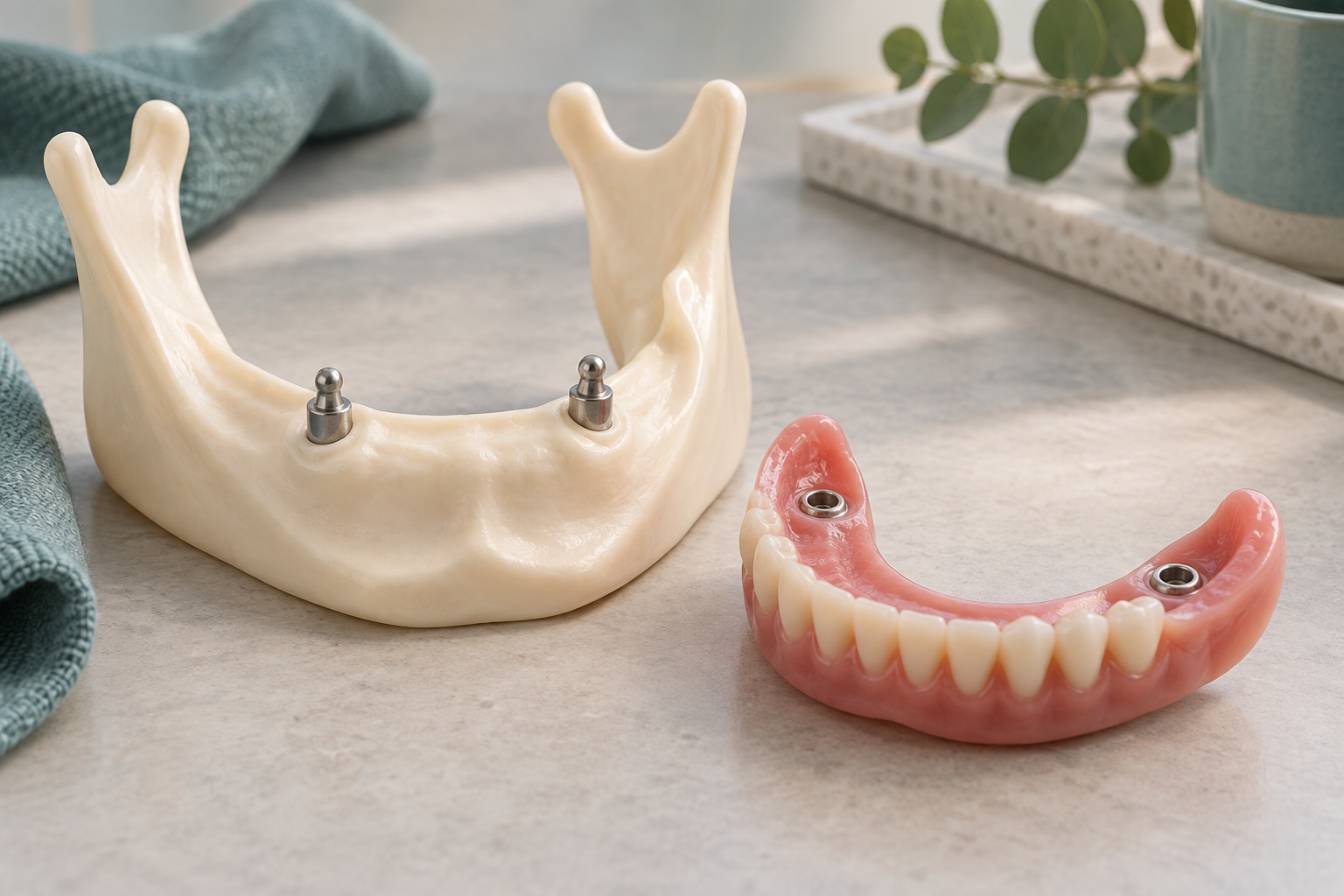
A fixed full-arch bridge is attached to implants and is removed by the dental team for examination or repair. An implant overdenture is removable by the patient and uses implants to improve stability and retention. Neither is automatically the right choice. Bone, hygiene access, dexterity, the opposing teeth, speech, aesthetics, expectations and the ability to attend maintenance appointments all matter.
| Option | What it does | Questions to settle |
|---|---|---|
| Fixed full-arch bridge | Provides a fixed prosthesis for an edentulous or failing arch when the surgical and prosthetic plan supports it. | Is the remaining bone and implant stability suitable? Is there enough space to clean under the bridge? What happens if a component needs repair? |
| Implant overdenture | Uses implants to retain a prosthesis that the patient removes for cleaning. | How many implants and what attachment system are proposed? Can the patient remove and clean it comfortably? |
| Individual implants or a shorter bridge | Replaces selected gaps while retaining suitable natural teeth. | Can the natural teeth be predictably maintained? Why is a full-arch extraction plan preferable? |
All-on-4, All-on-6 and other designs
All-on-4 and All-on-6 are names for particular full-arch implant concepts, not guarantees that four or six implants will suit every jaw. The ITI consensus states that a minimum of four appropriately distributed implants can support a one-piece full-arch fixed prosthesis in suitable cases, while also requiring the final prosthetic plan, anatomy, bone volume, implant stability, systemic conditions and hygiene space to be considered. The number should therefore follow the examination and prosthetic design, not a package tier.
Read the existing Morsia explanations of All-on-4 treatment and All-on-6 treatment alongside an individual written plan. A tilted implant, grafting, a sinus procedure or another approach may be considered when anatomy requires it. These decisions belong to the treating clinical team after examination and imaging.
Why a fixed implant count is not a diagnosis
Implant distribution is influenced by the arch form, bone volume and quality, available restorative space, the opposing dentition, the length of any cantilever, the proposed material and the patient’s ability to maintain the prosthesis. A scan may show that a planned design needs to change. A headline “full mouth” label cannot decide whether a natural tooth is salvageable or whether grafting is needed.
Assessment before surgery
Assessment normally combines a medical and dental history, examination of the teeth and gums, photographs or impressions where useful, and radiographs. A cone-beam CT may be requested to assess available bone and nearby anatomy such as nerves and sinuses. The scan is part of planning; it does not replace a clinical examination or determine a treatment by itself.
Questions the plan should answer
- Which teeth are restorable, and which alternatives to extraction have been considered?
- Is there active decay, gum disease, infection or another problem that needs treatment first?
- What bone volume and anatomy are available at each proposed implant site?
- Would bone augmentation or a sinus procedure change the sequence or healing period?
- What provisional and definitive prostheses are proposed, and how will the bite and hygiene space be checked?
- Who will provide reviews and manage a problem after the patient returns home?
Send imaging through a secure route agreed with the clinic and ask for the proposed arch, implant positions, prosthesis design and alternatives in writing. Do not book non-refundable travel on a generic timetable before the case-specific plan is confirmed.
Phases of treatment and what can change
Implant treatment is staged. NHS patient guidance describes assessment, possible grafting, implant placement and restorative treatment as separate phases. Bone integration commonly takes months and may take longer when grafting or other procedures are involved. The exact number of visits and the time between them depend on the patient and the chosen protocol.
| Phase | Typical purpose | What must be confirmed |
|---|---|---|
| Assessment and planning | Examination, imaging, diagnosis, options and informed consent. | Which teeth remain, which prosthesis is planned, the implant distribution, risks, alternatives and maintenance route. |
| Surgery | Extraction where indicated, implant placement and any planned adjunctive procedure. | Whether primary stability and the local conditions support the intended loading protocol. |
| Provisional restoration | A temporary prosthesis may restore appearance and limited function while tissues and implants heal. | What can be eaten, how it is cleaned, what warning signs require review, and who can adjust it. |
| Integration and review | Healing and clinical checks before the definitive prosthesis. | How review is performed at home, what imaging or examination is needed, and what would delay the next stage. |
| Definitive prosthesis | Records, try-in or equivalent checks, fit, bite and delivery of the final bridge or overdenture. | Material, retention method, repair route, records supplied and follow-up responsibility. |
| Long-term maintenance | Daily home care, professional review and monitoring around implants and prosthesis. | A patient-specific hygiene routine and a realistic route to care after returning home. |
Immediate or early loading is conditional
Some treatment protocols use a fixed provisional restoration early, but the ITI consensus links loading decisions to the implant-prosthodontic plan, bone volume, primary stability, systemic factors and the need for augmentation. A provisional fitted early is not evidence that every patient can travel on the same schedule. Any proposed early-loading plan should state the clinical conditions required and the alternative if those conditions are not present.
Healing and definitive teeth
NHS guidance commonly describes integration over a period of months, with longer periods possible after grafting. Once healing and stability are adequate, further records and appointments are used to make and fit the definitive bridge, crown or overdenture. A treatment proposal should therefore give an estimated sequence while clearly identifying what could change it.
Temporary and definitive prostheses
A provisional prosthesis is not the same as the definitive bridge or overdenture. It may help with appearance, speech and limited function while the implant and soft-tissue conditions develop. Ask whether it is fixed or removable, how it should be cleaned, what foods or forces should be avoided, and how an adjustment will be arranged if it feels loose or uncomfortable.
The definitive design should account for the opposing teeth, lip support, speech, available space, material, screw-retained or other retention method, access for hygiene and the possibility of future repair. Ask for the implant system, component details and records needed by a dentist who may provide care later.
Compare a written proposal, not a headline package
A useful proposal identifies the clinical scope separately from travel arrangements. Confirm the following before committing:
- one arch or both arches, and the teeth proposed for retention or extraction;
- implant system, number and distribution, with the reason for the design;
- any grafting, sinus procedure, extraction, sedation or other additional treatment;
- the provisional and definitive prostheses, materials and retention method;
- the assessment, surgical, review and definitive-fitting appointments;
- which records are supplied and who provides care after returning home;
- the response route for pain, swelling, a loose bridge, bleeding or another unexpected problem.
Do not treat a low headline figure, a short itinerary, a “teeth in a day” label or a written guarantee as a substitute for diagnosis and consent. The relevant comparison is the complete plan and its follow-up obligations.
Cleaning and long-term follow-up
Implant-supported teeth need daily cleaning and professional monitoring. The EFP guideline recommends individually tailored oral-hygiene instruction and patient-centered supportive peri-implant care. The exact tools and review interval depend on the prosthesis, tissue anatomy, dexterity, risk factors and what the treating team finds.
A fixed bridge usually requires access beneath the prosthesis as well as brushing the outer and chewing surfaces. An overdenture is removed for cleaning. Ask the clinician to demonstrate the routine and to provide a written plan that can be followed at home. Regular reviews should assess the prosthesis, gums, implant tissues, bite and bone levels where clinically indicated.
When to request an examination
Persistent or returning swelling, bleeding around an implant, pain, a loose or clicking bridge, a change in bite, a broken component or difficulty cleaning should prompt contact with the treating team or a local dentist. A web article cannot diagnose the cause or decide whether an implant can be retained.
Frequently asked questions
How many implants are needed?
There is no single number for every full-arch case. A suitable one-piece fixed full-arch prosthesis may be supported by at least four appropriately distributed implants, but the final number and positions depend on the prosthetic plan, bone, anatomy, stability, opposing bite and maintenance access.
Can all treatment be completed during one trip?
Some protocols use a provisional restoration early, while the definitive prosthesis may require later healing and records. The sequence is case-specific. Ask what must be true before the next stage and what happens if healing, stability or grafting changes the plan.
Is bone grafting always needed?
No. The need depends on the available bone and the proposed implant-prosthetic design. Imaging and examination determine whether augmentation or another approach should be considered; a package description cannot decide this.
Should remaining teeth always be removed?
No. Teeth that can be predictably retained should be considered in the alternatives and consent discussion. Removing sound or maintainable teeth to fit a standard package is not a diagnosis.
How should I plan travel?
Ask for a written clinical timetable, review arrangements, emergency contact route and what happens if an additional appointment is needed. Do not assume that a short advertised itinerary applies to an individual case.
What should happen after I return home?
Before treatment, agree who will provide reviews, what records you will receive, how the prosthesis will be maintained and what to do if there is pain, swelling, looseness or a broken component. Local dental assessment may be needed for an unexpected symptom.
Further reading and sources
These sources provide general clinical context and do not replace an individual examination or treatment plan:
- Leeds Teaching Hospitals NHS Trust: Dental implants — assessment, CBCT, integration, provisional/final prosthesis and long-term care.
- Guy’s and St Thomas’ NHS Foundation Trust: Having a dental implant — assessment, grafting, staged treatment and restorative appointments.
- ITI consensus: Number of implants for complete-arch fixed prostheses — prosthetic planning, preservation of teeth, implant distribution and patient factors.
- ITI consensus: Loading protocols for fixed prostheses in edentulous jaws — case selection, primary stability and conditional loading.
- European Federation of Periodontology: Prevention and treatment of peri-implant diseases — individualized oral hygiene and supportive peri-implant care.
For related Morsia information, see dental implants abroad and implant recovery and aftercare. This article is general information, not a diagnosis, personal treatment recommendation or guarantee of a particular result or timetable.