Planning dental treatment abroad works best when the clinical question comes before the travel plan. A wisdom tooth may be fully erupted, partly covered by gum, or impacted. Whether it needs monitoring, non-surgical care, or removal depends on an examination and the findings around that individual tooth.
If you are considering an appointment in Antalya, use an early consultation to share your symptoms, medical history, current medicines, dental X-rays if available, and travel dates. Your clinician can then explain what information is still needed before recommending a next step.
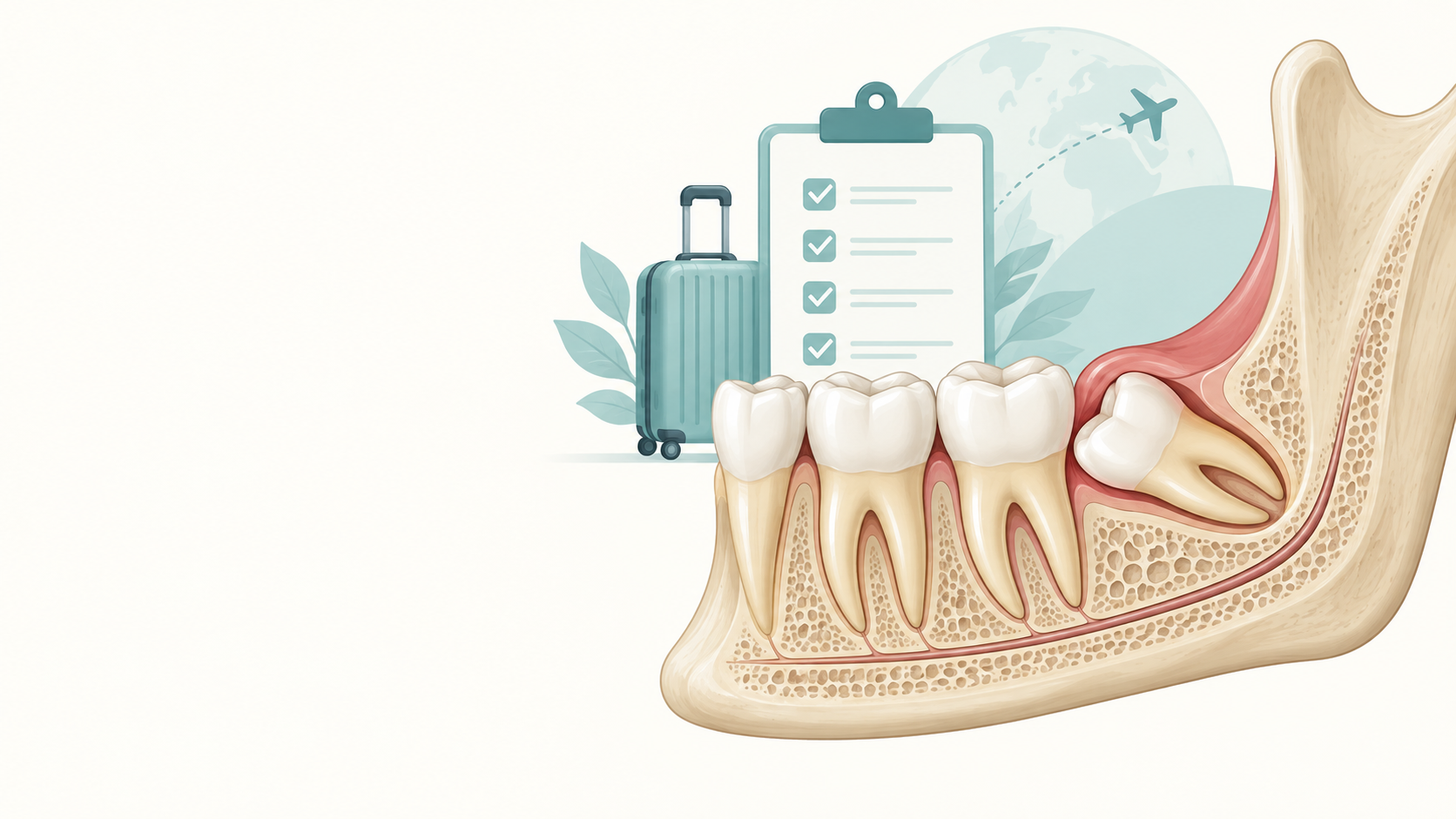
Educational illustration, not a patient case or treatment result.
Why an assessment matters before you book travel
Wisdom teeth do not all require removal. NICE guidance does not support routine prophylactic removal of pathology-free impacted third molars. A clinician may instead discuss monitoring when there is no disease, or explain why treatment is being considered when there is repeated infection, decay that cannot be restored, damage to a neighbouring tooth, or another relevant finding.
Ask what examination and imaging, if any, are needed to assess tooth position and nearby structures in your case. Imaging is a clinical decision, not a travel-package add-on.
Simple extraction or surgical removal?
Some wisdom teeth can be removed in a manner similar to other erupted teeth. Others are partly or fully impacted and may need a surgical approach, such as access through the gum, limited bone removal, or dividing the tooth into sections. The method, anaesthetic options, risks and recovery plan should be explained for your own imaging and examination findings.
Do not assume that a painful tooth will automatically need surgery, or that a symptom-free tooth never needs assessment. The right decision is based on the clinical picture and a discussion of benefits, risks and alternatives.
Plan aftercare and continuity before you travel
Before booking return travel, ask who will review you if symptoms change, how you can reach the treating team, and what records you should take home. Swelling, discomfort and temporary difficulty opening the mouth can occur after removal. Your clinician should give you individual written aftercare instructions, including medication and eating guidance where appropriate.
There is no one universal “safe to fly” interval for every wisdom-tooth procedure. The treating clinician should advise on travel based on the procedure performed, how you are recovering, any sedation or medicines, and whether you need a review. Build flexibility into your itinerary rather than relying on a generic timetable.

| Before you travel | Before you return home |
|---|---|
| Share relevant medical history, medicines, symptoms and available dental records. | Confirm the treating team’s contact route and the written aftercare instructions for your procedure. |
| Ask what assessment is needed before a treatment recommendation can be made. | Ask whether a review is recommended before travel and what records to take to your local dentist. |
| Discuss how travel dates can stay flexible if clinical findings or recovery change the plan. | Identify where you could obtain urgent local dental or medical care after you leave Antalya. |
Know when to seek prompt advice
For post-treatment symptoms that are severe, getting worse, or not settling with the instructions you were given — for example bleeding that does not stop, worsening pain or swelling, pain with a bad taste, fever or feeling unwell — contact the treating team or seek urgent dental advice. These examples are not a diagnosis; follow the clinical advice given for your own situation.
Emergency distinction: difficulty breathing, speaking or swallowing, or a large swelling in the mouth, needs emergency medical help where you are. Do not wait for a remote routine follow-up.
Questions to take to your consultation
- What assessment and imaging, if any, do I need to understand the tooth and nearby structures?
- Is monitoring reasonable, and what finding would change that plan?
- What extraction approach and anaesthetic options are appropriate for me?
- What aftercare, review and contact arrangements should I plan before travelling home?
- What symptoms should prompt urgent contact, and where should I seek care if I am no longer in Antalya?
For broader information about non-third-molar extraction, see our tooth extraction in Turkey guide. This page has a different purpose: it is a preparation guide for a possible wisdom-tooth assessment and does not replace an in-person examination.