
Last updated: 31 August 2026
A gap between the front teeth divides people more than almost any other smile concern we see. Some patients love it and would not part with it for the world; others have spent years covering their mouth in photos. If you are in the second camp and weighing up how to close that space, you have probably already found three names thrown around online — bonding, veneers and aligners — with very little to tell you which one is right for your particular gap. At Morsia Dental in Antalya we close diastemas most weeks, and the honest answer is that the best route depends on why the gap is there in the first place. This guide walks through what causes a diastema, how each treatment closes it, what each costs against UK prices, and how to work out which one suits you.
What Is a Diastema?
A diastema is simply a visible space between two teeth, most commonly the two upper front teeth (the central incisors). It is extremely common, it is not a disease, and in many people it is no problem at all. Whether to close it is a personal and cosmetic decision — though occasionally there is a functional reason to address it too.
Knowing the cause matters, because it points straight at the right fix. The usual culprits are:
- A mismatch between tooth size and jaw size — teeth that are a little narrow for the arch leave space between them.
- A prominent labial frenum — the small band of tissue between your lip and gum can sit low and hold the front teeth apart.
- Missing or undersized teeth elsewhere in the arch, which lets the others drift.
- Habits in childhood such as prolonged thumb-sucking or tongue thrusting.
- Gum disease, which can let teeth migrate as the supporting bone changes — this one needs treating before anything cosmetic.
That last point is why we never quote a cosmetic fix sight unseen. A gap caused by a narrow tooth is a very different job from a gap caused by drifting teeth or gum problems, and the treatment plan changes accordingly.

The Three Main Ways to Close a Tooth Gap
There are three routes that cover the vast majority of diastema cases, and they fall into two camps: restorative options that add material to make the teeth wider (bonding and veneers), and orthodontic options that physically move the teeth together (aligners). They solve the same visible problem in fundamentally different ways, which is exactly why people get confused comparing them.
1. Composite Bonding
Composite bonding closes a gap by adding tooth-coloured resin to the edges of the neighbouring teeth, building them out until the space disappears. It is sculpted and set by the dentist in a single visit, with no laboratory stage and usually no drilling. For a small, straightforward gap it is the quickest and most conservative answer there is. We cover the technique in full on our page about composite bonding, but for gap-closing specifically the appeal is obvious: one appointment, your own enamel left untouched, and an instant result.
The trade-off is that composite is not as hard-wearing as porcelain. It can pick up stain over the years and may chip, so it tends to need a polish or a top-up down the line. For the right gap, though, it is a brilliant first option — reversible, affordable and fast.
2. Porcelain Veneers
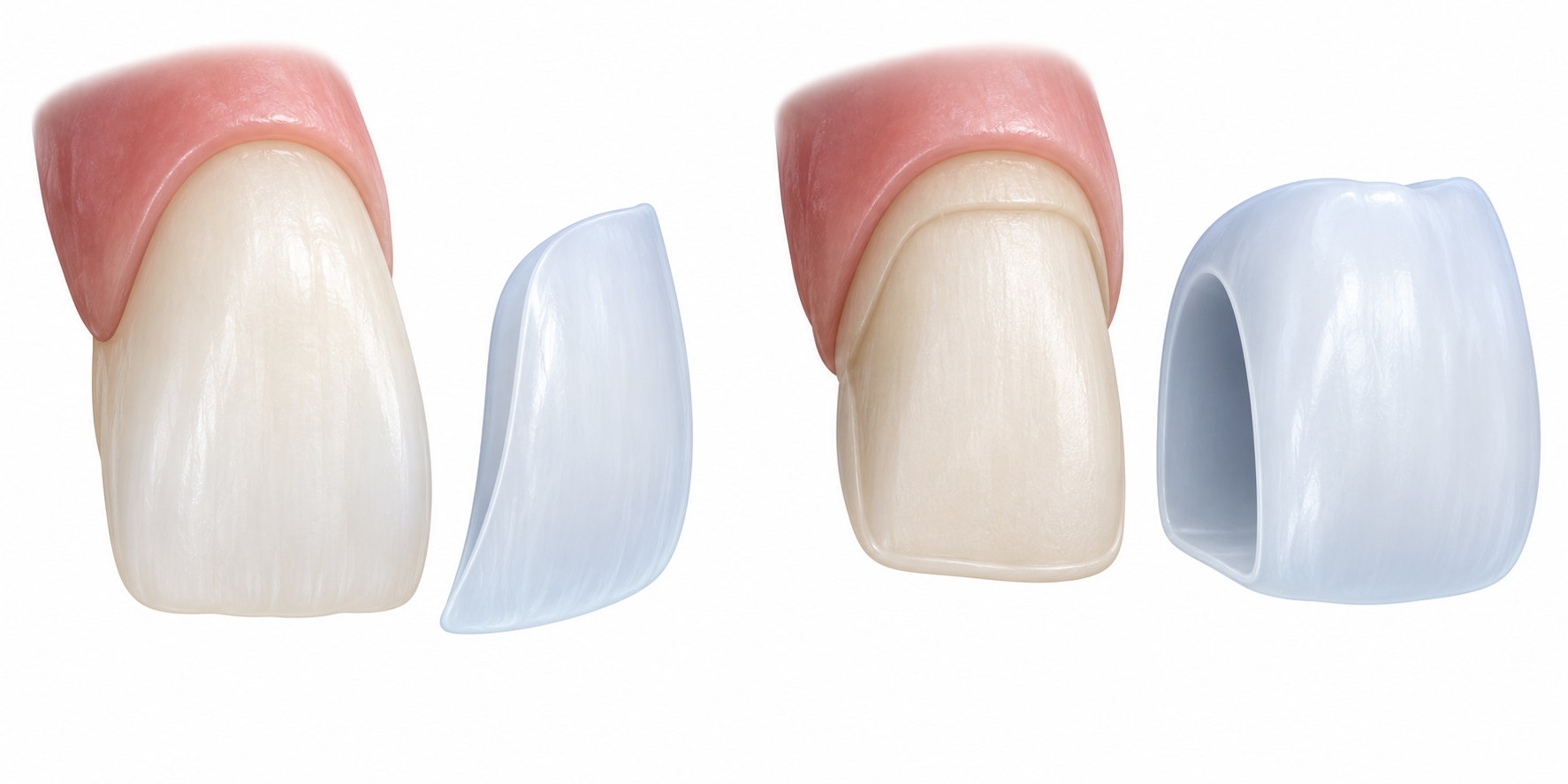
For a more permanent, stain-resistant result — or where the gap sits alongside other things you would like to change, such as colour, shape or worn edges — veneers are the stronger choice. Thin porcelain shells are bonded to the front of the teeth, closing the space and refining the whole look of the smile in one go. Porcelain resists staining far better than composite and, well cared for, lasts considerably longer.
Because veneers usually involve shaping a small amount of enamel, they are a bigger commitment than bonding. If keeping every scrap of enamel matters to you, it is worth asking about ultra-thin Lumineers, which aim to skip the filing stage. Veneers make most sense when the gap is one item on a longer wish list rather than the only thing you want sorted.
3. Clear Aligners
Aligners take the opposite approach: instead of adding material, they gently move your teeth so the gap closes for real. A series of clear, removable trays nudge the teeth into place over a few months, with nothing added to or removed from the teeth themselves. Our page on clear aligners explains the process in detail, but the headline is that this is the only one of the three that treats the cause rather than disguising it.
The catch is time. Where bonding is same-day and veneers take a few days, aligners take months — and once the teeth are in their new position, many people still want a small amount of bonding to finish the contact points neatly. For a gap that comes with general crowding or alignment issues, though, aligners are often the most complete answer.
Bonding vs Veneers vs Aligners: A Side-by-Side
Seeing the options next to each other usually makes the decision clearer. Here is how the three compare on the points patients ask about most:
| Factor | Composite bonding | Porcelain veneers | Clear aligners |
|---|---|---|---|
| How it closes the gap | Adds resin to widen teeth | Adds porcelain shells | Moves teeth together |
| Treatment time | One visit (same day) | A few days | Several months |
| Tooth preparation | Minimal to none | Conservative enamel shaping | None |
| Best for | Small, isolated gaps | Gaps plus colour or shape concerns | Gaps with crowding or alignment issues |
| Stain resistance | Lower — may need top-ups | High | Not applicable (own teeth) |
| Reversibility | Largely reversible | Not reversible | Fully — nothing altered |
| Typical lifespan | Around 5 to 8 years | 10 to 15 years or more | Permanent if retained |
There is no single winner in that table — only the option that fits your gap, your timeline and how much you want to change overall. A patient flying in for one week is not going to choose aligners; a patient who wants the most natural, cause-fixing result and can wear trays for a few months might.
Cost: Closing a Tooth Gap in Antalya vs the UK
Cost is usually what tips people towards treatment abroad, so let us be direct. The figures below are for closing a typical single front-tooth diastema and give a sense of the gap between UK and Antalya pricing.
| Treatment | Typical UK range | Typical Antalya range |
|---|---|---|
| Composite bonding (gap closure, per tooth) | £200 to £400 | £80 to £160 |
| Porcelain veneers (per tooth) | £500 to £1,000 | £180 to £300 |
| Clear aligners (full course) | £2,500 to £5,000 | £1,400 to £2,800 |
A couple of honest notes. First, closing a diastema rarely involves a single tooth in isolation — bonding and veneers usually treat the two teeth either side of the gap so the result looks balanced, so double the per-tooth figure for a realistic estimate. Second, the cheapest quote online is almost never the one to chase; the material, the laboratory and the dentist’s experience all sit inside that number, and they are what separate a smile that ages well from one that does not.
Prices are for informational purposes only. The figures above are indicative ranges, not a quote; your exact cost depends on a clinical assessment of your teeth, the cause of the gap, the materials chosen and the size of your case. Contact our clinic for an accurate quote tailored to you.
How Do You Choose? A Simple Way to Think About It
After fifteen-plus years of doing this, Dr. Dt. Aykut Onol tends to frame the decision around three questions, and they are a fair starting point before any examination:
- Is the gap small and the only thing you want to change? Bonding is usually the smartest, most conservative first move.
- Do you also want to improve colour, shape or worn edges, and want the most durable result? Veneers do several jobs at once and last the longest.
- Is the gap part of wider crowding or alignment, or do you want the teeth genuinely moved rather than masked? Aligners treat the cause and keep your own teeth intact.
These are guides, not verdicts. The cause of the gap can change the recommendation entirely — a low frenum, for instance, may need a small procedure first, or the teeth may simply re-open if the underlying reason is not addressed. A clinic that quotes you a full set of veneers before looking in your mouth is working backwards.
Why Patients Choose Antalya — and Morsia Dental
Antalya has become one of Europe’s busiest dental-treatment cities, and not only on price. Direct flights from most UK and European airports, established clinics, shorter waiting times and a genuine holiday setting make a treatment trip feel less like a medical errand and more like a planned week away.
At Morsia Dental we have treated patients from twenty-three countries, working with German- and Swiss-sourced materials. For a diastema in particular, the value is in the assessment as much as the treatment — matching the right option to the cause, rather than defaulting to whatever the clinic sells most of. If you want a clinician’s read on your gap before you commit to anything, we offer a assessment where we review your photos and lay out your realistic options in plain terms.
Will the Gap Come Back?
It is a fair question, and the answer depends on the route. With bonding and veneers the space is filled with material, so it stays closed as long as the restoration is intact. With aligners, the teeth have genuinely moved, and like any orthodontic result they need a retainer to hold the new position — skip the retainer and teeth can drift back over time. Whichever path you take, addressing the original cause is what keeps the result stable, which is exactly why the initial assessment matters so much.
Conclusion
Closing a diastema is one of the more satisfying things we do, because the change is immediate and personal. Bonding is the fast, conservative, budget-friendly route for a small gap; veneers give the most durable, all-in-one cosmetic upgrade; aligners are the option that moves your own teeth and treats the cause. None is universally “better” — the right one depends on your gap, your timeline and what else you want from your smile. Results vary from person to person, so the sensible next step is never a deposit but a proper look. If you would like an honest opinion on which approach suits your teeth, our team in Antalya is glad to review your case and explain your options clearly.
Frequently Asked Questions
What is the best way to close a gap between my front teeth?
There is no single best option — it depends on the gap and its cause. Composite bonding suits small, isolated gaps and is done in one visit. Veneers suit gaps where you also want to improve colour or shape and want a durable result. Clear aligners suit gaps that come with crowding or where you want the teeth genuinely moved. A clinical assessment is the only reliable way to know which fits your case.
How much does it cost to close a tooth gap in Antalya?
As a guide, composite bonding runs from about £80 to £160 per tooth in Antalya, veneers from around £180 to £300 per tooth, and a full course of clear aligners from roughly £1,400 to £2,800 — all well below typical UK prices. Most gap cases treat the teeth either side of the space, so figures should be doubled for a realistic estimate, and an exact cost can only be given after an assessment.
Can a tooth gap be closed in one day?
Yes, with composite bonding. Resin is added to the teeth either side of the gap and sculpted in a single appointment, with no laboratory stage. Veneers take a few days because of the laboratory work, and clear aligners take several months because the teeth are physically moved rather than filled in.
Is bonding or veneers better for closing a diastema?
Bonding is more conservative, faster and lower in cost, and it is largely reversible, which makes it a strong first choice for a small gap. Veneers cost more and involve shaping a little enamel, but they resist staining better, last longer and can refine colour and shape at the same time. The right choice depends on the size of the gap and whether you want to change anything else about the teeth.
Will my tooth gap come back after treatment?
With bonding or veneers the gap stays closed as long as the restoration is intact. With clear aligners the teeth are genuinely moved, so a retainer is needed to hold the new position — without one, teeth can gradually drift back. In every case, addressing the original cause of the gap is what keeps the result stable over time.
İlgili İçerikler
References
The clinical information in this article was cross-checked against the peer-reviewed publications listed below.
- Hirata R et al. Esthetic Solutions for Anterior Teeth: Composite Resins or Dental Ceramics?. Int J Periodontics Restorative Dent, 2026. PMID: 40532149
- Livada R et al. Non-Orthodontic, Non-Restorative Closure of Acquired Diastemata. J Tenn Dent Assoc, 2015. PMID: 27008768
- Wagner L et al. Magnets in orthodontics : which indications, which effects ? A review of the literature. Orthod Fr, 2020. PMID: 33372663
This content is for general information only and does not replace an in-person examination, diagnosis or treatment. Please consult a dentist about your own situation.