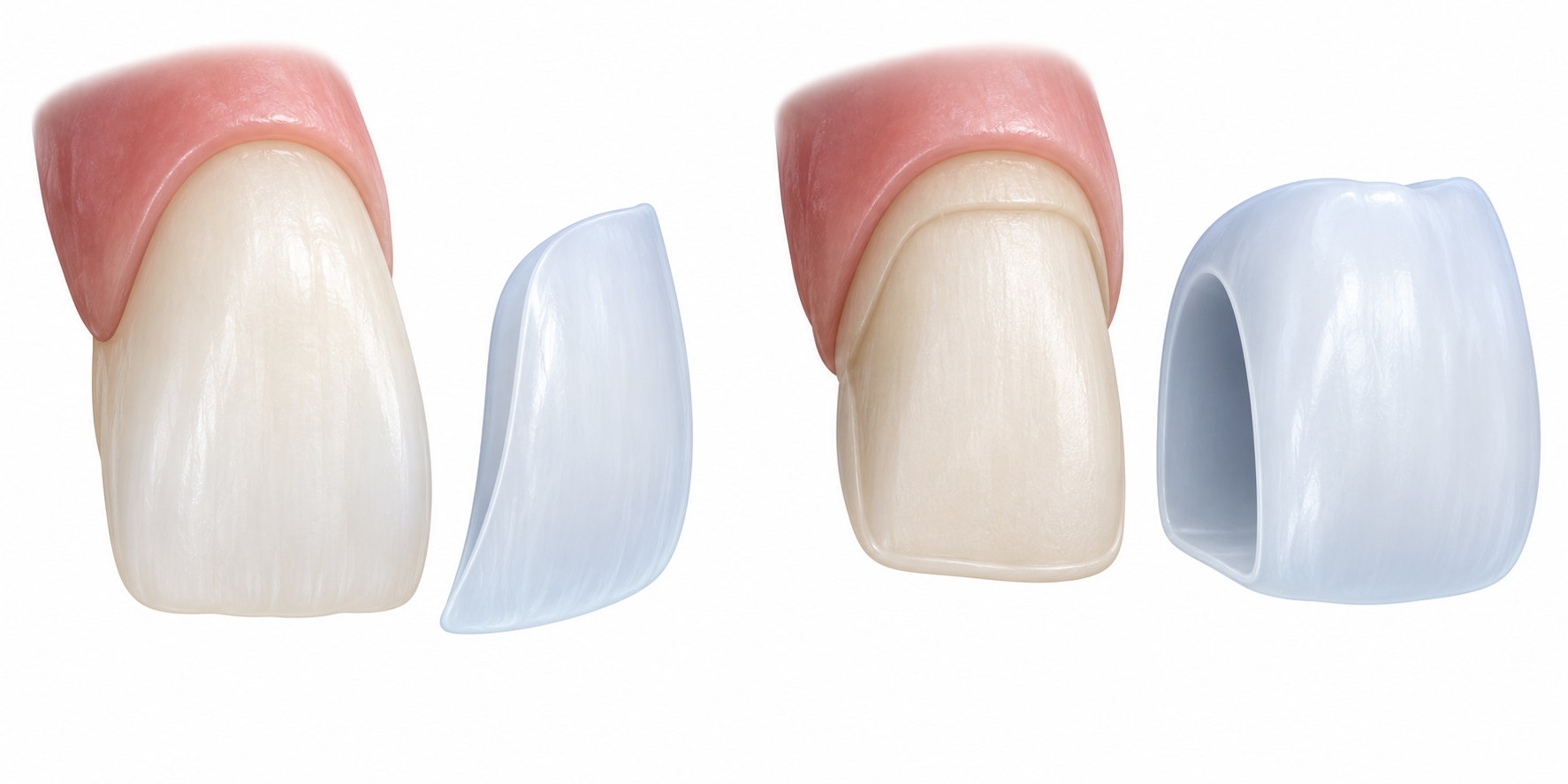

If you have been researching Lumineers in Turkey, you have probably noticed that the word gets used loosely — sometimes for any thin veneer, sometimes for the specific brand. At Morsia Dental in Antalya we treat patients from across the UK and Europe who arrive asking for “the veneers you don’t have to file your teeth down for,” and that is essentially what Lumineers are. They are an ultra-thin, no-prep porcelain veneer system, and they can be a brilliant option for the right smile. They are also not for everyone. This guide walks you through what they actually are, the honest pros and cons against traditional veneers, who qualifies, and what actually shapes the cost of the treatment here.
What Are Lumineers?
Lumineers are a brand of porcelain veneer made from a patented ceramic that can be pressed wafer-thin — roughly the thickness of a contact lens, around 0.2–0.3 mm. Because they are so thin, in many cases they can be bonded straight onto the front of your natural teeth with little or no drilling. That is the headline difference. A conventional veneer usually requires the dentist to shave off a small layer of enamel so the veneer sits flush; a true no-prep veneer aims to skip that step entirely.
It is worth being precise about terminology, because it affects what you are quoting for. “Lumineers” is a trademarked product. “No-prep” or “minimal-prep” veneers describe the technique, and several high-quality porcelain systems can be made in an ultra-thin format. When you compare options, ask whether you are being quoted the brand or the approach — both can give a beautiful result, but they are not always the same thing.
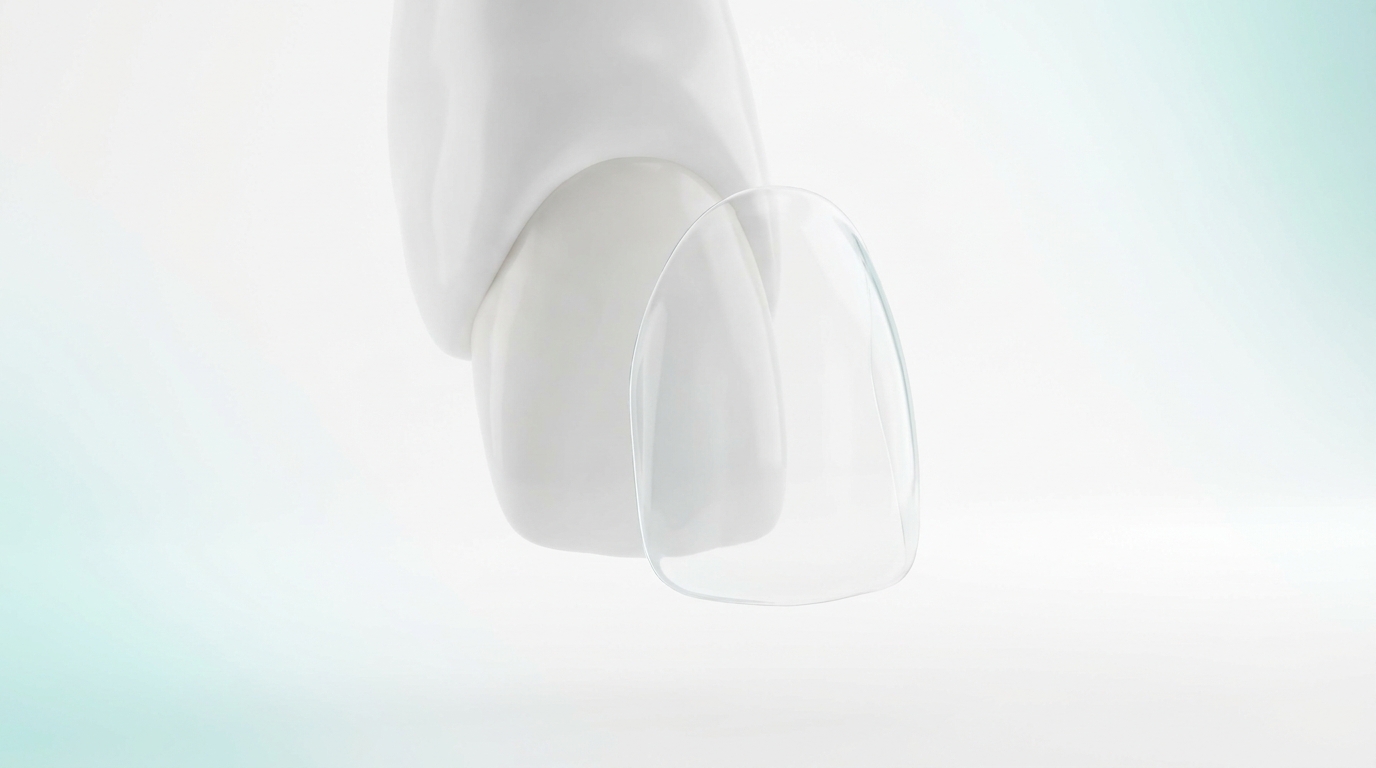
Lumineers vs Traditional Veneers: The Real Difference
This is the comparison that matters most, so let us slow down on it.
Tooth preparation
Traditional porcelain veneers involve reshaping the enamel, typically under local anaesthetic. Lumineers are designed to be bonded over the tooth with minimal or no preparation, which usually means no anaesthetic and no temporaries. For a nervous patient, that alone is a strong draw.
Thickness and final look
Because Lumineers add a thin layer on top of the existing tooth, they can very slightly increase the bulk of the tooth. Traditional veneers replace the layer that was removed, so they tend to sit flatter and give the technician more freedom to mask dark or heavily discoloured teeth. If your teeth are badly stained or you want a dramatic colour change, a prepped veneer often controls the result better.
Reversibility
Since little or no enamel is removed, no-prep veneers are considered largely reversible — the natural tooth underneath is preserved. Traditional veneers are a permanent commitment because the prepared enamel does not grow back. For younger patients, or anyone unsure about a lifelong choice, reversibility is a genuine advantage.
Here is the same information at a glance:
| Feature | Lumineers / no-prep | Traditional veneers |
|---|---|---|
| Enamel removal | Little or none | Thin layer removed |
| Anaesthetic | Usually not needed | Usually needed |
| Reversible | Largely yes | No |
| Best for heavy staining | Limited | Stronger coverage |
| Typical lifespan | 10–20 years with care | 10–15 years with care |
If you want a deeper look at the different ceramics used in standard veneers, our breakdown of dental veneer types — E-Max vs zirconia covers how material choice changes both strength and translucency.
The Pros of Lumineers
- Tooth-friendly. Keeping your natural enamel intact is the single biggest reason patients choose them.
- Usually pain-free, no temporaries. Most cases skip the anaesthetic and the awkward temporary-veneer stage.
- Reversible in principle. A meaningful comfort factor if you are veneer-curious but not ready for something irreversible.
- Natural translucency. Good-quality thin porcelain catches light in a lifelike way, which suits patients who want a refined, not “blocky,” result.
The Cons and Limitations
We would rather you hear this from us than be surprised in the chair. No-prep veneers are not the right answer for every smile:
- Limited on dark teeth. A thin, translucent shell may not fully hide severe discolouration or a heavily root-treated tooth.
- Can look bulkier. On already prominent or crowded teeth, adding a layer without preparation can make them feel slightly fuller.
- Not a fix for bite or alignment problems. Significant crowding, gaps or a heavy bite often need orthodontics or prepped restorations first.
- Technique-sensitive. The result depends heavily on the skill of the dentist and the dental technician — this is not a product you simply “order.”
When teeth are darker or the goal is a full transformation, many patients are better served by conventional veneers, crowns, or a planned combination. You can compare the broader options in our guide to veneers in Turkey, and if you are after a complete redesign, our Hollywood smile page explains how multiple treatments are sequenced.
Are You a Good Candidate for Lumineers?
In our experience, the patients who do best with no-prep veneers tend to share a few things: reasonably well-aligned teeth, healthy gums, no active decay, and teeth that are not severely discoloured. Minor chips, small gaps, slightly worn edges, mild shape concerns — these are where ultra-thin veneers shine. If you grind your teeth at night, that does not rule you out, but it does mean we would discuss a nightguard to protect the veneers.
The only way to know for certain is an assessment. During a consultation Dr. Dt. Aykut Önol and our team review your enamel, bite and gum health, and tell you honestly whether no-prep is realistic for the result you want — or whether another route will serve you better. If a removable, non-permanent option appeals to you instead, it is also worth reading about a snap-on smile, which clips over your teeth without any bonding at all.
What Shapes the Cost of Lumineers
Cost is one of the first questions patients ask, and the honest answer is that a no-prep veneer case is not a single fixed treatment. What a plan involves depends on clinical variables that cannot be judged from a photograph, and each of them changes the amount of chair time and laboratory work required. The table below sets out the factors we look at when a plan is drawn up.
| Factor | Why it affects the cost |
|---|---|
| Number of teeth in the plan | Correcting two or three teeth and designing a full front-of-smile line are different pieces of work, both in the chair and in the laboratory. |
| Porcelain system chosen | Brand-name Lumineers and other ultra-thin ceramics differ in how they are pressed, layered and finished. |
| Condition of your teeth and gums | Old fillings, worn edges, decay or gum treatment needed beforehand add clinical stages before any veneer is bonded. |
| Shade and design complexity | Masking discolouration or reshaping several teeth as one unit demands more technician time than a straightforward match. |
| Preparatory treatment | Crowding, gaps or a heavy bite may need orthodontics or prepped restorations first, which changes the whole plan. |
| Laboratory and technician work | Hand characterisation and individual layering take longer than a standard finish. |
For a front-of-smile makeover — say eight to ten teeth — the planning matters as much as the chair work, which is why many patients combine treatment with a short stay in Antalya. We bundle the clinical work, airport transfers and accommodation guidance into structured all-inclusive dental packages so the arrangements are clear before you travel.
This page is for general information and contains no quotation. A treatment plan and its cost can only be established individually, after a clinical examination and a review of your dental records. Contact our clinic to arrange an assessment.
The Treatment Process at Morsia Dental
For most no-prep cases the in-clinic process is short, which is what makes it well suited to a treatment trip:
- Online consultation. You send photos; we give an initial opinion and an outline of the likely treatment plan before you travel.
- In-clinic assessment and design. On arrival we confirm candidacy, take impressions or a digital scan, and agree the shade and shape together.
- Fabrication. Your veneers are crafted by the dental laboratory to the agreed design.
- Bonding. Each veneer is cleaned, etched and bonded to the tooth, then polished and checked against your bite.
Plan for roughly five to seven days in Antalya to allow for laboratory time and a comfortable fitting appointment — plenty of patients use the gap to enjoy the coast.
Caring for Your Lumineers
They are low-maintenance, not no-maintenance. Brush twice a day, floss, and keep your routine check-ups. Avoid using your front teeth as tools — opening packaging, biting nails, crunching ice — and wear a nightguard if you clench. Looked after well, quality porcelain veneers regularly last well beyond a decade.
Conclusion
Lumineers and other no-prep veneers offer something genuinely valuable: a way to refine your smile while keeping your natural teeth almost untouched. For mild cosmetic concerns and lighter teeth, they are hard to beat. For darker teeth or a full transformation, traditional veneers or a combined plan may give a cleaner result — and an honest clinic will tell you which camp you fall into. If you would like a straight answer about your own smile, our team in Antalya is happy to review your case and lay out your options.
Frequently Asked Questions
Are Lumineers the same as regular veneers?
Not exactly. Lumineers are a specific brand of ultra-thin, no-prep porcelain veneer. “Veneers” is the broader category, which includes thicker, prepped porcelain veneers that require a layer of enamel to be removed.
Do Lumineers ruin your natural teeth?
Because little or no enamel is removed, the natural tooth underneath is preserved, which is why no-prep veneers are considered largely reversible. Traditional veneers, by contrast, permanently alter the prepared tooth.
How long do Lumineers last?
With good oral hygiene and regular check-ups, quality no-prep porcelain veneers commonly last between 10 and 20 years. A nightguard is recommended if you grind your teeth.
How much do Lumineers cost in Turkey?
There is no standard figure. The cost depends on how many teeth are treated, the porcelain system chosen, the condition of your enamel and gums, and any preparatory treatment needed beforehand. A personal treatment plan and its cost are established only after a clinical examination, so no indicative amounts are published here.
Can anyone get Lumineers?
No. They suit well-aligned, healthy, lighter-shaded teeth with minor cosmetic concerns. Severe staining, crowding or bite issues usually call for traditional veneers, crowns or orthodontics instead — which is why a consultation comes first.
References
The clinical information in this article was cross-checked against the peer-reviewed publications listed below.
- Araujo E et al. Anterior Veneer Restorations – An Evidence-based Minimal-Intervention Perspective. J Adhes Dent, 2021. PMID: 33825424
- Lanzaretti G et al. Esthetic smile rehabilitation with direct composite veneers: a narrative review with a practical explanation of the technique. Minerva Dent Oral Sci, 2025. PMID: 40052299
- Meer Rownaq Ali AB et al. Conventional Versus Minimally Invasive Veneers: A Systematic Review. Cureus, 2023. PMID: 37799216
This content is for general information only and does not replace an in-person examination, diagnosis or treatment. Please consult a dentist about your own situation.
What Determines the Cost of Lumineers Turkey?
There is no single fixed figure for this treatment. The final plan — and therefore the cost — is shaped by the clinical findings recorded during examination. The factors below are the ones that make the biggest difference:
| Factor | Why it changes the cost |
|---|---|
| Material | Composite, E-max/lithium disilicate or zirconia — each involves different laboratory work |
| Number of teeth | How many teeth are included in the smile design |
| Preparation type | Whether minimal preparation or full crown coverage is clinically indicated |
| Condition of underlying teeth | Existing fillings, root canal treatment or gum therapy needed first |
| Design and mock-up stage | Digital smile design, wax-up and trial fitting steps |
| Laboratory and technician work | Layering technique and characterisation of each restoration |
| Follow-up and warranty terms | Review appointments and the warranty conditions offered |
Your treatment plan is prepared individually after a clinical examination; the applicable figure is shared with you at that stage.