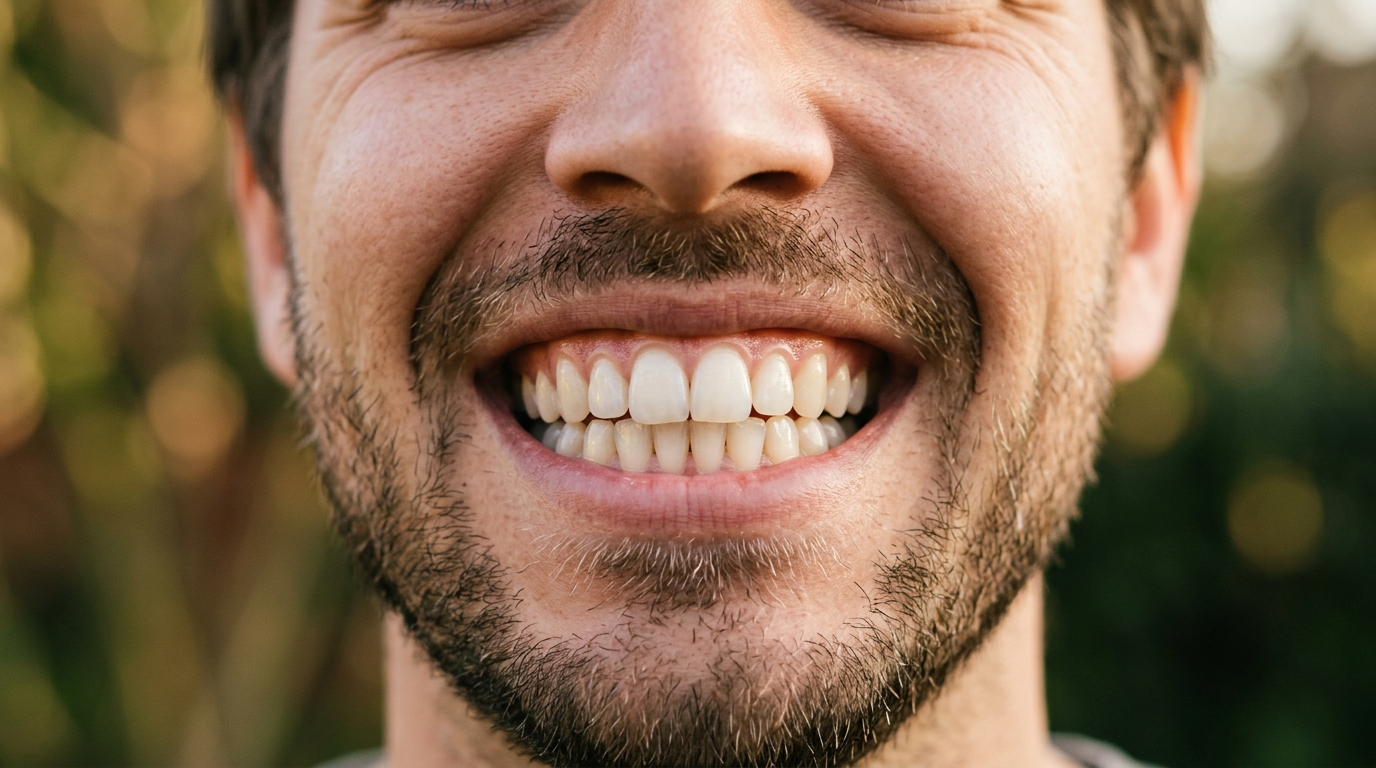
Dental veneers have become one of the most requested cosmetic dental procedures for international patients visiting Antalya. The ability to transform the colour, shape, size and alignment of your teeth in a matter of days — at a fraction of European prices — is a powerful combination.
But veneers are not a one-size-fits-all solution. The material you choose matters significantly: it affects the appearance, durability and longevity of the result. At Morsia Dental, we see patients who arrive having read contradictory information about E-Max and zirconia veneers. This article gives you a clear, honest comparison.
What Are Dental Veneers?
A dental veneer is a thin ceramic shell bonded to the front surface of a tooth. Unlike a crown, which covers the entire tooth, a veneer covers only the visible front face. This means less tooth reduction is required.
Veneers are used to correct:
- Discolouration that does not respond to whitening
- Chips, cracks or minor fractures
- Uneven tooth size or shape
- Minor spacing or alignment issues (not a substitute for orthodontics in severe cases)
- Worn enamel
What Are E-Max Veneers and Who Are They For?
E-Max is a lithium disilicate glass-ceramic made by Ivoclar Vivadent. It’s the most widely used veneer material in cosmetic dentistry worldwide, and for good reason: its optical properties closely mimic natural tooth enamel.
Why E-Max Works So Well for Veneers
- Translucency: E-Max allows light to pass through it in the same way natural enamel does. This is what gives veneers their lifelike, three-dimensional appearance.
- Thin construction: E-Max can be made as thin as 0.3mm — meaning minimal tooth reduction is needed. Some cases qualify for “no-prep” or “minimal-prep” veneers.
- Colour depth: The material can be layered to achieve multiple shades and gradients within a single veneer, matching the natural variation in tooth colour.
- Strength: Flexural strength of approximately 400 MPa — strong enough for front teeth where bite forces are relatively low.
Planning at Morsia Dental: set individually per veneer
When E-Max May Not Be the Right Choice
- Patients who grind their teeth heavily (bruxism) — the ceramic can chip under extreme force
- Teeth requiring extensive shape changes (where more material thickness is needed)
- Cases where the underlying tooth is very dark — a thicker, more opaque material may be needed to mask discolouration
What Are Zirconia Veneers and When Are They Best?
Zirconia (zirconium dioxide) is best known as the material of choice for full crowns — but it’s also used for veneers when additional strength is required. Modern high-translucency zirconia options have significantly narrowed the aesthetic gap with E-Max.
Advantages of Zirconia Veneers
- Exceptional durability: Flexural strength of 900–1,200 MPa — highly resistant to chipping and cracking
- Better masking of dark underlying teeth: The increased opacity blocks out discolouration more effectively
- Biocompatible: No metal content, no allergic reaction risk
- Long lifespan: Zirconia veneers can last 15–20+ years with good care
Planning at Morsia Dental: assessed after an examination
Limitations of Zirconia for Veneers
- Traditional zirconia is more opaque than E-Max — it can look slightly flat or artificial in certain lighting, particularly for patients wanting ultra-natural aesthetics
- Requires slightly more tooth reduction than E-Max in some cases
- High-translucency zirconia options (such as Vita Suprinity or Katana) address the opacity issue — but at a higher price point
Side-by-Side Comparison
| Feature | E-Max | Zirconia |
|---|---|---|
| Aesthetics/Translucency | Excellent — most natural | Good (high-translucency versions: very good) |
| Strength | Good (400 MPa) | Excellent (900–1,200 MPa) |
| Thickness possible | 0.3mm minimum | 0.5mm minimum |
| Best for | Aesthetic front-tooth cases, minimal prep | Bruxism patients, heavy masking needed |
| Longevity | 10–15 years | 15–20+ years |
| Cost (Morsia) | Assessed individually | Assessed individually |
The Hollywood Smile: How Many Veneers Do You Need?
Patients from Germany and the UK often ask: “How many veneers make a Hollywood Smile?” The most common range is 8–20 teeth, typically covering the upper arch and sometimes the lower as well. The exact number depends on how wide your smile is (how many teeth are visible when you smile fully).
At Morsia Dental, we use a digital smile design process to show you a preview of your result before any treatment begins. You approve the shape, size and shade — then our in-house laboratory produces the veneers to those specifications.
Veneers in Antalya: What Does the Process Look Like?
- Digital smile design: Photos and facial measurements are used to design your new smile digitally
- Mock-up: A temporary version of your new smile is placed on your teeth so you can preview it in person
- Tooth preparation: Minimal enamel reduction; local anaesthetic used throughout
- Temporary veneers: Fitted while permanent ones are made in our lab (2–3 days)
- Final fitting: Permanent veneers bonded; colour and bite checked
The full process — from design to final fitting — takes 5–7 days for most veneer cases.
Ready for your new smile? Contact Morsia Dental to arrange a consultation.
Frequently Asked Questions
Are veneers reversible?
Standard veneers require a small amount of enamel removal (typically 0.3–0.7mm). This preparation is permanent — the tooth will always need a veneer or crown going forward. Minimal-prep and no-prep veneers are available in some cases, where the tooth is not altered at all.
Do veneers look fake?
Poorly made veneers can look unnatural — typically because they’re too white, too opaque or don’t account for the individual characteristics of the patient’s smile. At Morsia Dental, we work from your natural facial features, lip line and skin tone to design a result that looks like your teeth, only better — not like a set of uniform white tiles.
Can I get veneers if I grind my teeth?
Bruxism (teeth grinding) increases the risk of veneer fracture. If you grind, zirconia veneers are more appropriate, and we will also recommend a night guard to protect your investment. Treating the grinding cause first (often stress or bite alignment) further improves longevity.
How do I look after veneers?
Brush twice daily, floss regularly, and visit a dentist for check-ups. Avoid biting hard objects (pens, nails, ice) or using your front teeth to open packaging. With proper care, E-Max veneers last 10–15 years; zirconia veneers 15–20+ years.
What if I don’t like the result?
The digital smile design process and the in-person mock-up step exist specifically to prevent this. You approve the design before any permanent changes are made. Minor adjustments (shape, translucency, shade) can be made at the fitting stage if the prototype is approved.
Book your consultation at Morsia Dental Antalya. Send us your photos and we’ll prepare a digital smile preview within 48 hours — before you commit to anything.
İlgili İçerikler
References
The clinical information in this article was cross-checked against the peer-reviewed publications listed below.
- Poggio CE et al. Metal-free materials for fixed prosthodontic restorations. Cochrane Database Syst Rev, 2017. PMID: 29261853
- Porto AM et al. Marginal adaptation of tooth-supported fixed restorations fabricated using digital scanning versus conventional impression techniques: An overview of systematic reviews. J Prosthet Dent, 2025. PMID: 40610310
This content is for general information only and does not replace an in-person examination, diagnosis or treatment. Please consult a dentist about your own situation.