Last updated: 20 August 2026
Most people who ask us about clear aligners are not chasing a perfect smile out of vanity. They are tired of hiding their teeth in photos, frustrated that a crowded lower jaw traps food, or worried that a slowly widening front gap is getting worse. At Morsia Dental in Antalya, we have guided patients from 23 countries through aligner treatment, and the same questions come up every week: how much does it cost, how long does it take, and can any of it be done while I am abroad? This guide answers those honestly, with UK price comparisons and no sugar–coating.
Why patients look at clear aligners in Antalya
Antalya has become one of Europe’s busier dental travel destinations, and orthodontics is part of that picture for two reasons. First, the cost gap with the UK is real and meaningful. Second, the planning that drives modern aligner treatment is digital, which means a good portion of it can happen before you ever board a flight.
Clear aligners are thin, transparent trays — you may know the category by the brand name Invisalign, though several comparable systems exist — that move teeth in small, controlled steps. You wear each set for one to two weeks, then move to the next. They are removable for eating and brushing, which most adults find far easier to live with than fixed metal braces. We should be clear, though: aligners are not right for every case. Severe bite problems, badly rotated teeth or complex jaw discrepancies sometimes still need fixed appliances or a combined approach, and that is a judgement we only make after seeing your scans.
What aligners do well — and what they don’t
- Mild to moderate crowding and spacing — a strong fit for clear aligners.
- Mild relapse after braces you had years ago — very common in the adults we treat.
- Closing a small front gap — often achievable, sometimes paired with restorative work.
- Significant bite correction or skeletal issues — usually beyond what aligners alone can fix.

How much do clear aligners cost in Antalya vs the UK?
Cost is the first question, so let us deal with it plainly. In the UK, a full Invisalign-style course commonly lands between £2,500 and £5,500 depending on the city and how many trays your case needs. In Antalya, the equivalent treatment typically sits well below that, which is why the maths works for many patients even after flights and a hotel.
| Treatment scope | Typical UK range | Typical Antalya range |
|---|---|---|
| Limited / single-arch aligners (minor cases) | £1,500 – £2,800 | £700 – £1,300 |
| Full course, both arches (moderate cases) | £2,500 – £5,500 | £1,400 – £2,600 |
| Retainers after treatment (per set) | £150 – £300 | £80 – £160 |
These figures are indicative ranges for information only and are not a quote. Your exact cost depends on how many aligners your case requires, whether one or both arches are treated, and any preparatory work — and can only be confirmed after a clinical assessment. Please contact our clinic in Antalya for a personalised estimate.
One honest note on price: the cheapest number you see online is rarely the number you pay, anywhere. A realistic plan accounts for the right tray count, refinements if teeth move slower than predicted, and retainers afterwards. We would rather quote you accurately than win you with a headline figure that quietly grows.
The process, step by step
Modern aligner treatment is mostly planning, then execution. Here is how we run it at Morsia Dental, including the parts that happen before you travel.
- Initial assessment. You send recent photos and any X-rays or records you have. We review whether aligners suit your case or whether a different route makes more sense. You can start this with a online assessment before committing to anything.
- Digital scan and treatment plan. On arrival, Dr. Dt. Aykut Onol and our team take a 3D intraoral scan — no putty trays — and build a tooth-by-tooth movement plan. You see a simulation of how your teeth are expected to look at the end.
- Aligner production. Trays are manufactured using the German and Swiss-sourced materials we work with. Depending on the system, the first sets may be ready quickly or shipped to you.
- Wear and progress. You wear each tray 20 to 22 hours a day, swapping to the next set roughly every one to two weeks, with periodic check-ins.
- Retention. Once teeth are in position, retainers hold them there. This step is not optional — teeth drift back without it.
Can you actually finish aligner treatment while abroad?
This is the question that worries people most, and the honest answer is: partly, but not entirely on a single trip. A full aligner course takes months, and nobody stays in Antalya for half a year. What works well in practice is a hybrid model — we complete the scan, planning and a stack of trays during your visit, then monitor remotely while you progress at home, with photos or a monitoring app. If refinements are needed near the end, a short follow-up visit usually handles them.
If you want a fully finished result in one trip, aligners are not the tool for that — their whole mechanism is gradual movement over time. For patients who genuinely need a quick visible change within a week or two, the conversation shifts towards restorative options instead, which we cover below.
How long does it take?
Timelines vary more than cost does, because they depend entirely on how far your teeth need to move. As a rough guide:
| Case type | Typical duration | Number of aligner sets (approx.) |
|---|---|---|
| Minor crowding or single-arch tidy-up | 4 – 6 months | 10 – 18 |
| Moderate crowding or spacing, both arches | 8 – 14 months | 20 – 35 |
| More involved cases | 14 months and beyond | 35+ |
Wearing your trays for the full daily hours is the single biggest factor in staying on schedule. The trays only work while they are in your mouth — the most common reason a case runs long is simply not wearing them enough.
Aligners and your wider smile plan
Straightening is often step one rather than the whole story. Once teeth are properly aligned, any cosmetic work afterwards tends to be more conservative, because the foundation is already in the right place. We see this constantly: a patient comes in wanting brighter, more uniform front teeth, and aligning first means we can do less to the natural tooth later.
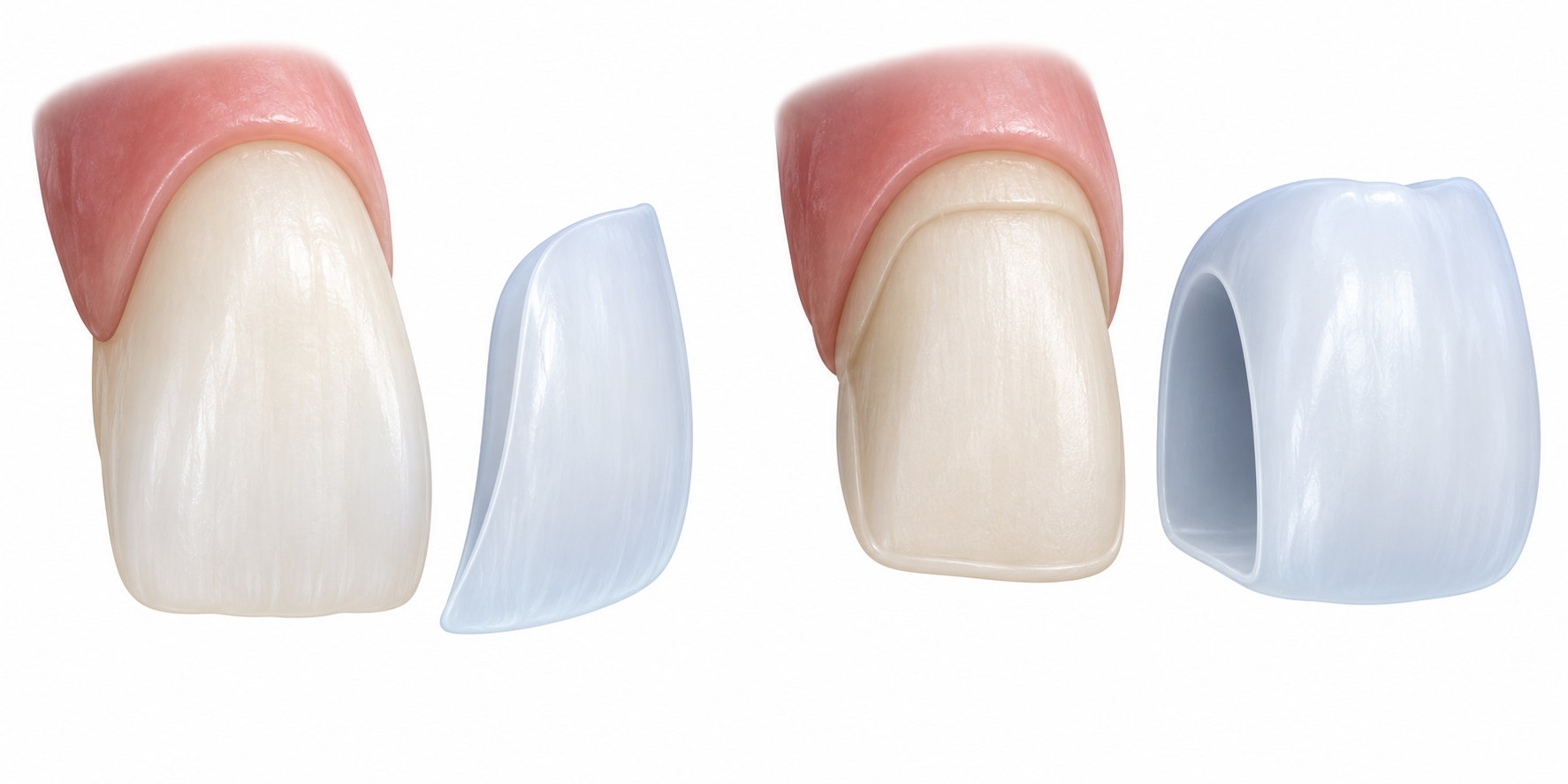
For example, if a front gap remains after alignment, closing a tooth gap with a small amount of bonding or restoration is far simpler once the teeth either side are correctly positioned. Where the goal is a fuller cosmetic transformation, some patients move on to veneers after their aligner phase, or plan the whole journey as a smile makeover from the outset so the orthodontic and cosmetic stages fit together. And for those drawn to a brighter, highly uniform look, our guide to the Hollywood smile explains where aligners end and restorative work begins.
The point we make to every patient is that aligners and cosmetic dentistry are not competitors — sequenced properly, they protect more of your natural tooth and give a result that lasts.
Is treatment comfortable?
Most people describe aligners as a feeling of pressure or tightness for a day or two after switching to a new set, easing as the teeth respond. It is not the same as the soreness many remember from fixed braces, and there are no wires to catch the inside of your cheeks. That said, comfort is individual, and a small number of patients are more sensitive than others — we would never promise you will feel nothing.
Is dental travel to Antalya right for you?
Aligner treatment suits dental travel well precisely because so much of it is planning and remote monitoring rather than chair time. But it asks for commitment: you have to wear the trays diligently and keep retainers in afterwards. If you are disciplined about that, the cost saving against UK prices is substantial and the clinical standard need not be compromised.
Results vary from person to person, and no responsible clinic can guarantee an outcome before seeing your case. The sensible first step is always an assessment so we can tell you, honestly, whether aligners are the right path for you and what your particular timeline and cost would look like.
Frequently Asked Questions
How much do clear aligners cost in Antalya compared to the UK?
A full both-arch course in Antalya typically ranges from around £1,400 to £2,600, against a common UK range of £2,500 to £5,500. Minor single-arch cases start lower. These are indicative figures only, not a quote — your exact cost depends on tray count and case complexity and is confirmed after a clinical assessment.
Can I complete my clear aligner treatment while abroad in Antalya?
Not entirely in one trip, because a full course runs over several months. In practice we complete your scan, planning and initial trays during your visit, then monitor your progress remotely while you continue at home. A short follow-up visit can handle any refinements near the end.
How long does clear aligner treatment take?
Minor cases often take four to six months, while moderate both-arch cases usually run eight to fourteen months. More involved cases take longer. Duration depends on how far your teeth must move and on wearing the trays for the full 20 to 22 hours a day.
Are clear aligners better than veneers for straightening teeth?
They do different jobs. Aligners physically move your own teeth into position, while veneers cover the front surface for a cosmetic change. For many patients we straighten first with aligners, then decide whether any veneers are needed — aligning first usually means more of your natural tooth is preserved.
Do I have to wear a retainer after clear aligners?
Yes. Teeth naturally tend to drift back towards their old position, so wearing retainers after treatment is essential to hold your result. We provide guidance on how and how long to wear them, and replacement sets are available if needed.
İlgili İçerikler
References
The clinical information in this article was cross-checked against the peer-reviewed publications listed below.
- Weir T et al. Clear aligners in orthodontic treatment. Aust Dent J, 2017. PMID: 28297094
- Rossini G et al. Efficacy of clear aligners in controlling orthodontic tooth movement: a systematic review. Angle Orthod, 2015. PMID: 25412265
- Upadhyay M et al. Biomechanics of clear aligners: hidden truths & first principles. J World Fed Orthod, 2022. PMID: 34965910
This content is for general information only and does not replace an in-person examination, diagnosis or treatment. Please consult a dentist about your own situation.
What Determines the Cost of Clear Aligners & Invisalign in Antalya?
There is no single fixed figure for this treatment. The final plan — and therefore the cost — is shaped by the clinical findings recorded during examination. The factors below are the ones that make the biggest difference:
| Factor | Why it changes the cost |
|---|---|
| Scope of treatment | How many teeth or regions are included in the plan |
| Technique and materials | The clinical method chosen and the materials it requires |
| Diagnostic imaging | Examination, radiographs and digital planning steps |
| Preliminary treatments | Any procedure that must be completed before the main treatment |
| Number of sessions | How many appointments the plan is spread across |
| Laboratory work | Whether custom laboratory production is involved |
| Follow-up care | Review appointments included after treatment |
Your treatment plan is prepared individually after a clinical examination; the applicable figure is shared with you at that stage.