Last updated: 3 August 2026
Most patients who write to us about laminate veneers in Antalya have already spent weeks down the same rabbit hole — a wall of price quotes, a dozen names for what looks like the same treatment, and no clear idea of who to trust. At Morsia Dental we see this every week. People fly in from the UK and across Europe braced for a confusing process and leave surprised at how straightforward it was once someone explained it plainly. So that is what this guide does: what porcelain laminate veneers really are, what they cost here against UK prices, the step-by-step process in our Antalya clinic, who they suit, and how to look after them.
What Are Laminate Veneers?
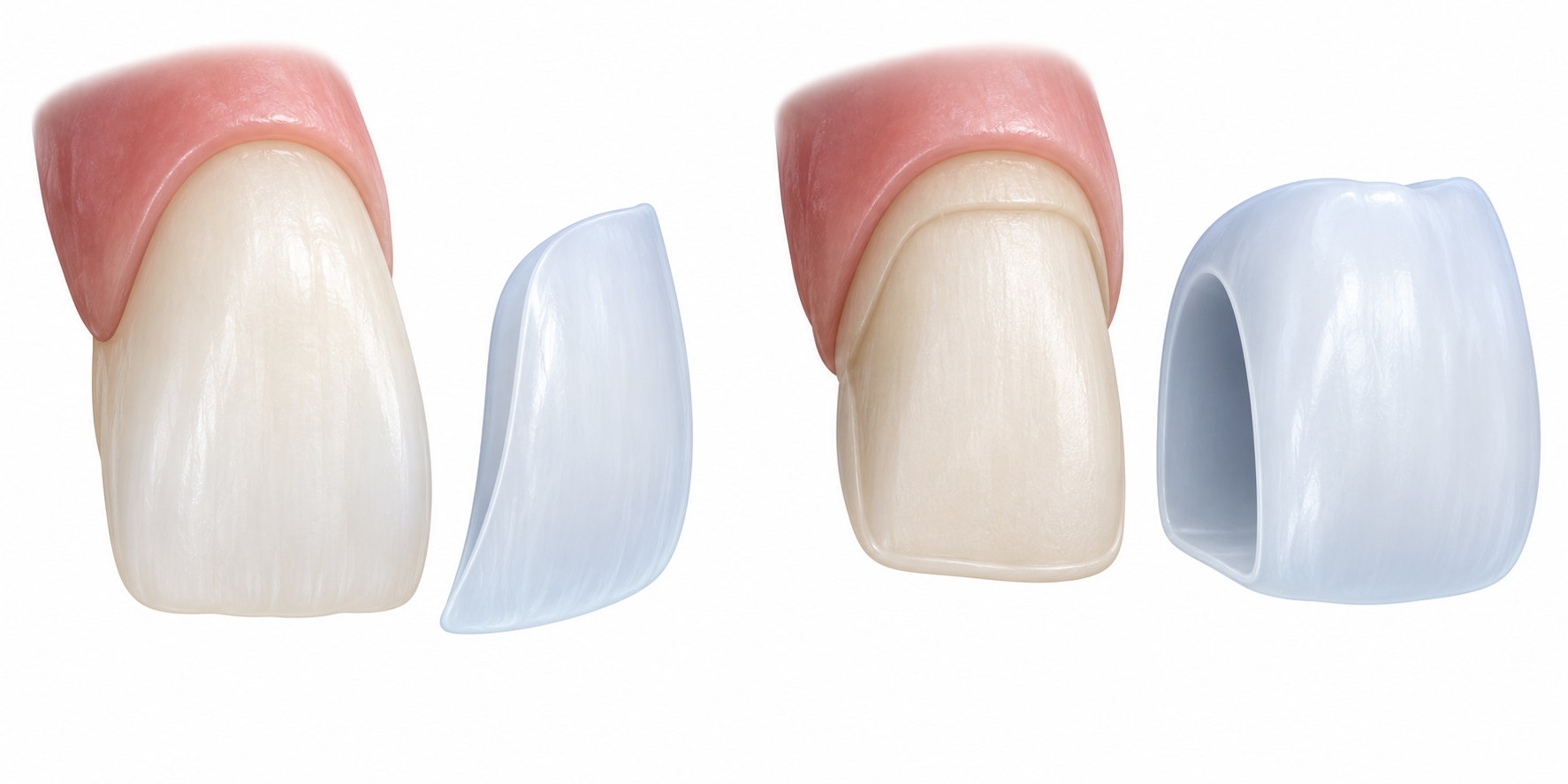
A laminate veneer is a thin shell of porcelain — usually somewhere between 0.3 and 0.7 mm thick — bonded to the front surface of a tooth to change its colour, shape, length or alignment. “Laminate” simply describes that thin, layered porcelain construction; it is the term used across most of Europe and Turkey for what UK patients often call “porcelain veneers.” Same family, different vocabulary.
Because the porcelain is thin, the dentist usually removes a small amount of enamel from the front of the tooth so the veneer sits flush and looks natural rather than bulky. That preparation is conservative — we are talking about a fraction of a millimetre — but it is real, and it is one of the things we explain carefully before anyone commits. If keeping every scrap of your natural enamel matters to you, there is a near-relative worth reading about: ultra-thin no-prep Lumineers, which aim to skip the filing stage entirely.
It also helps to know the broader landscape before you settle on laminates. We cover the full picture in our pillar guide to veneers in Turkey, which compares laminates against crowns, composite bonding and other restorative routes.
Why Antalya for Laminate Veneers?
Antalya has quietly become one of Europe’s busiest dental-treatment cities, and it is not only about price. Established clinics, direct flights from most UK and European airports, a genuine holiday setting and shorter waiting times make a treatment trip feel less like a medical errand and more like a planned week away.
At Morsia Dental, Dr. Dt. Aykut Onol has spent more than fifteen years restoring smiles, and over that time we have treated patients from twenty-three countries. We work with German- and Swiss-sourced materials and our own laboratory relationships, which matters more than people expect — a laminate veneer is only ever as good as the porcelain and the technician behind it. The clinical skill is what turns a thin shell of ceramic into a tooth that nobody can pick out as artificial.
Laminate Veneers Cost: Antalya vs the UK
Cost is almost always the trigger for looking abroad, so let us be direct about it. In the UK, a single porcelain laminate veneer commonly runs from around £500 to £1,000 per tooth. In Antalya, the same treatment typically falls in the region of £180 to £300 per tooth, depending on the porcelain system, the number of teeth and how much design work your case needs.
For a front-of-smile set — most people choose six, eight or ten upper teeth — that gap becomes substantial, which is exactly why patients are willing to travel. Here is how it tends to look in practice:
| What you’re pricing | Typical UK range (per tooth) | Typical Antalya range (per tooth) |
|---|---|---|
| Single porcelain laminate veneer | £500 to £1,000 | £180 to £300 |
| 6-tooth smile (upper front) | £3,000 to £6,000 | £1,080 to £1,800 |
| 8-tooth smile | £4,000 to £8,000 | £1,440 to £2,400 |
| 10-tooth smile | £5,000 to £10,000 | £1,800 to £3,000 |
One honest note: the lowest quote you find online is rarely the one to chase. Porcelain quality, laboratory standards and the dentist’s experience all sit inside that number, and they are the difference between a smile that ages well and one that does not. Even after flights and a few nights’ stay, the maths on a full set still works comfortably in Antalya’s favour — and we fold travel logistics into our all-inclusive packages so the total is clear before you book.
Prices are for informational purposes only. The figures above are indicative ranges, not a quote; your exact cost depends on a clinical assessment of your teeth, the materials chosen and the size of your case. Contact our clinic for an accurate quote tailored to you.
The Laminate Veneer Process at Morsia Dental
The process is more methodical than dramatic, and that is a good thing — you want a treatment that has been planned, not improvised. Here is how a typical laminate case runs with us:
- Online consultation. You send clear photos of your teeth and tell us what you would like to change. We give an initial opinion, flag anything that needs attention and provide a planning estimate before you spend a penny on flights.
- In-clinic assessment and smile design. On arrival, Dr. Dt. Aykut Onol examines your teeth and gums, takes a digital scan, and we design the shape, length and shade of your new smile together. This is where you have a real say — nothing is bonded until you are happy with the plan.
- Tooth preparation. A conservative layer of enamel is gently shaped under local anaesthetic so each laminate will sit flush. We fit natural-looking temporaries so you are never walking around with prepared teeth.
- Laboratory fabrication. Your laminates are crafted by the dental laboratory to the agreed design. This is the stage that needs time and is the main reason a few days in Antalya are required rather than a single afternoon.
- Try-in and bonding. Before final bonding, we trial the veneers so you can check the look. Once approved, each tooth is cleaned, etched and the laminate is bonded, then polished and balanced against your bite.
Plan for roughly five to seven days in Antalya. That window covers laboratory time and a comfortable, unrushed fitting — and most patients happily spend the laboratory days by the coast rather than in a waiting room.
Choosing the Right Porcelain: Material Matters
Not all laminate veneers are made from the same ceramic, and the choice affects both how strong they are and how lifelike they look. The two systems we discuss most often are E-Max (lithium disilicate) and zirconia. E-Max tends to win on translucency, which is why it is a favourite for front teeth where catching the light naturally is everything; zirconia brings extra strength, useful in specific cases. We help you weigh the trade-off based on your bite, the position of the teeth and the result you are after — our detailed comparison of E-Max vs zirconia veneer types goes deeper if you like reading up before your consultation.
Who Are Laminate Veneers Right For?
In our experience, the patients who get the most out of laminate veneers share a few traits: healthy gums, no active decay, reasonably well-aligned teeth and concerns that are mainly cosmetic. Laminates are excellent for:
- Discolouration that whitening cannot shift — including grey or banded staining.
- Minor chips, cracks or worn edges on otherwise sound teeth.
- Small gaps between front teeth where braces feel like overkill.
- Slightly uneven shape or length that throws off the symmetry of a smile.
- A refresh of older bonding or veneers that have discoloured or chipped over the years.
They are not the answer for everything, and we would rather say so up front. Significant crowding or a noticeable bite problem usually needs orthodontics first. Heavily broken-down or root-treated teeth may be better served by a crown than a laminate. And if you grind your teeth at night, that does not rule you out, but it does mean we will talk about a nightguard to protect your investment. If you are picturing a complete transformation across both arches rather than a few front teeth, it is worth reading how a full Hollywood smile sequences several treatments into one plan.
The only way to know for certain which camp you are in is a proper assessment. That is not a sales line — it genuinely changes the recommendation, and a clinic that quotes you a full set of laminates before looking at your mouth is doing it backwards.
How Long Do Laminate Veneers Last?
With good care, quality porcelain laminate veneers commonly last between ten and fifteen years, and often longer. Porcelain itself does not stain or decay, but the natural tooth underneath and the bonding margins still need looking after — which brings us neatly to maintenance.
Caring for Your Laminate Veneers
They are low-maintenance, not no-maintenance. A sensible routine keeps them looking their best:
- Brush twice a day with a non-abrasive toothpaste and floss daily.
- Keep your regular check-ups and hygiene appointments — the gum line is where problems start.
- Go easy on staining habits; porcelain resists colour, but heavy red wine, coffee and smoking can still affect the bonding edges over time.
- Do not use your front teeth as tools — opening packaging, biting nails and crunching ice are how veneers chip.
- Wear a nightguard if you clench or grind.
Conclusion
Laminate veneers are one of the most reliable ways to refine a smile — correcting colour, shape and small imperfections with thin, lifelike porcelain — and Antalya makes them accessible at a fraction of UK prices without cutting corners on quality. What matters most is not the headline figure but the planning, the porcelain and the hands doing the work. If you would like an honest read on whether laminates suit your teeth, or whether another route would serve you better, our team in Antalya is glad to review your case and lay out your options clearly. Results vary from person to person, so the right next step is always a consultation rather than a commitment.
Frequently Asked Questions
How much do laminate veneers cost in Antalya?
A single porcelain laminate veneer typically ranges from about £180 to £300 per tooth in Antalya, compared with roughly £500 to £1,000 per tooth in the UK. The exact figure depends on the porcelain system, the number of teeth and the complexity of your case, and can only be confirmed after a clinical assessment.
Are laminate veneers the same as porcelain veneers?
Largely, yes. “Laminate veneer” is the term used across much of Europe and Turkey for a thin porcelain shell bonded to the front of a tooth, which is what UK patients usually call a porcelain veneer. They describe the same kind of treatment.
How long do I need to stay in Antalya for laminate veneers?
Plan for roughly five to seven days. That window allows time for tooth preparation, laboratory fabrication of your veneers and a comfortable, unrushed fitting appointment, with temporaries fitted in between so you are never left with prepared teeth on show.
Do laminate veneers damage your natural teeth?
A conservative layer of enamel is usually shaped so the veneer sits flush, which is a permanent change. Done well, the teeth remain healthy and protected by the porcelain. If preserving all your enamel is a priority, no-prep options such as Lumineers may be worth discussing at your consultation.
How long do laminate veneers last?
With good oral hygiene, regular check-ups and a nightguard if you grind your teeth, quality porcelain laminate veneers commonly last between ten and fifteen years, and frequently longer. Outcomes vary from person to person depending on care and bite.
İlgili İçerikler
References
The clinical information in this article was cross-checked against the peer-reviewed publications listed below.
- Klein P et al. Survival and Complication Rates of Feldspathic, Leucite-Reinforced, Lithium Disilicate and Zirconia Ceramic Laminate Veneers: A Systematic Review and Meta-Analysis. J Esthet Restor Dent, 2025. PMID: 39523553
- Komine F et al. Clinical performance of laminate veneers: A review of the literature. J Prosthodont Res, 2024. PMID: 38220160
- Lim TW et al. SURVIVAL AND COMPLICATION RATES OF RESIN COMPOSITE LAMINATE VENEERS: A SYSTEMATIC REVIEW AND META-ANALYSIS. J Evid Based Dent Pract, 2023. PMID: 38035903
This content is for general information only and does not replace an in-person examination, diagnosis or treatment. Please consult a dentist about your own situation.
What Determines the Cost of Laminate Veneers in Antalya?
There is no single fixed figure for this treatment. The final plan — and therefore the cost — is shaped by the clinical findings recorded during examination. The factors below are the ones that make the biggest difference:
| Factor | Why it changes the cost |
|---|---|
| Material | Composite, E-max/lithium disilicate or zirconia — each involves different laboratory work |
| Number of teeth | How many teeth are included in the smile design |
| Preparation type | Whether minimal preparation or full crown coverage is clinically indicated |
| Condition of underlying teeth | Existing fillings, root canal treatment or gum therapy needed first |
| Design and mock-up stage | Digital smile design, wax-up and trial fitting steps |
| Laboratory and technician work | Layering technique and characterisation of each restoration |
| Follow-up and warranty terms | Review appointments and the warranty conditions offered |
Your treatment plan is prepared individually after a clinical examination; the applicable figure is shared with you at that stage.