
Last updated: 3 September 2026
One of the most common worries we hear at Morsia Dental in Antalya goes something like this: “The dentist said I need a root canal — or maybe a crown — or should I just have it pulled?” It is an understandable muddle, because these three things get talked about as if they were rival options on a menu. They are not. A root canal and a crown often work together to save the same tooth, and pulling it sits at the far end of the scale when saving is no longer sensible. Getting the difference straight is the first step to making a calm, informed decision rather than a panicked one.
This guide walks through what each treatment actually does, when one makes more sense than another, and how the numbers compare between the UK and Antalya. Dr. Dt. Aykut Onol and our clinical team have guided patients from 23 countries through exactly this fork in the road, and the honest theme that runs through all of it is the same: the right call depends on what is left of your tooth, and that is something only an examination and an X-ray can settle.
First, clear up the confusion: these are not rivals
A root canal treats the inside of a tooth. When decay or a crack lets bacteria reach the pulp — the soft tissue holding the nerve and blood supply — the tooth becomes infected or dies. A root canal removes that damaged pulp, disinfects the hollow canals and seals them, which stops the infection and saves the tooth. It treats the problem within.
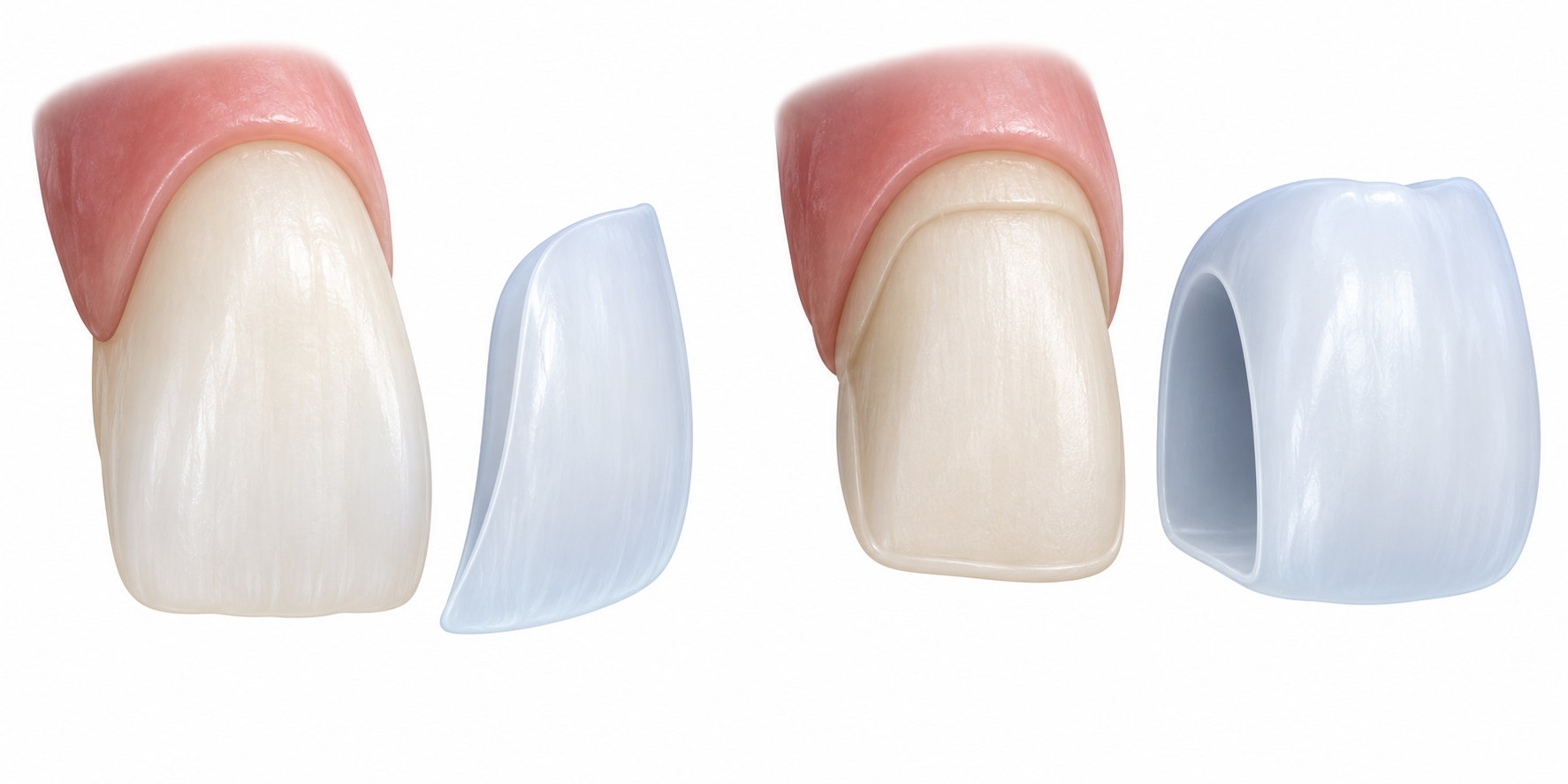
A crown, on the other hand, treats the outside. It is a custom-made cap that covers a weakened tooth, restoring its shape, strength and appearance. A crown does nothing for an infection inside the tooth — it protects what is left on the surface.
Here is the part most people miss: a tooth that has had a root canal is usually more brittle afterwards, because removing the pulp and drilling access to the canals takes away structure. That is precisely why a back tooth that has had a root canal so often needs a crown placed over it. The two are not an either/or choice in those cases — they are a sequence. You treat the inside, then you protect the outside.

When you need a root canal (and what it saves)
A root canal becomes the right answer when the pulp inside a tooth is infected, inflamed or dead, but enough healthy tooth structure remains to be worth keeping. The classic signs we look for are a deep ache that lingers, sensitivity to hot or cold that does not settle, pain when biting, a darkening tooth, or a small gum boil that signals an abscess. Sometimes there is no pain at all and the problem only shows up on an X-ray.
The point of the treatment is preservation. Your own tooth, root and all, stays anchored in the jaw, keeping your bite stable and the neighbouring teeth in place. No replacement — not even a good one — quite matches the natural root you were born with. When the foundations are sound, saving the tooth is almost always the preferred route. Our page on root canal treatment explains the step-by-step process and what recovery feels like in more detail.
We tend to recommend a root canal when:
- The pulp is infected or dying, but the tooth has solid walls and a healthy root
- The surrounding bone and gum are in good shape
- Extraction would leave an awkward gap that affects your bite or smile
- You would rather keep your natural tooth than move straight to a replacement
When you need a crown (and when it follows a root canal)
A crown is about structure. It is the right choice when a large portion of the tooth has gone — through decay, a fracture, a worn-down old filling or a cusp that has snapped off — and a simple filling would not hold up to chewing. The crown wraps the remaining tooth like a helmet, spreading the bite force and shielding it from further damage.
Crowns also do the closing act after a root canal on a back tooth. Once the inside is treated and sealed, the now-hollowed molar or premolar is vulnerable to cracking, and a crown is what keeps it in one piece for the long haul. Front teeth, which take less chewing force, do not always need a crown after a root canal, but molars almost always do. If you are weighing up materials, our comparison of zirconia vs E-Max crowns lays out the strengths of each so you can match the crown to the tooth.
A crown tends to make sense when:
- More than half the tooth is missing or a filling has grown too large to be reliable
- The tooth is cracked or at risk of fracturing under normal biting
- A root canal has been done on a molar or premolar that now needs protecting
- You want to restore the look of a heavily worn or discoloured front tooth
When replacing the tooth is the wiser call
Saving a tooth is the goal, but it is not always the realistic one. When decay or a fracture runs deep below the gum line, when an infection has destroyed too much of the supporting bone, or when a tooth is split vertically through the root, even a skilled root canal and crown cannot give you a result that lasts. Pushing to save a tooth that is genuinely beyond rescue often just delays the inevitable — and costs more along the way.
In those situations a planned tooth extraction followed by a replacement, usually a dental implant or a bridge, is the more honest path. Leaving a gap unfilled is rarely a good idea either, as neighbouring teeth can drift and the bite can shift over time. The decision to replace is never taken lightly, and it always comes after we have looked properly at what we are working with.
Crown, root canal or extraction: a side-by-side view
Here is how the three approaches compare on the points patients ask about most. Treat the figures as a starting point for a conversation, not a verdict — your own tooth always has the final say.
| Factor | Root canal (+ crown) | Crown alone | Extraction & replace |
|---|---|---|---|
| What it treats | Infection inside the tooth | A weakened tooth’s structure | A tooth beyond saving |
| Keeps your natural tooth? | Yes | Yes | No |
| Typical visits | 1–2 (plus crown fitting) | 2 (or same trip with digital) | Extraction, then implant/bridge later |
| Indicative cost (UK) | £500 to £1,500 | £500 to £1,200 | £150 to £400 (extraction) |
| Indicative cost (Antalya) | £150 to £450 | £130 to £350 | £40 to £120 (extraction) |
| Best when | Root is healthy, tooth is restorable | Tooth is intact inside but weak outside | Tooth is split, abscessed or non-restorable |
The figures above are indicative ranges shared for information only and are not a quote or a price guarantee. Costs vary with the tooth involved, the number of canals, the crown material and any replacement that follows. We can only give you an exact cost after a clinical assessment, so please contact the clinic to arrange one.
The deciding factor: how much tooth is left
Strip away the labels and almost every one of these decisions comes down to a single question: how much sound, healthy tooth structure remains, and is the root worth building on? A tooth with a healthy root and good walls is a strong candidate for a root canal and crown. A tooth that is intact inside but cracked or heavily filled may just need a crown. A tooth whose root is fractured or whose foundations have been eaten away by infection is the one we talk to you about replacing.
This is why we are wary of anyone promising a fixed answer before seeing the tooth. We will not tell you a tooth is “definitely savable” over email, and we will not write off a tooth you are attached to without good reason. Dr. Dt. Aykut Onol bases the recommendation on a clinical examination and X-rays that show the root, the bone level and the extent of any infection. Outcomes vary from person to person, which is exactly why the assessment comes first and the plan second.
Cost: why Antalya changes the maths
In the UK, a root canal on a molar followed by a crown can comfortably climb past £1,500, and a crown on its own often sits in the high hundreds to over a thousand pounds. The same care in Antalya generally lands at a fraction of that, and the gap reflects lower clinic running costs rather than lower-grade work. At Morsia Dental we use German and Swiss materials and the same internationally recognised crown systems you would expect at home.
What matters when you compare is that you are comparing like with like. A root canal price that quietly leaves out the crown the molar will need is not the full picture, so we set the whole plan out in writing before you commit. Our pages on dental crown cost and our endodontics in Antalya walk through what is included, so there are no surprises mid-treatment.
Recovery and what to expect afterwards
Modern endodontic treatment is far gentler than its reputation. With proper anaesthetic, a root canal is usually no more uncomfortable than having a filling, and most patients are back to normal eating within a day or two, with any tenderness easing over that window. A crown fitting is even more straightforward — a little numbness while we prepare the tooth, then nothing more than getting used to the new shape.
The longer-term picture is encouraging. A well-treated root canal under a properly fitted crown can serve you for many years, and a crown on a sound tooth does the same. None of this is maintenance-free, though: the saved tooth still needs daily brushing, flossing around the crown margin and regular check-ups. Looking after the gum and bone around a restored tooth is what protects the result over time, just as it would with any natural tooth.
So, save or replace?
If you take one thing from this comparison, let it be that “crown versus root canal” is usually the wrong framing. The real questions are whether the tooth can be saved, and if so, what it needs to last — treatment inside, protection outside, or both. When the root is healthy and enough structure remains, saving the tooth with a root canal and, where needed, a crown is almost always the route we favour. When the tooth is genuinely beyond rescue, a planned extraction and a good replacement is the kinder long-term decision.
The only way to know which camp your tooth falls into is to have it looked at properly. If you are facing this choice, send us a recent X-ray or your dental records and we will give you an honest view of whether the tooth can be saved, with no pressure either way.
Frequently Asked Questions
Is a crown the same as a root canal?
No, they do different jobs. A root canal treats infection inside the tooth by removing the damaged pulp and sealing the canals, while a crown is a cap that covers and strengthens the tooth from the outside. They are often used together rather than as alternatives: a back tooth that has had a root canal usually needs a crown afterwards to protect it from cracking. Which you need depends on what is wrong with the tooth, so an examination is the place to start.
Do I always need a crown after a root canal?
Not always, but often. Molars and premolars take heavy chewing forces and tend to become brittle after a root canal, so a crown is usually recommended to keep them from fracturing. Front teeth take less load and do not always require a crown afterwards. The decision depends on how much tooth structure is left and which tooth is involved, which we confirm during your assessment.
Is it better to save a tooth or have it pulled?
Where it is realistic, saving your natural tooth is usually the preferred option, because nothing replaces a healthy root quite as well. A root canal and crown can keep a damaged tooth working for many years. Extraction becomes the wiser call only when the tooth is split, severely infected or has lost too much supporting bone to be restored reliably. Outcomes vary from person to person, so the right choice is made after examining the tooth.
How much do a root canal and crown cost in Antalya compared with the UK?
As an indicative guide, a root canal and crown in the UK can range from around £500 to over £1,500, while in Antalya the same treatment commonly falls between £150 and £450 depending on the tooth and the crown material. These are information-only ranges, not a quote. We can confirm your exact cost only after a clinical assessment, so please contact the clinic.
Does a root canal hurt?
With proper anaesthetic, a root canal is usually no more uncomfortable than having a filling, and the procedure relieves the pain that the infection was causing. Some tenderness for a day or two afterwards is normal and settles with ordinary care. If you feel anxious about it, let us know in advance so we can make the visit as comfortable as possible for you.
İlgili İçerikler
References
The clinical information in this article was cross-checked against the peer-reviewed publications listed below.
- Mergoni G et al. Single versus multiple visits for endodontic treatment of permanent teeth. Cochrane Database Syst Rev, 2022. PMID: 36512807
- Coll JA et al. A Systematic Review and Meta-Analysis of Nonvital Pulp Therapy for Primary Teeth. Pediatr Dent, 2020. PMID: 32847665
- Del Fabbro M et al. Endodontic procedures for retreatment of periapical lesions. Cochrane Database Syst Rev, 2016. PMID: 27759881
This content is for general information only and does not replace an in-person examination, diagnosis or treatment. Please consult a dentist about your own situation.