
Most patients who ask us about root canal treatment in Turkey arrive with the same worry: “Will it hurt, and is it worth travelling for?” Fair questions. A root canal saves a tooth that would otherwise be lost, and here in Antalya our team carries it out under local anaesthetic using the same German and Swiss-origin materials you would expect anywhere in Europe. The difference patients usually notice first is the price. We will walk you through the whole picture below — what the procedure actually involves, realistic costs, recovery, and whether saving the tooth beats pulling it out.
What Is Root Canal Treatment?
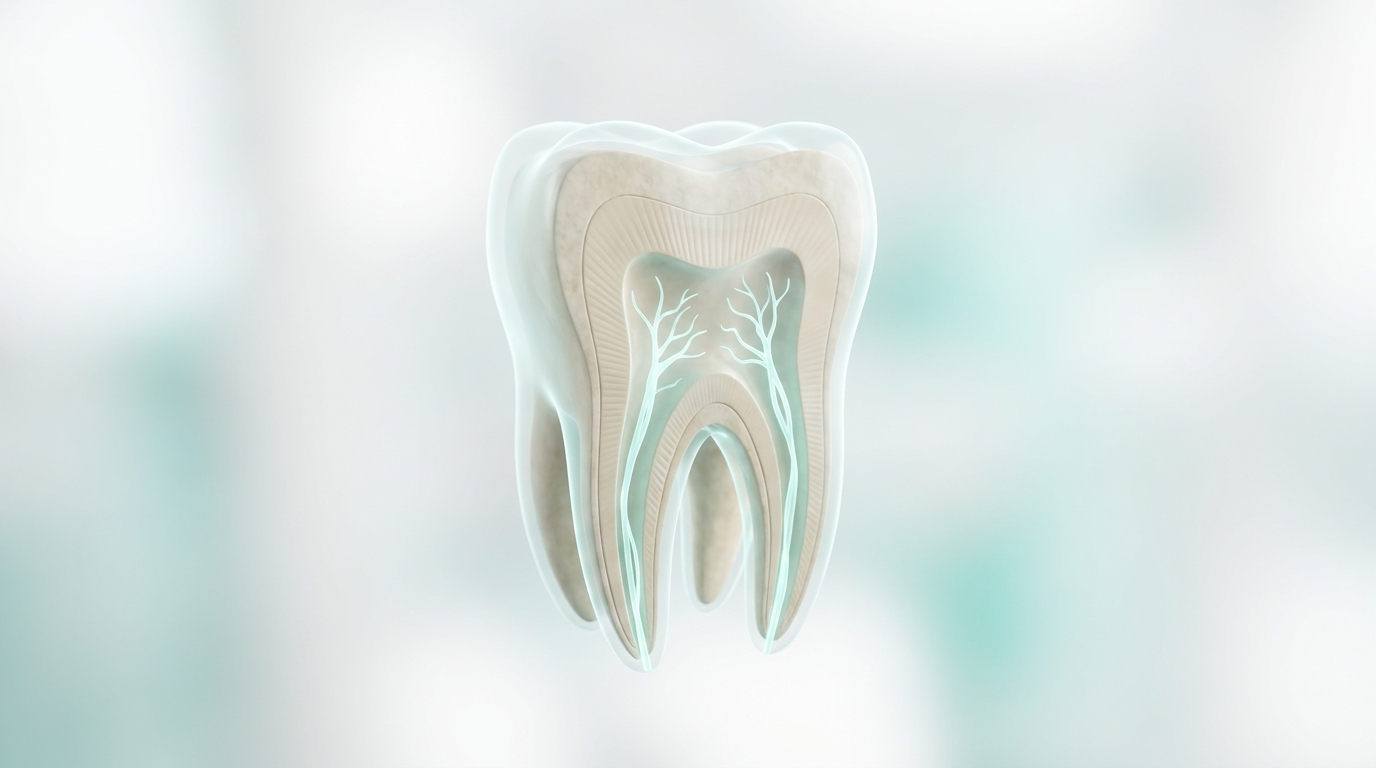
Root canal treatment — endodontics, if you want the technical term — is what we do when the soft tissue inside a tooth, the pulp, becomes inflamed or infected. That pulp holds the nerves and blood vessels. Once it is damaged beyond repair, leaving it alone is not really an option; the infection tends to spread.
So we clean it out. The dentist removes the diseased pulp, disinfects the hollow canals inside the root, then seals them with a rubber-like material called gutta-percha. The tooth stays in place. It keeps doing its job. You just no longer have a living nerve inside it, which is exactly why the pain stops.
It is one of the most routine procedures in dentistry. Millions are done every year. The reputation it has for being dreadful is, honestly, a bit out of date.
When Do You Need a Root Canal?
Not every toothache means a root canal. But certain signs point that way, and ignoring them rarely ends well. Here is what tends to bring patients to us.
Severe Toothache and Sensitivity
A deep, throbbing ache that lingers — especially one that wakes you at night — is a classic warning sign. The same goes for sensitivity to hot and cold that does not settle after the food or drink is gone. If a sip of tea sets off pain that drags on for a minute or more, the nerve may already be inflamed.
Abscess or Infection
When infection reaches the tip of the root, it can form an abscess: a pocket of pus that may show up as a swollen gum, a small “pimple” near the tooth, a bad taste, or facial swelling. This needs prompt attention. An untreated dental abscess is not something to sit on.
Deep Decay Reaching the Pulp
Decay that has been left too long, or a large old filling that has failed, can let bacteria travel all the way down to the pulp. Sometimes a cracked tooth does the same. Once bacteria reach that inner chamber, cleaning the cavity alone will not fix it — the canal itself has to be treated.
Root Canal Procedure — Step by Step
People imagine something far more dramatic than it is. In practice, here is roughly how a session runs at our clinic:
- Examination and X-ray. We take an image to map the shape and number of canals. No two teeth are identical.
- Local anaesthetic. The area is numbed thoroughly before anything begins.
- Isolation. A small protective sheet (a rubber dam) keeps the tooth clean and dry.
- Cleaning and shaping. The infected pulp is removed and the canals are disinfected and gently shaped.
- Filling and sealing. The canals are filled with gutta-percha and sealed.
- Restoration. A filling closes the tooth, and in most cases a crown follows to protect it long term.
For straightforward cases we often complete this in a single visit. More complex molars, with several curved canals, may need two. If you are travelling from the UK or Europe, we plan that timing in advance so your trip is not left to guesswork — our patient coordinator handles the scheduling end to end. You can read more about our root canal treatment in Antalya (pain-free endodontics) on our dedicated treatment page.
Root Canal Cost in Turkey (2026)
This is usually the reason people start researching treatment abroad in the first place. In Turkey the plan for a root canal is set individually after a clinical assessment, because the tooth changes the picture: how many canals it has and whether it has been treated before. A single-rooted front tooth is the straightforward case; a multi-rooted molar needs more chair time, simply because there is more work involved.
Why is it lower than at home? Lower overheads, a strong currency advantage, and the sheer volume of dental work carried out here. The materials, though, are not where clinics cut corners — at least not where we are concerned. We use German and Swiss-origin products throughout.
Prices are for informational purposes only. Contact our clinic for an accurate quote.
Root Canal Cost: Turkey vs UK
Numbers make the gap clearer than any sales pitch could. The table below gives indicative ranges only — your actual figure depends on the tooth and whether a crown is needed afterwards.
| Treatment | Turkey (indicative) | UK (indicative) |
|---|---|---|
| Root canal, front tooth (single canal) | Assessed individually | Assessed individually |
| Root canal, molar (multiple canals) | Assessed individually | Assessed individually |
| Root canal + crown (combined) | Assessed individually | Assessed individually |
Even once you factor in flights and a couple of nights’ stay, the maths often still works in your favour — particularly if more than one tooth needs treating. Many of our patients combine the trip with a short break on the Antalya coast. We also offer all-inclusive treatment packages that fold accommodation and transfers into the process.
Prices are for informational purposes only. Contact our clinic for an accurate quote.
Is Root Canal Treatment Painful?
Here is the honest answer: the procedure itself shouldn’t hurt. The whole point of it is to relieve pain, not cause it. With modern anaesthetic, most patients say it feels much like having a routine filling.
The discomfort people remember is usually the toothache before treatment — the infection talking, not the dentist. Afterwards, some tenderness for a day or two is normal as things settle. That is easily managed with over-the-counter pain relief in most cases. Individual experiences vary, and your dentist will assess your situation before treatment.
Root Canal Recovery — What to Expect
Recovery is generally quick. Most people return to normal activities the same day or the next. A few sensible habits help the first few days go smoothly:
- Stick to softer foods while any tenderness lasts.
- Chew on the other side until the tooth is fully restored — ideally crowned.
- Keep up gentle brushing and flossing as usual.
- Take any prescribed or recommended pain relief as directed.
If you are flying home soon after, plan a little buffer — an extra day or two on the coast is wise, so any follow-up check can happen before you leave. Should anything feel off once you are back home, we stay reachable; remote follow-up is part of how we look after travelling patients.
Root Canal vs Tooth Extraction — Which Is Better?
It is tempting to think pulling the tooth is the simpler route. Sometimes it genuinely is the right call. But removing a tooth leaves a gap, and that gap rarely stays harmless — neighbouring teeth can drift, and bone in the area can shrink over time.
As a general rule, keeping your own tooth is preferable where the tooth is restorable. A root canal lets you do exactly that. If the tooth is too badly damaged to save, then replacement comes into the picture, and dental implants if the tooth must be extracted are usually the gold-standard option. The right choice depends on a proper examination — there is no one-size-fits-all answer here.
Do You Need a Crown After Root Canal?
In most cases, yes — particularly for back teeth that do the heavy lifting when you chew. A tooth that has had its pulp removed can become more brittle over time, and a crown protects it from fracturing. Front teeth sometimes manage with a filling alone, but molars almost always benefit from full coverage.
We typically plan a dental crown after the root canal as part of the same treatment course, so the tooth is properly sealed and reinforced before you head home. It is the step that gives the work its longevity.
Frequently Asked Questions
How much does a root canal cost in Turkey?
The plan for a root canal in Turkey is set individually after a clinical assessment. What changes it is the tooth itself: how many canals it has, whether a crown or an additional procedure is needed afterwards, and how many sessions the treatment takes. For an assessment specific to your tooth, contact our clinic.
Is root canal treatment painful?
The procedure is carried out under local anaesthetic and most patients compare it to having a routine filling. It is designed to relieve the pain caused by infection. Mild tenderness for a day or two afterwards is normal and usually eased with simple pain relief. Individual experiences vary.
How long does a root canal take?
Many root canals are completed in a single appointment of around 60–90 minutes. More complex molars with several canals may need two visits. For patients travelling from abroad, we plan the timing in advance so it fits comfortably within your trip.
Do I need a crown after root canal treatment?
In most cases a crown is recommended, especially for back teeth, because a treated tooth can become more brittle over time and a crown protects it from fracturing. Some front teeth may be restored with a filling instead. Your dentist will advise after assessing the tooth.
Is it better to have a root canal or extract the tooth?
Where the tooth is restorable, keeping your natural tooth with a root canal is generally preferable, as extraction leaves a gap that can cause neighbouring teeth to shift and bone to shrink. If the tooth cannot be saved, an implant is usually the recommended replacement. A proper examination determines the best option for you.
References
The clinical information in this article was cross-checked against the peer-reviewed publications listed below.
- Duncan HF et al. Present status and future directions-Vital pulp treatment and pulp preservation strategies. Int Endod J, 2022. PMID: 35080024
- Boutsioukis C et al. Present status and future directions – irrigants and irrigation methods. Int Endod J, 2022. PMID: 35338652
- Patel S et al. External cervical resorption: a three-dimensional classification. Int Endod J, 2018. PMID: 28746776
This content is for general information only and does not replace an in-person examination, diagnosis or treatment. Please consult a dentist about your own situation.
What Determines the Cost of Root Canal Treatment in Turkey?
There is no single fixed figure for this treatment. The final plan — and therefore the cost — is shaped by the clinical findings recorded during examination. The factors below are the ones that make the biggest difference:
| Factor | Why it changes the cost |
|---|---|
| Scope of treatment | How many teeth or regions are included in the plan |
| Technique and materials | The clinical method chosen and the materials it requires |
| Diagnostic imaging | Examination, radiographs and digital planning steps |
| Preliminary treatments | Any procedure that must be completed before the main treatment |
| Number of sessions | How many appointments the plan is spread across |
| Laboratory work | Whether custom laboratory production is involved |
| Follow-up care | Review appointments included after treatment |
Your treatment plan is prepared individually after a clinical examination; the applicable figure is shared with you at that stage.