
Last updated: 1 September 2026
If you have a chipped front tooth, a small gap that bothers you in photos, or an edge that has worn unevenly over the years, you have probably come across composite bonding while searching for a fix. It is one of the most common questions we field at Morsia Dental in Antalya — usually from people who want their smile tidied up without filing down healthy teeth or spending a fortune. Bonding is the gentlest, most reversible option on the cosmetic menu, and for the right case it does a quietly brilliant job. This guide walks through what it actually is, the procedure step by step, what it costs here against UK prices, how long it lasts and who it genuinely suits.
What Is Composite Bonding?
Composite bonding is a treatment where a tooth-coloured resin — the same family of material used for white fillings — is applied directly to your tooth, shaped by hand, then hardened with a curing light and polished to blend in. There is no laboratory, no porcelain and, in most cases, no drilling. The dentist sculpts the resin onto the tooth in layers to rebuild a chipped edge, close a small gap or refine a shape, all in a single visit.
The thing that sets bonding apart from porcelain work is how little it touches your natural tooth. Because the resin bonds to the enamel surface, we rarely need to remove any tooth structure at all. That makes it the most conservative cosmetic route we offer, and it is why patients who feel uneasy about “getting their teeth shaved down” often relax once we explain the difference. It is also, for the most part, reversible — an important point we will come back to.

Why Choose Antalya for Composite Bonding?
Antalya has become one of Europe’s busiest dental destinations, and bonding fits a trip here particularly well because it is quick. Many cases are finished in a single appointment, which leaves the rest of your stay for the coast rather than the clinic. Direct flights from most UK and European airports, established practices and a genuine holiday backdrop all help, but the headline reason people travel is cost — the gap between UK and Antalya pricing on cosmetic dentistry is hard to ignore.
At Morsia Dental, Dr. Dt. Aykut Onol has spent more than fifteen years refining smiles, and over that time we have treated patients from twenty-three countries. Bonding may look simple, but a good result lives or dies on the dentist’s eye — the way the resin is layered, shaded and polished is what separates a repair you forget about from one you notice every time you look in the mirror. We work with German- and Swiss-sourced materials, and the artistry behind the resin is exactly where the experience shows.
Composite Bonding Cost: Antalya vs the UK
Let us be direct about money, since it is usually what brings people to this page. In the UK, composite bonding commonly runs from around £150 to £350 per tooth, and edge-bonding or a fuller front-teeth case climbs from there. In Antalya, the same treatment typically falls in the region of £60 to £120 per tooth, depending on how much resin work each tooth needs and the overall design of your case.
For a single chip the difference is modest. But most people who travel are treating several front teeth at once — six, eight or ten — and that is where the maths starts to matter. Here is how it tends to compare in practice:
| What you’re pricing | Typical UK range (per tooth) | Typical Antalya range (per tooth) |
|---|---|---|
| Single composite bond (one tooth) | £150 to £350 | £60 to £120 |
| 4-tooth front edge bonding | £600 to £1,400 | £240 to £480 |
| 6-tooth smile | £900 to £2,100 | £360 to £720 |
| 8-tooth smile | £1,200 to £2,800 | £480 to £960 |
A word of caution that applies anywhere: the lowest quote is rarely the smart choice. The quality of the resin, the layering technique and the polish all sit inside that figure, and they decide whether your bonding still looks good in three years or has gone dull and chipped. Even after flights and a few nights’ stay, a multi-tooth case still works out comfortably in Antalya’s favour — but value, not the lowest number, is what we would urge you to weigh.
Prices are for informational purposes only. The figures above are indicative ranges, not a quote; your exact cost depends on a clinical assessment of your teeth, the number of teeth involved and the materials chosen. Contact our clinic for an accurate quote tailored to you.
The Composite Bonding Procedure at Morsia Dental
One of the reasons patients like bonding is that it is calm and quick — no temporaries, no waiting on a laboratory, usually no anaesthetic. Here is how a typical case runs with us:
- Online consultation. You send clear photos of your teeth and tell us what you would like to change. We give an initial opinion, flag anything that needs attention first and provide a planning estimate before you book a flight.
- In-clinic assessment. On arrival, Dr. Dt. Aykut Onol examines your teeth and gums and confirms that bonding is the right tool for what you want — sometimes a different route serves you better, and we will say so.
- Shade selection. We match the resin to your natural teeth, or to the lighter shade you are aiming for, so the result blends rather than stands out.
- Preparation and application. The tooth surface is lightly cleaned and conditioned so the resin grips. The composite is then built up in layers and sculpted by hand directly on the tooth.
- Curing and shaping. Each layer is set with a curing light. Once the shape is right, we refine the contours and check it against your bite.
- Polishing. A final polish gives the bonding a natural sheen and a smooth surface that resists staining and feels like your own enamel.
For a single tooth, you are often in and out within an hour. A fuller front-teeth case may take a longer appointment or be split across two short visits, but bonding rarely eats into your trip the way porcelain treatments can.
Composite Bonding vs Veneers: Which Is Right for You?
This is the comparison we are asked about most, so it deserves a clear answer. Bonding and veneers solve overlapping problems but in very different ways, and neither is simply “better.”
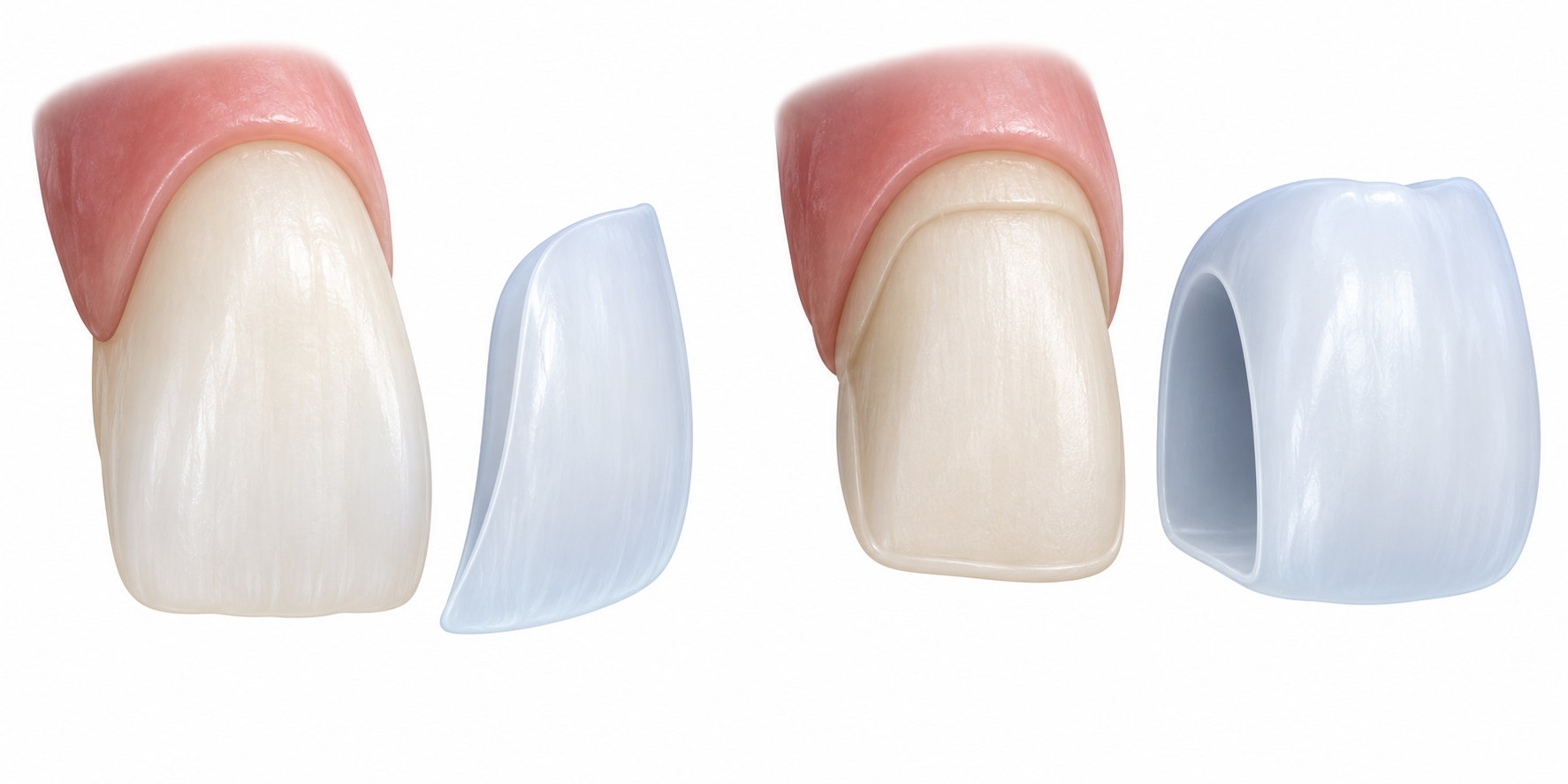
Composite bonding is faster, cheaper, usually requires no tooth reduction and can be repaired or removed — but the resin is softer than porcelain, can stain over time and typically lasts a handful of years rather than a decade. Porcelain restorations are the opposite trade: more involved, more expensive, longer-lasting and more stain-resistant, with a translucency that catches the light beautifully. If you are weighing a permanent ceramic result, our guide to porcelain veneers lays out the full picture, and for an enamel-preserving middle ground it is worth reading about ultra-thin no-prep Lumineers.
| Factor | Composite bonding | Porcelain veneers |
|---|---|---|
| Tooth preparation | Minimal to none | Conservative enamel reshaping |
| Time | Usually one visit | Several days (lab fabrication) |
| Reversibility | Largely reversible | Permanent |
| Typical lifespan | 4 to 8 years | 10 to 15+ years |
| Stain resistance | Moderate | High |
| Relative cost | Lower | Higher |
A useful way to think about it: bonding is the sensible starting point when the changes are small and you value keeping your options open. Veneers make more sense when you want a long-term result across a fuller smile. Many patients begin with bonding and move to porcelain later — and because bonding is conservative, that door stays open.
Who Is Composite Bonding Right For?
In our experience, bonding does its best work on cosmetic concerns that are real but modest. It suits:
- Small chips or worn edges on otherwise healthy front teeth.
- Minor gaps between teeth where orthodontics would be overkill.
- Slightly misshapen or short teeth that throw off the symmetry of a smile.
- Surface marks or small discolouration on individual teeth.
- Patients who want a reversible, lower-commitment option before considering anything permanent.
It is not the answer for everything, and we would rather be honest about that. Heavy staining across the whole smile is often handled better with teeth whitening first, since bonding cannot lighten your natural teeth. Significant crowding or a bite problem usually needs orthodontics. Badly broken-down teeth may be better served by a crown. And if you grind your teeth at night, bonding can chip more easily, so we will talk about protecting it. For anyone picturing a complete transformation rather than a few tidy-ups, it is worth reading how a smile makeover sequences several treatments into one plan.
If you want a fully removable change with no work on the teeth at all — say, to test a brighter, more even look before committing — there is also a snap-on smile, which clips over your existing teeth. The right choice genuinely depends on your mouth, which is why a proper assessment matters more than any web page.
How Long Does Composite Bonding Last?
With good care, composite bonding commonly lasts between four and eight years before it needs a touch-up or replacement. That is shorter than porcelain, and it is the honest trade-off for a treatment that is quicker, cheaper and kinder to your teeth. The resin can pick up stain over time and the edges may wear, but the upside is that bonding is straightforward to repair or refresh — we can add to it, repolish it or redo it without the upheaval of a porcelain restoration.
How long yours lasts depends a great deal on you: where the bonding sits, how you eat, whether you grind and how well you keep up your hygiene. Outcomes vary from person to person, so treat that four-to-eight-year window as a guide rather than a promise.
Caring for Your Composite Bonding
Bonding is low-maintenance, but a sensible routine keeps it looking its best for longer:
- Brush twice a day and floss daily, paying attention to the margins where bonding meets tooth.
- Go easy on staining habits — coffee, red wine, dark tea and smoking dull resin faster than porcelain.
- Avoid using your front teeth as tools; biting nails, opening packaging and crunching ice are how bonding chips.
- Keep your regular check-ups and hygiene appointments so any wear is caught early.
- Wear a nightguard if you clench or grind in your sleep.
Conclusion
Composite bonding is one of the most accessible ways to improve a smile — quick, conservative, reversible and far gentler on the wallet than porcelain — and Antalya makes it more affordable still without cutting corners on the artistry that a good result needs. It will not suit every case, and it does not last as long as ceramic, but for chips, small gaps and minor reshaping it is often the smartest first move. If you would like an honest read on whether bonding is right for your teeth, or whether whitening or a more permanent route would serve you better, our team in Antalya is glad to review your case and lay out the options plainly. Because results vary from person to person, the right next step is always a consultation rather than a commitment.
Frequently Asked Questions
How much does composite bonding cost in Antalya?
Composite bonding in Antalya typically ranges from about £60 to £120 per tooth, compared with roughly £150 to £350 per tooth in the UK. The exact figure depends on how much resin work each tooth needs, the number of teeth and the overall design of your case, and can only be confirmed after a clinical assessment.
How long does composite bonding last?
With good care, composite bonding commonly lasts between four and eight years before it needs a touch-up or replacement. The resin is softer than porcelain and can stain or wear over time, but it is straightforward to repair or refresh. How long yours lasts depends on where it sits, your habits and your oral hygiene, so outcomes vary from person to person.
Is composite bonding better than veneers?
Neither is simply better — they suit different goals. Bonding is faster, cheaper, conservative and largely reversible, but lasts a handful of years. Porcelain veneers are more involved and more expensive, yet last longer and resist staining better. Bonding is a sensible starting point for small changes, while veneers make more sense for a long-term result across a fuller smile.
Does composite bonding damage your teeth?
In most cases no, which is one of its main advantages. The resin bonds to the enamel surface and usually no tooth structure is removed, so the treatment is conservative and largely reversible. Because the natural tooth is preserved, you keep your options open for other treatments later if you wish.
Can composite bonding fix a gap between front teeth?
Yes, bonding is a common and effective way to close small gaps between front teeth, since the resin can be sculpted to widen the teeth slightly and meet in the middle. For larger gaps or noticeable crowding, orthodontics may be the better route, which is something we can advise on after examining your teeth.
İlgili İçerikler
References
The clinical information in this article was cross-checked against the peer-reviewed publications listed below.
- Cadenaro M et al. Progress in Dental Adhesive Materials. J Dent Res, 2023. PMID: 36694473
- Ferracane JL et al. Resin composite–state of the art. Dent Mater, 2011. PMID: 21093034
- Opdam NJ et al. Longevity of posterior composite restorations: a systematic review and meta-analysis. J Dent Res, 2014. PMID: 25048250
This content is for general information only and does not replace an in-person examination, diagnosis or treatment. Please consult a dentist about your own situation.