Last updated: 14 September 2026
Losing a single tooth feels like a small problem until you start reading about how to replace it. Suddenly there are implants, bridges, abutments, crowns and a wall of conflicting advice, and the gap in your smile starts to feel like a much bigger decision than it should. At Morsia Dental in Antalya we have this conversation almost every week, usually with someone who has been quoted an eye-watering figure at home and wants to understand whether an implant or a bridge is the sensible choice for one missing tooth. The short answer is that both can work beautifully — but they solve the problem in very different ways, and the right one depends on you.
This guide is written for exactly that situation: one tooth gone, and a choice to make. We will walk through how a single implant and a bridge actually differ, what each does to the teeth and bone around the gap, how the costs compare between the UK and Antalya, and the honest trade-offs that Dr. Dt. Aykut Onol and our team weigh up with patients from the 23 countries we treat. By the end you should know which questions to ask, even if the final call only comes after an examination.
One missing tooth, two proven ways to fill it
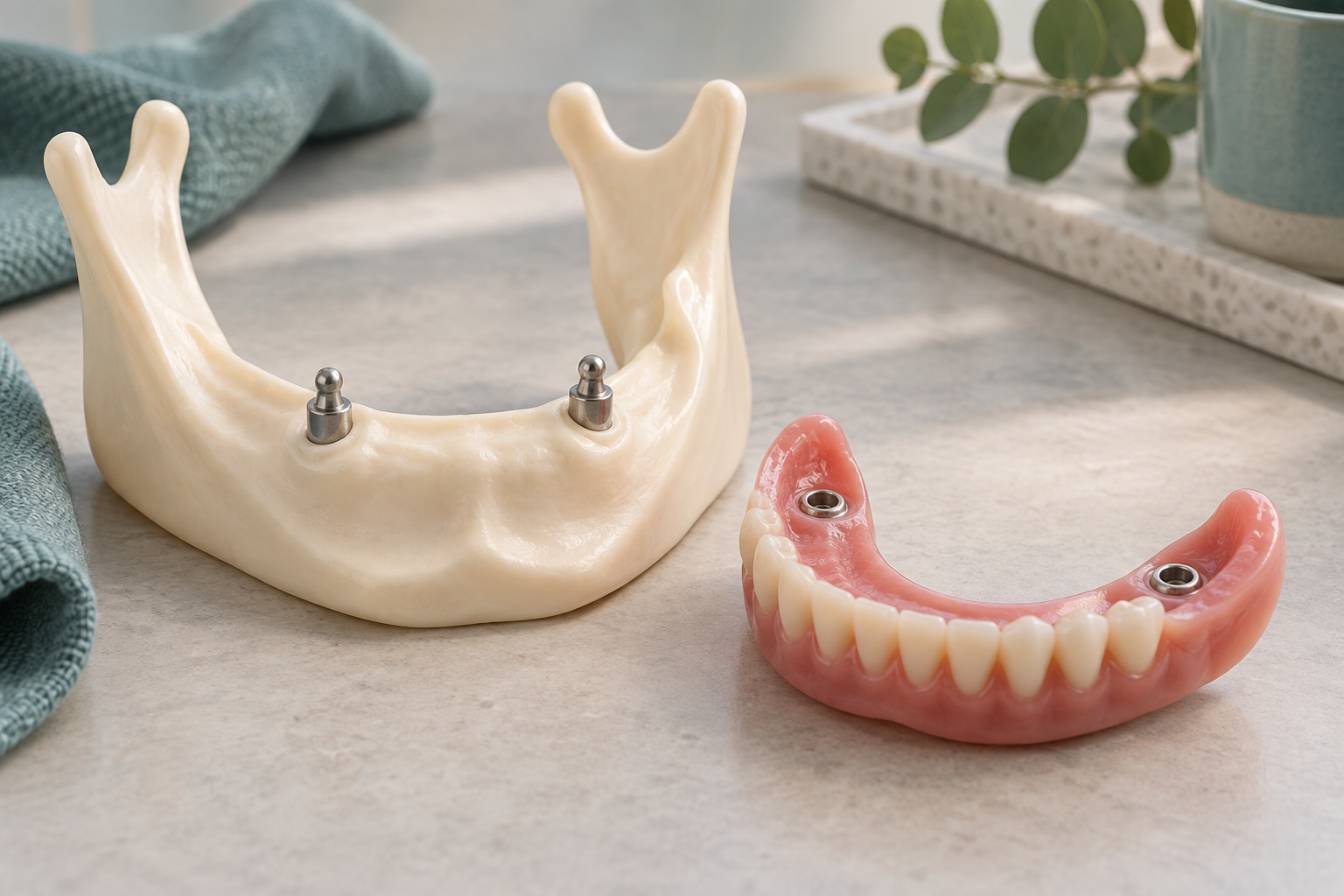
A single dental implant replaces the whole tooth, root and all. We place a small titanium post into the jawbone where the root used to be, let it fuse with the bone over a few months, then fit a single crown on top. Nothing touches the neighbouring teeth. It stands on its own, like the tooth it replaces.
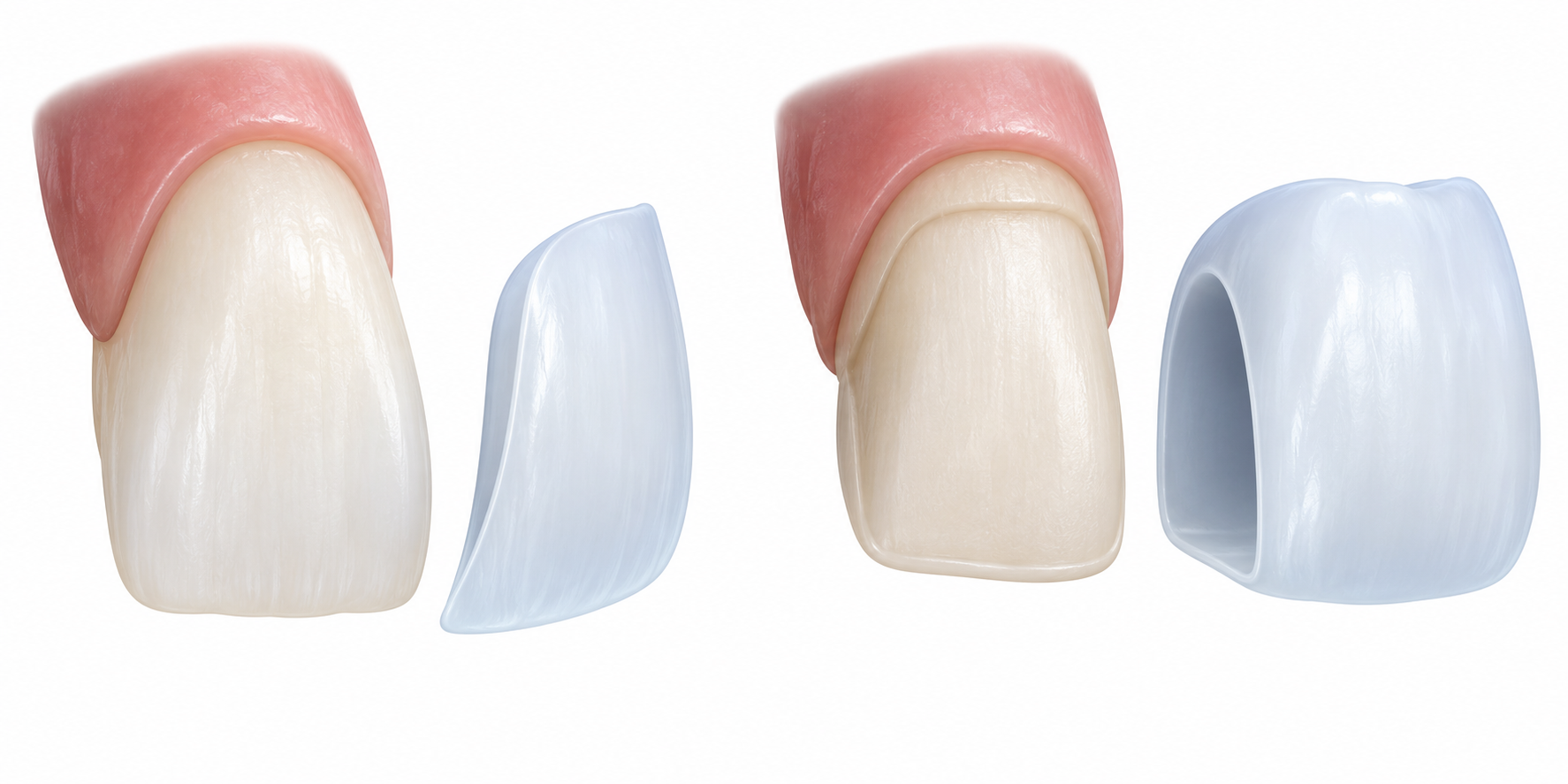
A bridge takes a different route. Instead of going into the bone, it borrows support from the two teeth on either side of the gap. Those teeth are reshaped and capped with crowns, and a false tooth — the pontic — is suspended between them, bridging the space. It sits on top of the gum rather than in the jaw, and it leans on its neighbours to do the work.
That single structural difference — standing alone in the bone versus leaning on the teeth beside it — is what drives almost everything else: the cost, the longevity, what happens to your jawbone, and how much healthy tooth has to be altered. Hold on to that picture as we go through the rest.
How a single tooth implant works
The implant route is a staged process rather than a single appointment, and that is by design — the bone needs time. After an assessment and a 3D scan, we place the titanium post into the jaw under local anaesthetic. Over the following months the bone grows around it in a process called osseointegration, which is what gives an implant its strength. Once it has fused, we attach an abutment and then the crown on top, colour-matched to your own teeth.
For dental-tourism patients this usually means two trips: one to place the implant, and a second, a few months later, to fit the permanent crown. We can often provide a temporary solution in between so you are never left with a visible gap. The big advantage is independence — your healthy neighbouring teeth are left completely untouched, and the implant stimulates the jawbone in a way nothing else does. If you want the full picture on the procedure and what drives the price, our guide to dental implants in Turkey goes into the materials and stages in detail.
How a dental bridge works
A bridge is faster, and for some people that simplicity is exactly the appeal. There is no surgery and no waiting for bone to heal. We prepare the two anchor teeth, take impressions, and within a short trip the laboratory crafts a single connected unit that we cement into place. The gap is closed in a matter of days rather than months.
The catch is what it asks of the teeth either side. To carry a bridge, those neighbours have to be filed down and crowned, even if they were perfectly healthy to begin with. That is a permanent change, and once a tooth is prepared for a bridge it will always need a crown of some kind. A bridge is a strong, well-established option — you can read more about how we approach a dental bridge and the materials we use — but it is worth going in clear-eyed about the trade-off it involves.
Implant vs bridge: a side-by-side comparison
Here is how the two options stack up on the points patients ask about most. Treat the figures as a starting point for a conversation, not a verdict — your own mouth always has the final say.
| Factor | Single dental implant | Dental bridge |
|---|---|---|
| Affects neighbouring teeth? | No – they stay untouched | Yes – both are filed down and crowned |
| Protects the jawbone? | Yes – stimulates bone like a natural root | No – bone under the gap can shrink over time |
| Typical timeline | 2 trips over a few months (healing) | 1 short trip, no healing wait |
| Typical lifespan | Often many years, frequently decades | Commonly around 10–15 years |
| Indicative cost (UK) | £2,000 to £3,000 | £700 to £2,500 |
| Indicative cost (Antalya) | £500 to £900 | £300 to £700 |
| Best when | Neighbours are healthy; bone is sufficient | Neighbours already need crowns; bone is thin; faster route preferred |
The figures above are indicative ranges shared for information only and are not a quote or a price guarantee. Costs vary with the implant or bridge system, the crown material, whether any bone grafting is needed and the condition of the surrounding teeth. We can only give you an exact cost after a clinical assessment, so please contact the clinic to arrange one.
The jawbone question most people overlook
If there is one factor that swings many of our patients towards an implant, it is what happens to the bone beneath the gap. A natural tooth root keeps the jawbone stimulated and dense; when the tooth goes, the bone underneath gradually begins to resorb — to shrink away — because nothing is signalling it to stay. An implant takes over that job, transmitting the pressure of chewing into the bone much as the original root did. A bridge cannot do this. It rests above the gum, so the bone in the gap is left without that stimulus and may slowly recede over the years.
This does not make a bridge a bad choice — plenty of people wear one happily for well over a decade — but it does explain why we talk about implants as the more conservative long-term option for a single missing tooth in many cases. It preserves what is there rather than relying on the teeth and tissue around it. That said, it only works if there is enough bone to anchor the post in the first place, which is why the decision is never made on cost alone.
Cost: why Antalya changes the maths
In the UK, replacing a single tooth with an implant comfortably runs into a few thousand pounds, and even a conventional bridge often lands in four figures. The same treatments in Antalya typically sit at a fraction of those prices — not because corners are cut, but because the cost of running a clinic here is far lower than in central London or Manchester. At Morsia Dental we work with German and Swiss implant systems and recognised crown materials, so you are comparing like with like rather than trading quality for price.
When you compare quotes, make sure they cover the whole job. An implant price that quietly leaves out the abutment and crown is not the full figure, and a bridge price should state how many units it includes. We set the complete plan out in writing before you commit, so there are no surprises mid-treatment. There are plenty of implant clinics in Antalya, and the sensible advice is the same wherever you look: ask exactly what is included, what materials are used, and what the aftercare arrangement is.
So which one is right for you?
There is no single answer that fits everyone, but a few patterns hold true. An implant tends to be the better fit when the teeth either side of the gap are healthy and you would rather not have them touched, when you have enough jawbone to support a post, and when you are thinking about the long term. A bridge often makes sense when the neighbouring teeth already need crowns anyway, when there is not enough bone for an implant without grafting, or when you simply want the gap closed quickly without surgery.
We tend to lean towards an implant when:
- The teeth on either side of the gap are sound and untouched
- There is adequate bone, or grafting is a realistic option
- You want to protect the jawbone and keep your neighbours intact
- You are comfortable with a staged process over a few months
And a bridge can be the wiser call when:
- The adjacent teeth are already damaged or need crowning regardless
- The bone in the gap is too thin for an implant without extra surgery
- You would prefer a single short trip with no healing period
- An implant is not suitable for medical reasons
Cost matters too, of course, and for many of our overseas patients the difference between UK and Antalya pricing is what makes treatment possible at all. But we would never recommend choosing the cheaper option on price alone — the better question is which one suits your bone, your neighbouring teeth and the result you want to last. If you are weighing this up locally, our page on dental bridges in Antalya covers the bridge side in more depth.
What to expect with us
Whichever route you take, the starting point is the same: a proper look at the gap and what surrounds it. Dr. Dt. Aykut Onol bases the recommendation on a clinical examination and a 3D scan that show the bone level, the health of the neighbouring teeth and the position of the nerve. From there we set out the options, the timeline and the full cost in writing, and you decide with the facts in front of you rather than under pressure.
Outcomes vary from person to person, and recovery, healing time and the final look all depend on your individual situation — which is precisely why the assessment comes first and the plan second. If you are facing a single missing tooth and going back and forth between an implant and a bridge, send us a recent X-ray or your dental records and we will give you an honest view of which is likely to suit you, with no obligation either way.
Frequently Asked Questions
Is a single implant better than a bridge for one missing tooth?
For many people an implant is the more conservative long-term choice, because it replaces the tooth on its own without filing down the healthy teeth either side, and it helps preserve the jawbone where the tooth was lost. A bridge is faster and avoids surgery, but it relies on crowning the neighbouring teeth. Which is better depends on the health of those teeth, how much bone you have and your priorities, so the right answer comes from an examination rather than a rule of thumb.
How much does a single dental implant cost in Antalya compared with the UK?
As an indicative guide, a single implant with its crown in the UK often ranges from around £2,000 to £3,000, while in Antalya the same treatment commonly falls between £500 and £900 depending on the system and crown material. A bridge typically costs less than an implant in both places. These are information-only ranges, not a quote. We can confirm your exact cost only after a clinical assessment, so please contact the clinic.
Will replacing one tooth with a bridge harm the teeth next to it?
A bridge does not harm healthy teeth as such, but it does require them to be permanently reshaped and crowned to act as anchors, even if they had nothing wrong with them. Once prepared this way, those teeth will always need a crown. If the neighbouring teeth are already damaged or due for crowns, this is less of a drawback. If they are perfectly healthy, an implant lets you leave them untouched, which is something we discuss with you during the assessment.
How long does a single tooth implant take from start to finish?
For most patients the implant is placed first, then the bone is given a few months to fuse around it before the permanent crown is fitted, which usually means two trips to Antalya. We can often provide a temporary solution in between so you are not left with a visible gap. A bridge, by contrast, can often be completed in a single short trip because there is no healing wait. The exact timeline depends on your bone and healing, which we confirm after examining you.
What happens to my jawbone if I leave the gap or choose a bridge?
When a tooth is lost, the bone that used to support its root gradually shrinks because nothing is stimulating it any more. Leaving the gap unfilled allows this to continue and can let neighbouring teeth drift. A bridge closes the gap visually but sits above the gum, so it does not stop the bone beneath from receding over time. An implant is the option that takes over the root’s job and helps keep the bone stimulated, which is why we often raise it for a single missing tooth.
İlgili İçerikler
References
The clinical information in this article was cross-checked against the peer-reviewed publications listed below.
- Poggio CE et al. Metal-free materials for fixed prosthodontic restorations. Cochrane Database Syst Rev, 2017. PMID: 29261853
- Scheuber S et al. Implants versus short-span fixed bridges: survival, complications, patients' benefits. A systematic review on economic aspects. Clin Oral Implants Res, 2012. PMID: 23062127
- Goodacre CJ et al. Single implant and crown versus fixed partial denture: A cost-benefit, patient-centred analysis. Eur J Oral Implantol, 2016. PMID: 27314112
This content is for general information only and does not replace an in-person examination, diagnosis or treatment. Please consult a dentist about your own situation.