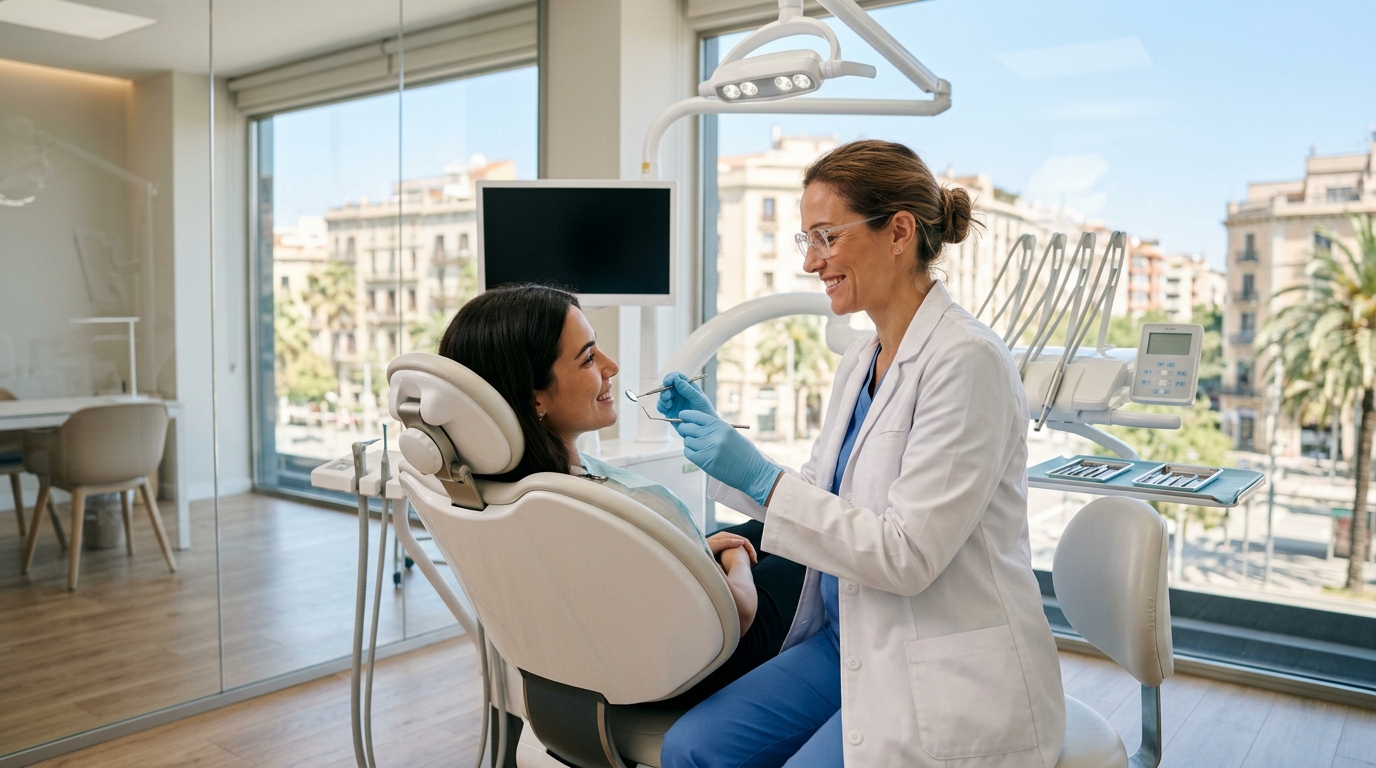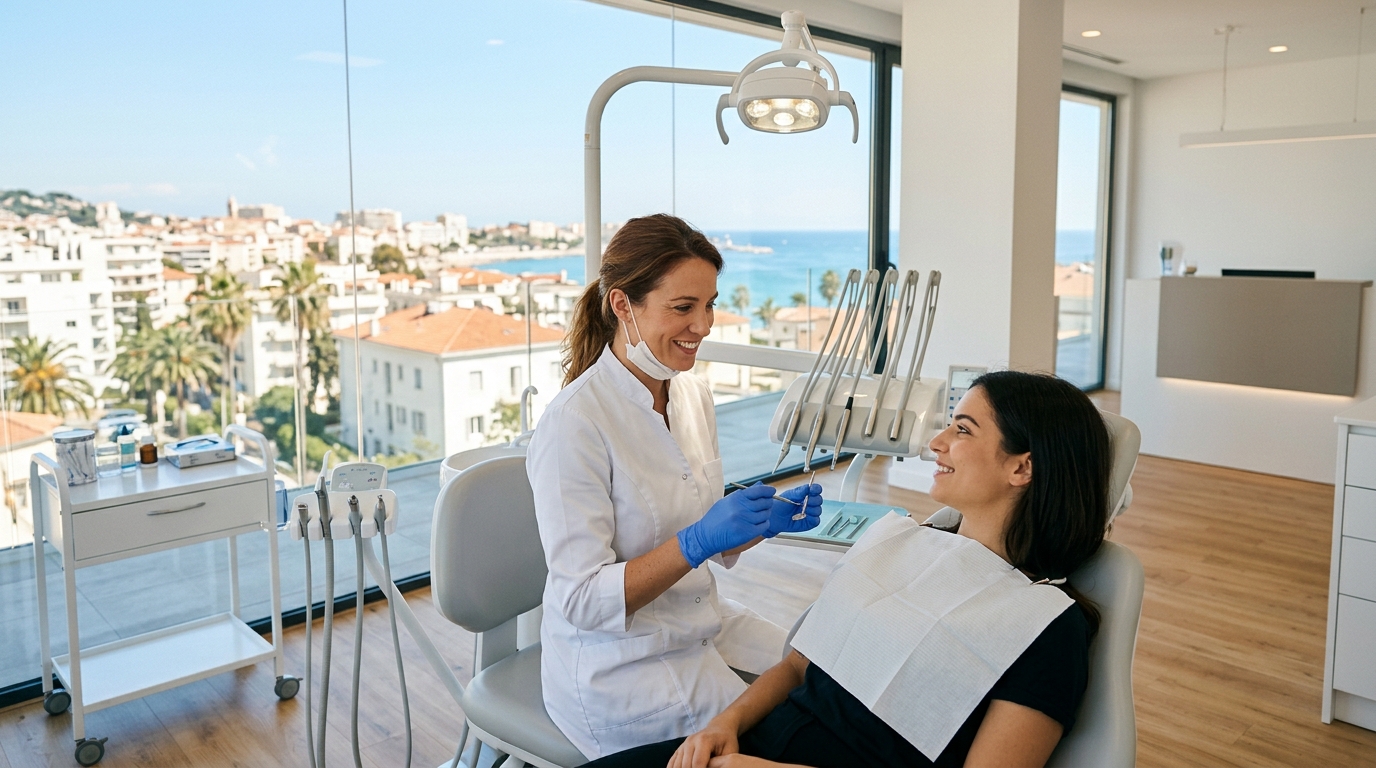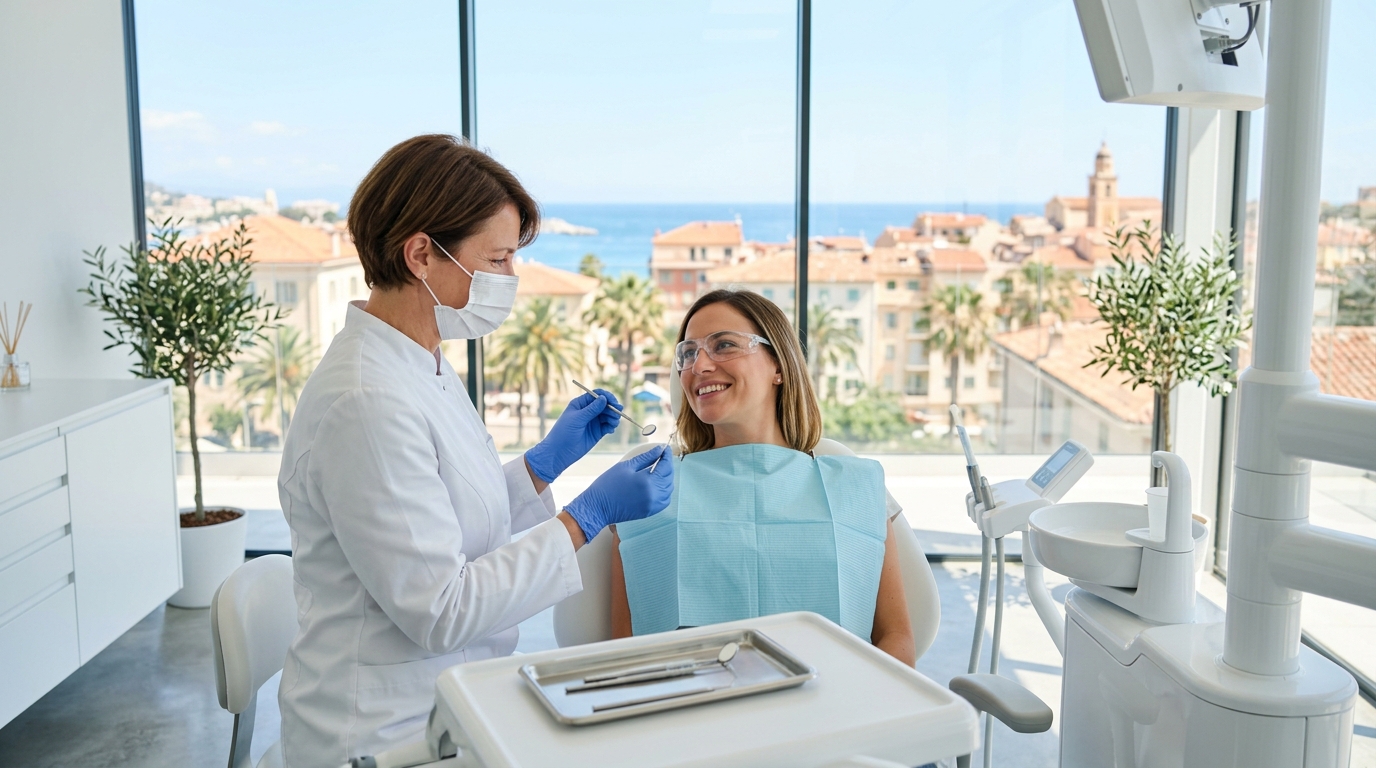

All-on-6 dental implants replace a full arch of missing teeth with a fixed bridge supported by six titanium implants, and most patients leave the clinic with temporary fixed teeth on the same day the implants are placed.
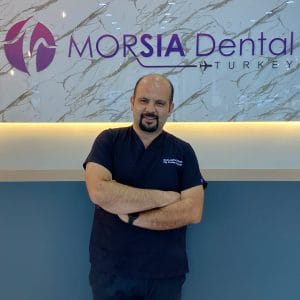
All-on-6 dental implants suit people who have lost most or all of their teeth in one jaw and have sufficient bone to support six posts rather than four. At Morsia Dental in Antalya, every case is planned by Dr. Dt. Aykut Önol using a 3D scan before any surgical decision is made.
What Are All-on-6 Dental Implants?
All-on-6 is a full-arch treatment in which six implants are placed into the jawbone and a single fixed bridge is secured onto them. The bridge is not removable — you clean it in your mouth, just as you would natural teeth. It replaces every tooth in that jaw at once, upper, lower or both.
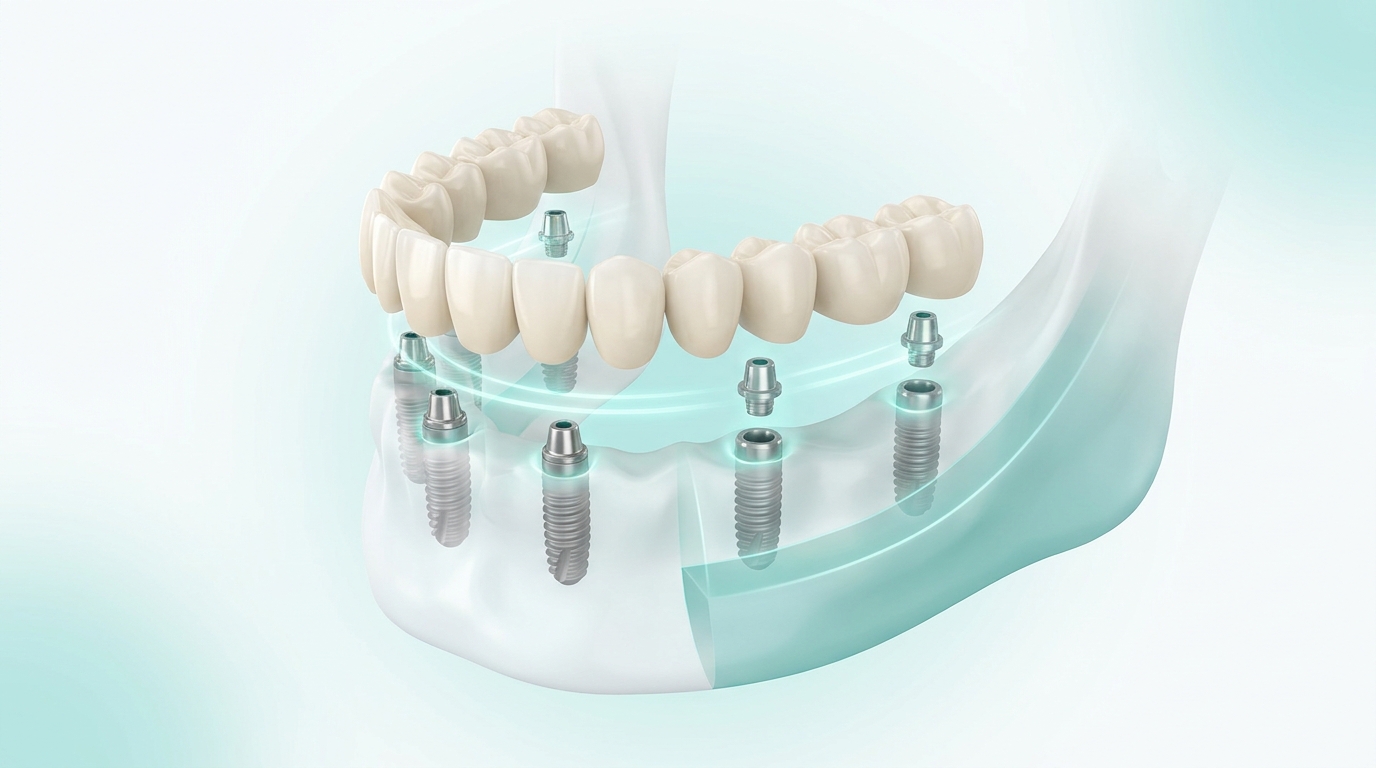
The name describes the number, not the brand. Some clinics call the same approach a fixed full-arch restoration or a screw-retained bridge. What matters clinically is how many implants support the load and where they sit in the bone.
Why six implants instead of four
Six implants spread chewing forces across more anchor points, which lowers the load each individual implant carries. That extra distribution matters most in the upper jaw, where bone tends to be softer than the lower jaw, and for patients with a strong bite or a history of grinding.
The trade-off is bone. Six implants need more available bone volume than four, and they need it in more positions along the arch. If the back of your jaw has resorbed after years without teeth, four angled implants may fit where six upright ones will not.
How the fixed bridge is supported
The bridge screws directly onto abutments seated on the implants, so there is no palate coverage in the upper jaw and no adhesive anywhere. Your tongue reaches the roof of your mouth normally, which is the main change patients moving from a full denture notice first.
Because the bridge is screw-retained rather than cemented, it can be removed by the dentist for maintenance and refitted. That matters over a fifteen-year horizon much more than it seems on day one.
All-on-4 vs All-on-6: Which One Is Right for You?
The honest answer is that your bone decides, not your preference. All-on-4 uses two straight front implants and two angled back implants to work around bone loss; All-on-6 adds two more posts for a broader spread of support, and needs the bone to accommodate them.
Both give you a fixed, non-removable arch. Both are placed under local anaesthetic with sedation if you want it. The difference shows up in load distribution and in what happens if one implant ever fails — with six, the remaining five can often support the bridge while the site heals.
| All-on-4 | All-on-6 | |
|---|---|---|
| Implants per jaw | 4 | 6 |
| Bone requirement | Lower — angled implants avoid resorbed areas | Higher — needs volume in more positions |
| Bite force handling | Good for average bite | Better for strong bite and bruxism |
| Grafting needed? | Often avoidable | Sometimes required at the back |
| If one implant fails | Bridge usually needs support restored first | Remaining five often carry the bridge |
| Typically suits | Advanced bone loss, single-trip preference | Adequate bone, upper jaw, heavy chewers |
A more detailed side-by-side comparison, including how the two options behave over ten years, sits in our dedicated guide to All-on-4 vs All-on-6.
Who Is a Good Candidate for All-on-6?
You are likely to be a candidate if you have lost most teeth in a jaw, your gums are free of active infection, and a CBCT scan shows enough bone height and width in six implant positions. General health matters as much as dental health — controlled diabetes, stable blood pressure and no recent radiotherapy to the jaw are the usual criteria.
Age by itself rules nobody out. We have treated patients in their late seventies whose bone quality was better than that of patients twenty years younger. What we assess is the scan, the medical history and the gum tissue, in that order.
Bone volume and density
Bone is the determining factor, and it is measured rather than estimated — the CBCT scan gives height, width and density at every planned implant site. Resorption after tooth loss is fastest in the first year, so how long you have been without teeth matters more than how many you lost.
Density varies by jaw. The lower jaw is denser and generally more forgiving; the upper jaw, especially at the back near the sinus, is softer and often the reason a plan shifts from six implants to four.
Who is NOT a candidate?
All-on-6 is not appropriate for patients with untreated periodontal infection, uncontrolled diabetes, active heavy smoking during the healing window, or insufficient bone that cannot be corrected by grafting. Some of these are lasting exclusions. Most are not.
Smoking is the one most people underestimate. It measurably reduces implant survival by limiting blood flow to healing bone, and we ask patients to stop before surgery and stay stopped through osseointegration. Patients who cannot are usually better served by a different plan.
Six-point suitability check — if you can answer yes to all six, All-on-6 is likely on the table:
- Most or all teeth in one jaw are absent, failing or unrestorable
- No active gum infection, or it has first been treated
- CBCT shows adequate bone in six sites, or grafting can create it
- Any systemic condition (diabetes, blood pressure) is well controlled
- You are not smoking during the healing period
- You can commit to making two visits to Antalya across several months
Do You Need a Bone Graft or Sinus Lift?
Broadly, the position of the back implants decides this, and in the upper jaw that means the sinus. When the floor of the sinus has dropped into the space left by missing molars, there is not enough vertical bone for a standard implant, and a sinus lift raises that floor to create it.
A lift introduces healing time before the implants can be loaded — usually several months — which is why it changes the shape of the whole treatment plan rather than just adding a step. Where grafting would delay treatment significantly, All-on-4 with angled implants often achieves the same fixed-bridge result without it.
We describe the graft and sinus procedures in detail on our sinus lift and bone grafting page. Whether you need one is a scan question, and it is addressed before you book flights, not after you arrive.
The All-on-6 Procedure Step by Step
The treatment takes place over two visits to Antalya separated by a healing period, with the surgical day itself taking most of a morning. Here is what actually happens at each stage, and what you feel during it.
Consultation, CBCT and digital planning
It all starts with the scan. A CBCT gives a three-dimensional view of bone height, width and density, and the implant positions are planned on that scan before anyone uses an instrument. You see the plan before you agree to it.
Extractions and implant placement
If failing teeth are present, they come out in the same session as the implants go in. Six implants are inserted under local anaesthetic, with sedation available for patients who want it. Most people report pressure rather than pain.
Temporary fixed bridge
A temporary fixed bridge is fitted, usually the same day or the next morning. It is fixed, not removable, and it allows you to leave with teeth — but it is acrylic and provisional, made to protect the site while bone integrates, not to last.
Healing and osseointegration
Bone grows onto the implant surface over the coming months, securing each post in place. This is the part nobody can accelerate. You go home, eat softly at first, and return when the implants are ready to carry a permanent load.
Final zirconia bridge
On the second visit the permanent bridge is fitted, checked against your bite and screwed into place. Zirconia is the common choice for its strength and colour stability; the alternative materials are covered further down.
| Stage | What happens | Time | How it feels |
|---|---|---|---|
| Consultation & CBCT | 3D scan, planning, treatment agreement | 1–2 hours | No discomfort |
| Extractions & surgery | Remaining teeth out, six implants placed | 2–4 hours | Numb; pressure, not pain |
| Temporary bridge | Fixed provisional teeth fitted | Same day or next morning | Tight, unfamiliar for a day |
| Healing at home | Osseointegration; soft diet easing back to normal | 3–6 months | Settled within 1–2 weeks |
| Final bridge | Permanent zirconia bridge fitted and adjusted | 3–5 days, second visit | Comfortable; bite settles in days |
How Many Days in Antalya, and How Many Trips?
Plan for two trips: around six to eight days for surgery and the temporary bridge, then three to five days several months later for the permanent one. Single-trip treatment exists, but it means fitting a permanent bridge before bone has fully integrated, and we do not recommend it for a six-implant arch.
Flights matter more than many expect. We ask patients not to fly on the day of surgery — one night in Antalya after the procedure lets us check the site before you travel.
| Visit | Length | What is done | Gap before next |
|---|---|---|---|
| First | 6–8 days | Scan, extractions, six implants, temporary fixed bridge, review | 3–6 months |
| Second | 3–5 days | Impressions, try-in, final zirconia bridge, bite adjustment | — |
All-on-6 Cost in Turkey Compared With the UK
The gap between Turkish and UK pricing stems from operating costs rather than component quality — the same implant brands and the same laboratory materials are available in both countries. What differs is overhead, laboratory labour and clinic economics.
We do not publish per-arch figures, because an accurate number depends on your scan. Two patients with the same missing teeth can need different implant counts, different grafting and different bridge materials, and quoting before the CBCT would be guesswork.
What is included in the package?
A package should itemise every element in writing before you pay a deposit, and anything missing from that list is an extra. Ask specifically about the items below — they are where quotes most often diverge.
- Number of implants and the implant brand
- Temporary bridge, and whether it is fixed or removable
- Final bridge material (zirconia, acrylic hybrid, alternative)
- CBCT scan, extractions and any grafting
- Airport transfers, accommodation and number of nights
- Follow-up appointments and what occurs on the second visit
- Aftercare arrangement once you return home
What changes the price?
Four variables affect the figure more than anything else: implant brand, bridge material, whether grafting is needed, and how many arches you treat. Treating both jaws in one plan costs less per arch than treating them separately, because the surgical and laboratory work overlaps.
| Item | Effect on cost | Why |
|---|---|---|
| Implant brand | Significant | Premium systems carry longer clinical records and wider component availability |
| Bridge material | Significant | Zirconia costs more than acrylic hybrid and lasts longer |
| Bone graft / sinus lift | Moderate | Adds surgical time, materials and healing months |
| One arch vs both | Moderate per arch | Shared surgical and laboratory work |
| Number of nights | Minor | Accommodation and transfers |
Morsia Dental provides a written, itemised quote after the CBCT scan and case review. It is specific to your jaw, and it lists what is included rather than what is suggested.
Recovery and Healing Timeline
Swelling peaks around day two or three and then subsides, and most patients are comfortable on ordinary painkillers within the first week. The longer part of recovery is invisible: bone integrating around six implants over three to six months.
What you do in the first fortnight matters particularly. Keeping the site clean, sleeping slightly elevated for the first few nights, and staying off hard food protect the work while it settles.
Eating: liquids to normal diet
Diet moves through three stages — liquids for the first two days, soft food for several weeks, then gradually back to normal once the permanent bridge is fitted. The temporary bridge is not designed for hard chewing, and treating it as though it were is the most common cause of an unplanned repair.
When can you fly home?
Most patients fly home two to three days after surgery, once the site has been checked and swelling has started to settle. We schedule that review before your departure rather than afterwards, so anything unexpected is caught while you are still in Antalya.
How Long Do All-on-6 Implants Last?
Implants themselves routinely last well beyond a decade when they integrate successfully and are kept clean, while the bridge on top is the component more likely to need attention first. That distinction matters: replacing a bridge is straightforward, while replacing an implant is not.
Published survival figures for full-arch implant restorations remain high, but they describe populations, not individuals. Smoking, uncontrolled diabetes, bruxism and poor hygiene move a personal outcome away from the average faster than anything a clinic controls.
Cleaning under a fixed bridge
Cleaning happens underneath the bridge, not just around it, and this is where most long-term issues begin. A water flosser used daily along the gum line, plus interdental brushes threaded under the bridge, does more for implant survival than any other habit.
The bridge is unscrewed and professionally cleaned during review appointments. That is the point of a screw-retained design, and it is why we recommend it over cemented alternatives for full arches.
What shortens implant life
Four things account for most failures: smoking, unmanaged grinding, untreated gum inflammation around the implants, and missing maintenance visits. A night guard solves the second cheaply, and it is worth asking for one if you know you clench.
Problems and Complications
Complications are uncommon but not unusual, and knowing what they look like is what lets you act early. Every surgical treatment carries risk; the useful question is what happens next when something goes wrong, not whether it ever does.
Implant failure: how often?
Early failure — an implant that does not integrate — shows up within the first months and is usually detected at a review before it causes symptoms. It is treated by removing the implant, letting the site heal and replacing it, and with six implants the bridge can often remain supported meanwhile.
Prosthesis fracture and repair
Chipping affects acrylic temporaries more often than zirconia finals, and it is a repair rather than a redo. Report a chip promptly — a small fracture left alone changes how the bite loads the remaining structure.
What if something goes wrong after you fly home?
Contact the clinic first, before any local intervention, because a dentist unfamiliar with the system may not have the matching components. Morsia Dental keeps your implant system, component sizes and case notes on file and coordinates directly with a local dentist where hands-on care is needed.
Individual outcomes vary, and nothing on this page is a guarantee of a specific result. What we can commit to is a documented plan and a clear route back to us if you need it.
All-on-6 Before and After
Before-and-after images show what changed for one patient with one set of conditions, and they are useful only when read that way. Bone volume, gum position, lip line and the shape of the opposing arch all influence a result, and no two cases share them.
Every image in our gallery is published with the patient’s written consent. Results shown are individual and are not a promise of the same outcome in another case — the closest thing to a prediction is your own scan assessed by a clinician.
Patient Reviews and Experiences
Reviews are most useful for the parts of treatment a clinical page cannot describe: how the coordination felt, whether the plan matched what was quoted, what the follow-up was like. On the clinical side, weigh the scan above the testimonial.
Patient accounts of treatment at our Antalya clinic, including full-arch cases, are collected on our Morsia Dental reviews page.
Why Morsia Dental in Antalya
Full-arch work is planned and performed at our Antalya clinic by Dr. Dt. Aykut Önol, with the CBCT scan, surgical planning and bridge design handled as one case rather than a sequence of appointments. Treatment coordination is in English throughout.
Antalya adds a practical advantage that has nothing to do with dentistry: direct flights from most UK and European airports, and a short transfer from the airport to the clinic. For a treatment that requires two visits several months apart, ease of travelling back matters.
Frequently Asked Questions
How much do All-on-6 implants cost in Turkey?
Cost depends on your CBCT scan, the implant brand, the final bridge material and whether grafting is needed, so we quote in writing after the scan rather than publishing a figure. The quote lists every included element.
Is All-on-6 better than All-on-4?
Neither is universally better — six implants distribute bite force across more anchor points, four work around bone loss where six would not fit. Your scan determines which is appropriate.
Do I need a bone graft for All-on-6?
Some patients do, particularly in the upper jaw where the sinus has dropped into the space left by missing molars. The CBCT confirms this before you travel.
How long does All-on-6 treatment take?
Two visits over three to six months: six to eight days for surgery and temporary teeth, then three to five days for the permanent bridge once bone has integrated.
Do I get fixed teeth the same day?
Yes — a fixed temporary bridge is fitted the same day or the next morning. It is provisional and made of acrylic; the permanent zirconia bridge comes on your second visit.
How long do All-on-6 implants last?
Well-integrated implants routinely last beyond a decade with good hygiene and regular check-ups, while the bridge is the part more likely to need replacing first. Smoking and untreated grinding shorten both.
Is the surgery painful?
The procedure is performed under local anaesthetic, with sedation available, and most patients report pressure rather than discomfort. Swelling peaks around day two or three and settles within the first week.
How do I clean under the bridge?
Daily water flossing along the gum line plus interdental brushes threaded beneath the brid
References
The clinical information in this article was cross-checked against the peer-reviewed publications listed below.
- Berzaghi A et al. Occlusion and Biomechanical Risk Factors in Implant-Supported Full-Arch Fixed Dental Prostheses-Narrative Review. J Pers Med, 2025. PMID: 39997342
- Messias A et al. Different Interventions for Rehabilitation of the Edentulous Maxilla with Implant-Supported Prostheses: An Overview of Systematic Reviews. Int J Prosthodont, 2021. PMID: 33571327
- Chan MH et al. All-on-4 Concept Update. Dent Clin North Am, 2021. PMID: 33213711
This content is for general information only and does not replace an in-person examination, diagnosis or treatment. Please consult a dentist about your own situation.
ge. The bridge is also unscrewed and professionally cleaned at review appointments.
What if an implant fails later?
The implant is removed, the site is allowed to heal and a replacement is inserted. With six implants, the remaining five can often continue supporting the bridge while that happens.
How many days should I stay in Antalya?
Six to eight days for the first visit and three to five for the second. We ask patients not to fly on the day of surgery, so plan at least one night following the procedure.
Book a Consultation
Send us a panoramic X-ray or CBCT scan if you have one, along with a note on which teeth are missing and how long they have been gone. Dr. Dt. Aykut Önol reviews every case personally and returns with a written plan, the implant count your bone actually supports, and an itemised quote.
What Determines the Cost of All-on-6 Dental Implants Turkey?
There is no single fixed figure for this treatment. The final plan — and therefore the cost — is shaped by the clinical findings recorded during examination. The factors below are the ones that make the biggest difference:
| Factor | Why it changes the cost |
|---|---|
| Implant system | Surface technology and the volume of long-term clinical data behind the brand |
| Number of implants | Whether a single tooth, a bridge or a full arch is being restored |
| Bone condition | Whether grafting or a sinus lift is required before placement |
| Crown or prosthesis material | Zirconia, E-max, acrylic or metal-supported restorations differ in laboratory work |
| Planning and imaging | 3D CBCT imaging, digital planning and whether a surgical guide is produced |
| Additional procedures | Extraction, gum treatment or a temporary prosthesis during healing |
| Follow-up and warranty terms | Number of review appointments and the manufacturer warranty conditions |
Your treatment plan is prepared individually after a clinical examination; the applicable figure is shared with you at that stage.