
Last updated: 8 September 2026
It is the question we are asked more than almost any other at Morsia Dental: “If I have this done, how many years will it actually last?” It is the right question, too — you are about to invest in something that should serve you for a long time, so you deserve an honest answer rather than a marketing line. The short version: a dental implant is designed to be a permanent solution, and in practice the titanium post itself frequently lasts a lifetime. The crown on top is a different story, and that is where the nuance lives. Below we lay out realistic lifespans, what genuinely affects them, the success rates the research supports, and the handful of habits that decide whether your implant gives you fifteen years or thirty.
The Honest Answer: Two Parts, Two Lifespans
A dental implant is not one thing — it is three: the implant (the titanium screw placed in the jawbone), the abutment (the connector), and the crown, bridge or denture that sits on top. People tend to ask about “the implant” as a single object, but the parts wear at very different rates, and conflating them is where confusion starts.
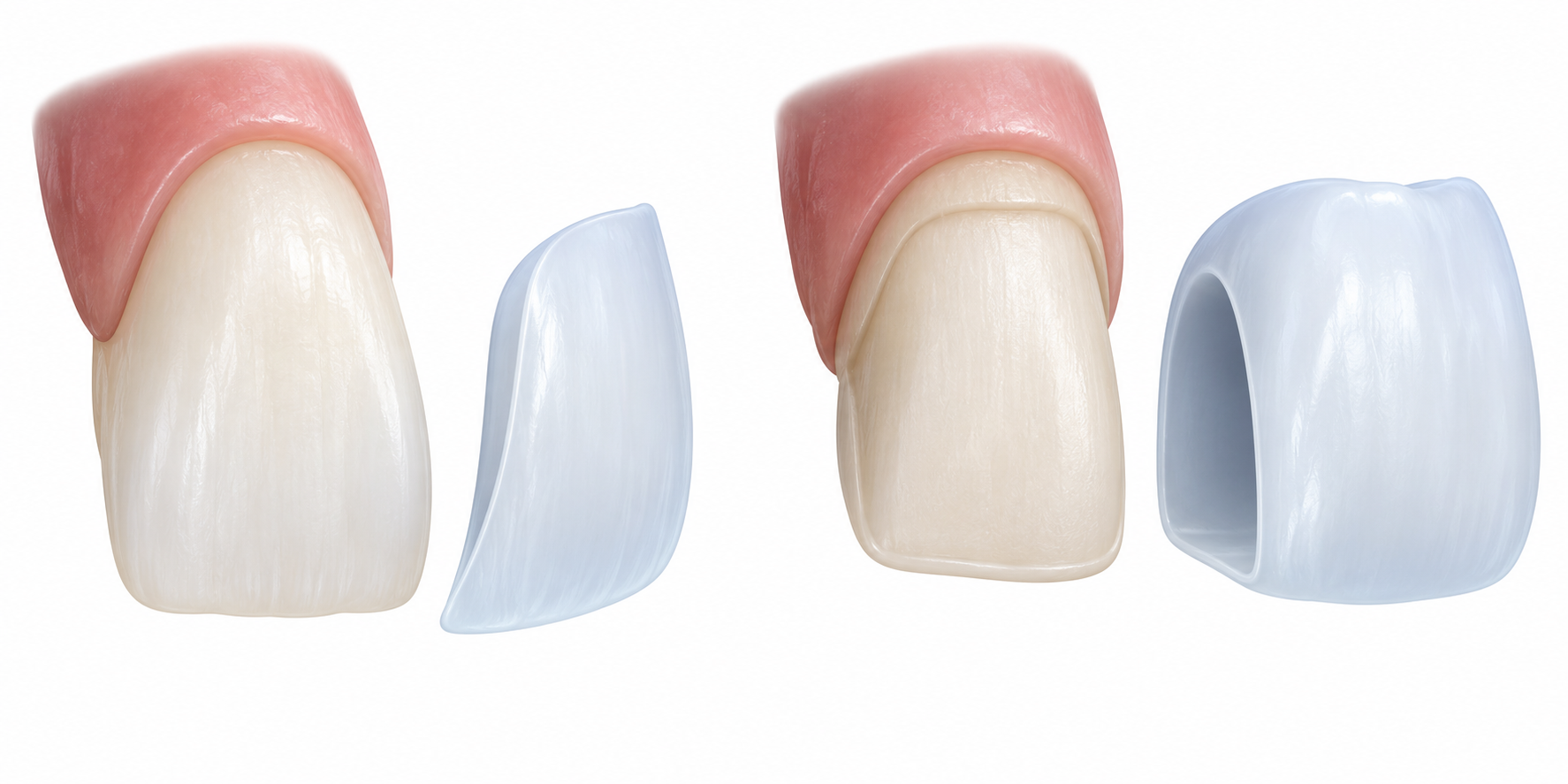
The implant post is the durable part. Once it has fused with your jawbone — a process called osseointegration — it behaves like a natural tooth root and, with good care, can last twenty-five years to a lifetime. The crown on top is the part that takes the daily punishment of chewing, and that typically lasts ten to fifteen years before it may need replacing through normal wear. Importantly, replacing a worn crown does not mean replacing the implant; the post stays put and only the visible restoration is renewed.
| Component | What it is | Typical lifespan |
|---|---|---|
| Implant post (titanium) | The screw fused into the jawbone | 25 years to a lifetime |
| Abutment (connector) | Links post to crown | 15 years or more |
| Crown / restoration | The visible tooth surface | 10 to 15 years |
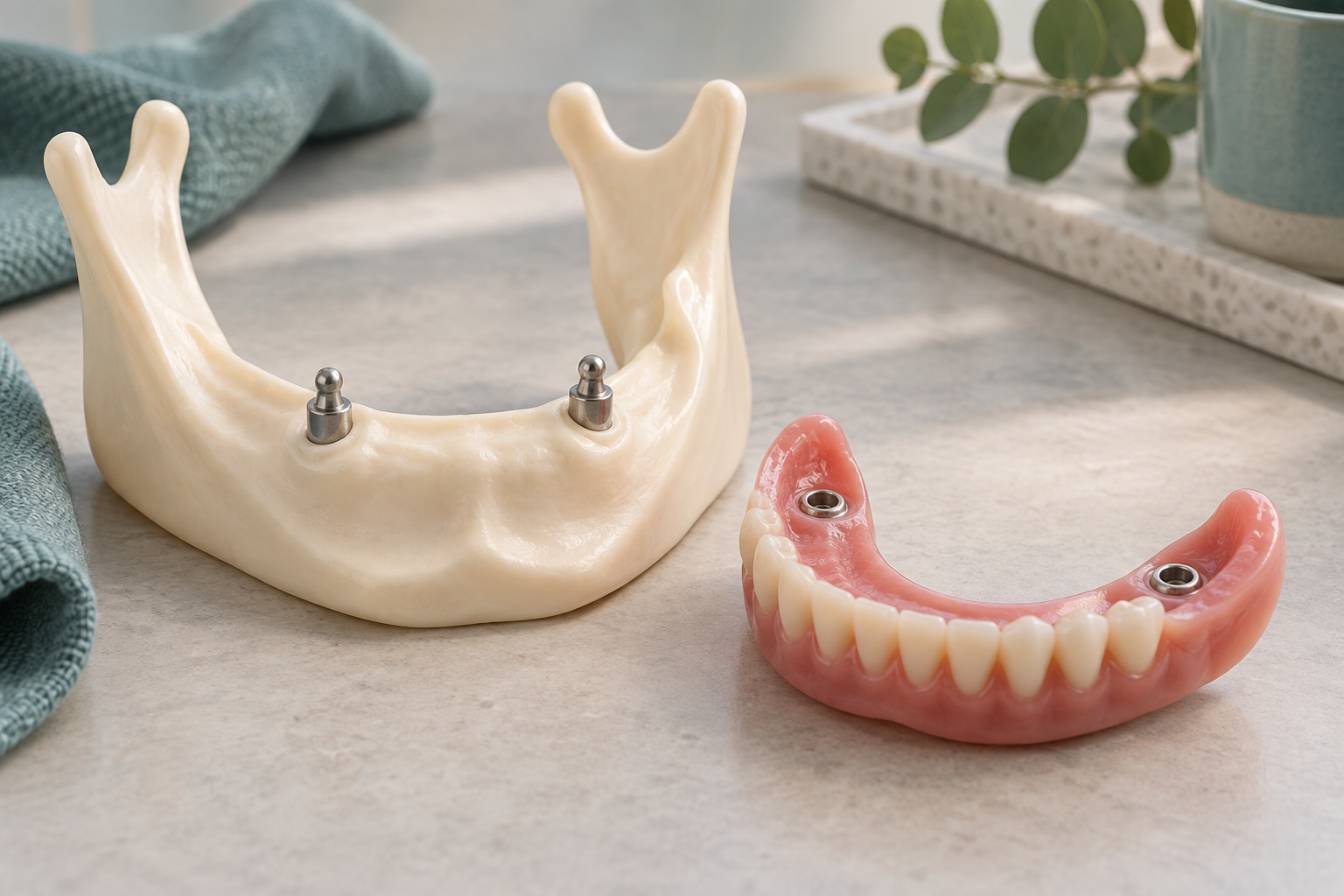
| Implant-supported denture | Full-arch fixed bridge or denture | 10 to 20 years (restoration), post lasts longer |
So when someone says their implant “lasted twenty years,” what they usually mean is that the post is still solid and they swapped a crown along the way — which is exactly how the system is meant to work.
What the Success Rates Actually Show
Dental implants are one of the most studied procedures in modern dentistry, and the numbers are genuinely reassuring. Long-term studies put ten-year survival rates for well-placed implants at roughly 90 to 95 per cent. That figure has held up across decades of research, which is part of why implants have become the standard of care for replacing missing teeth rather than an experimental option.
We want to be careful with that statistic, though. A 90 to 95 per cent survival rate is an average across large populations — it is not a promise about your individual mouth, and any clinic that frames it as a guarantee is overstepping. Your own outcome depends on your bone, your health, your habits and the standard of the work. What the data does tell you is that a properly planned implant, looked after well, has a strong chance of lasting decades — a reasonable expectation to walk in with.
What Affects How Long an Implant Lasts
This is the part worth slowing down on, because the lifespan of your implant is far more in your hands than most people realise. Over fifteen years of placing implants, Dr. Dt. Aykut Onol and our team have seen the same factors decide outcomes again and again. They fall into a few clear groups.
Oral hygiene and gum health
This is the single biggest factor you control. Implants cannot decay, but the gum and bone around them absolutely can become inflamed — a condition called peri-implantitis, which is essentially gum disease around an implant. Left unchecked, it eats away at the bone holding the implant and is the most common reason an otherwise sound implant eventually fails. Daily brushing, flossing or interdental cleaning around the implant, and regular hygiene visits are not optional extras; they are the difference between fifteen years and thirty.
Smoking
We say this to every patient who smokes, gently but plainly: smoking is the habit most strongly linked to implant failure. It restricts blood flow to the gums, slows healing during the critical osseointegration phase and raises the risk of infection. It does not make implants impossible — many smokers have successful implants — but it measurably lowers the odds, and cutting down or quitting around the treatment window genuinely improves them.
Bite forces and grinding
If you clench or grind your teeth at night (bruxism), you are loading your implant crown with forces it was not designed to absorb constantly. That can wear or fracture the crown faster and, in severe cases, stress the implant itself. A simple custom nightguard protects your investment, and it is one of the most cost-effective pieces of insurance in dentistry.
General health and bone quality
Conditions such as uncontrolled diabetes, osteoporosis, and some medications affect how well bone heals around an implant. Good bone volume at the start matters too — if there is not enough, a bone graft or sinus lift may be planned first so the implant has a solid foundation. None of these are automatic disqualifiers; they are simply reasons a proper assessment beats a quick quote.
The skill behind the placement
Finally, the implant is only ever as good as the planning, the materials and the hands placing it. Correct positioning, the right implant system and a well-fitted crown all influence longevity. At our clinic we work with established German- and Swiss-sourced implant systems and plan each case with digital imaging, because shortcuts at this stage are the ones that show up years later. This is also why the lowest online price is rarely the bargain it looks like — you can read more about how the cost is built up in our guide to dental implants in Turkey.
Do Different Implant Treatments Last Differently?
The underlying biology is the same whether you are replacing one tooth or a full arch, but the restoration on top varies, and that affects how the lifespan plays out in practice.
- Single implant: One post, one crown — the most straightforward case. The post can last a lifetime; expect the crown to be reviewed around the ten-to-fifteen-year mark.
- Implant bridge: A few implants supporting several teeth. Excellent longevity, with the bridge component following similar crown timelines.
- Full-arch solutions: Treatments such as All-on-4 implants rebuild an entire jaw on a small number of strategically placed posts. The implants are built to last for decades; the fixed bridge they carry is typically reviewed or refreshed over a ten-to-twenty-year horizon.
- Same-day implants: With same-day implants, a temporary tooth is fitted quickly while the implant heals beneath it, then a permanent crown follows. The speed is in the temporary restoration — the long-term lifespan of the final result is the same as any well-placed implant.
If you want a sense of how these treatments hold up for real people over time, our collection of patient reviews is a more grounded read than any statistic, because it is patients describing how their implants have settled into everyday life.
What an Implant Costs — and Why Longevity Changes the Maths
Lifespan and value are tied together, so a quick word on cost. In the UK, a single dental implant with its crown commonly runs from around £2,000 to £2,500, and full-arch treatments climb well into five figures. In Antalya, the same single-tooth implant treatment typically falls in the region of £500 to £800, with full-arch solutions priced proportionally lower.
The reason longevity matters here is simple: if an implant is designed to last decades, the cost per year of service is what really counts, not just the headline figure. A well-made implant that serves you for twenty-five years is a very different proposition from a cheaper restoration replaced every few years.
Prices are for informational purposes only. The figures above are indicative ranges, not a quote; your exact cost depends on a clinical assessment, the number of implants, the materials chosen and whether any preparatory work such as bone grafting is needed. Contact our clinic for an accurate quote tailored to you.
How to Make Your Implants Last as Long as Possible
Here is the practical part — the routine we actually ask our patients to follow, because it is what protects the result long after you have flown home:
- Clean around the implant every day. Brush twice daily and clean between the teeth with floss or interdental brushes. The gum line around the implant is where trouble begins, so it is where your attention belongs.
- Keep your check-ups and hygiene visits. A professional clean catches early inflammation before it becomes peri-implantitis. Twice a year is a sensible baseline for most people.
- Wear a nightguard if you grind. Protecting the crown from clenching forces adds years to its working life.
- Cut down on smoking. Especially around the healing period, but ideally for good — your gums and your implant will both thank you.
- Follow your aftercare carefully in the first weeks. The early healing window is when osseointegration happens, and getting it right sets the tone for everything that follows. Our detailed guide to implant recovery and aftercare walks through exactly what to expect day by day.
Signs an Implant Needs Attention
Implants are quietly reliable, so problems are rare — but it helps to know what is worth a phone call rather than a wait. Get in touch with your dentist if you notice any of the following:
- Persistent gum swelling, redness or bleeding around the implant.
- Any feeling of looseness or movement in the implant or crown.
- Ongoing discomfort or pain that does not settle.
- Gum receding away from the implant, exposing more of it than before.
Caught early, most of these are straightforward to manage. Caught late, they are the issues that shorten an implant’s life unnecessarily — which is the whole argument for regular reviews.
Conclusion
So, how long do dental implants last? Realistically, the titanium post is built to last decades and very often a lifetime, while the crown on top is the part you can expect to refresh somewhere around the ten-to-fifteen-year mark — normal, not a failure. What tips the balance toward the longer end is almost entirely within reach: clean around the implant daily, keep your check-ups, protect against grinding, ease off smoking and follow your aftercare. Outcomes vary from person to person, which is exactly why a proper clinical assessment beats any number on a page. If you would like an honest read on whether implants are right for you and how long yours could be expected to last, our team in Antalya is glad to review your case and lay out the options plainly.
Frequently Asked Questions
How long do dental implants last on average?
The titanium implant post is designed to be permanent and, with good care, frequently lasts 25 years to a lifetime. The crown on top usually lasts 10 to 15 years before it may need replacing through normal wear, while the post stays in place. Long-term studies show ten-year survival rates of roughly 90 to 95 per cent, though individual outcomes vary with health, habits and care.
Can a dental implant last a lifetime?
The implant post itself often does last a lifetime once it has fused with the jawbone, especially with good oral hygiene and regular check-ups. The visible crown is more likely to be refreshed over time. Replacing a worn crown does not mean replacing the implant, so the foundation can serve you for decades while the surface is renewed as needed.
What is the most common reason dental implants fail?
The most common reason an otherwise sound implant fails over the long term is peri-implantitis, an inflammation of the gum and bone around the implant caused by poor cleaning. Smoking, uncontrolled diabetes, heavy grinding and inadequate bone can also raise the risk. The good news is that most of these factors are manageable with daily care and regular hygiene visits.
Do cheaper dental implants last as long?
Not always. The longevity of an implant depends heavily on the quality of the implant system, the planning and the skill of placement, all of which sit inside the price. A very low quote may use less proven materials or skip planning steps that matter years later. Because implants are designed to last decades, the cost per year of service is a fairer way to judge value than the headline figure, and an exact cost should follow a clinical assessment.
How can I make my dental implant last longer?
Clean around the implant every day with brushing and interdental cleaning, keep your regular check-ups and hygiene appointments, wear a nightguard if you clench or grind, cut down on smoking and follow your aftercare instructions carefully during the early healing period. These habits protect the gum and bone holding the implant and are the main difference between an implant lasting fifteen years and lasting thirty.
İlgili İçerikler
References
The clinical information in this article was cross-checked against the peer-reviewed publications listed below.
- Sailer I et al. Prosthetic failures in dental implant therapy. Periodontol 2000, 2022. PMID: 35103329
- Wagner J et al. Systematic review on diabetes mellitus and dental implants: an update. Int J Implant Dent, 2022. PMID: 34978649
- Howe MS et al. Long-term (10-year) dental implant survival: A systematic review and sensitivity meta-analysis. J Dent, 2019. PMID: 30904559
This content is for general information only and does not replace an in-person examination, diagnosis or treatment. Please consult a dentist about your own situation.