If you are considering gum recession treatment in Antalya, start with an assessment of why the gum has receded and what treatment could realistically achieve. A graft is not automatically needed for every exposed root, and complete root coverage cannot be promised. This guide helps you prepare questions for a periodontal consultation and arrange follow-up if you live abroad.
Why gums can recede
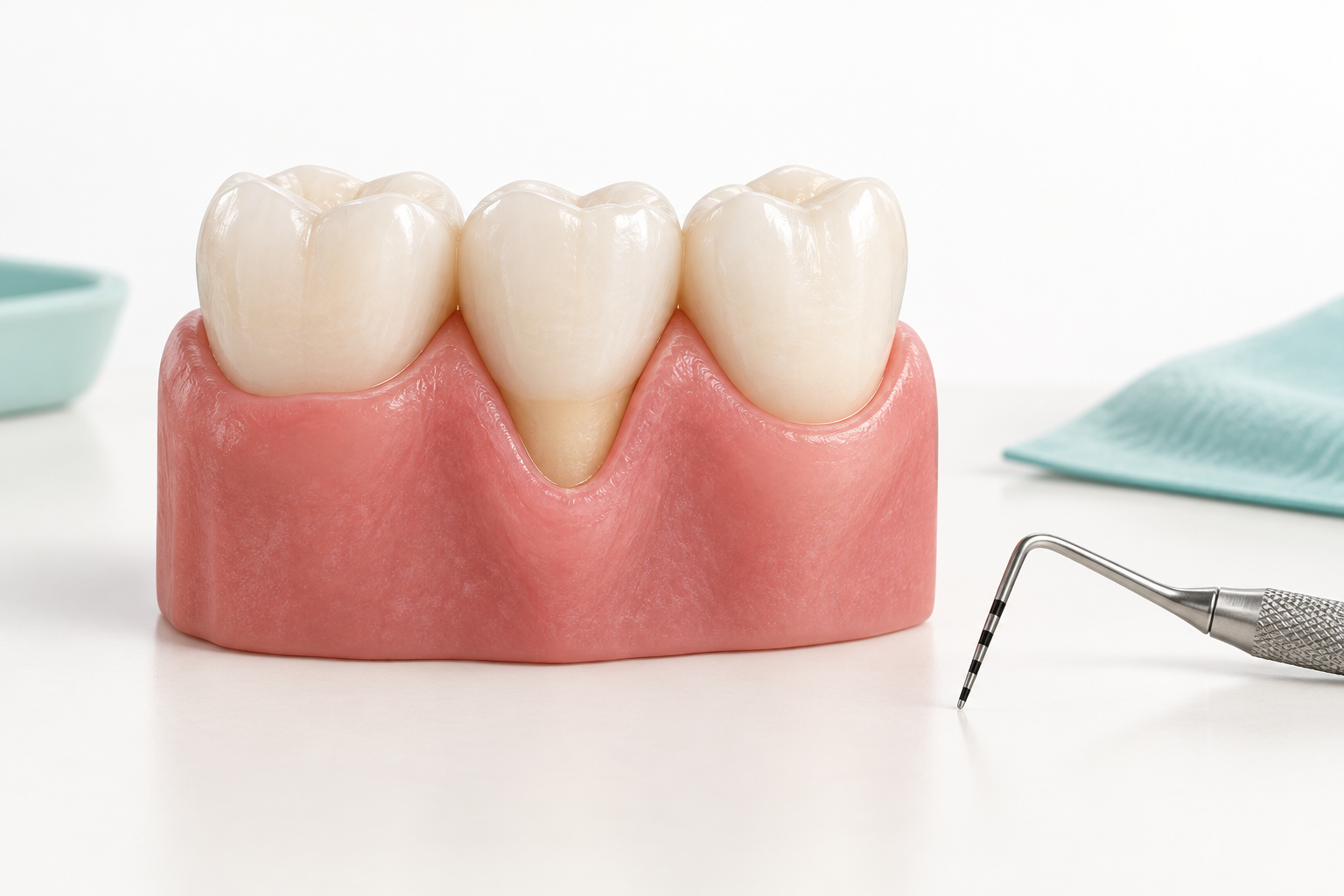
Gum recession exposes part of a tooth root. Periodontal disease, forceful brushing, tobacco use, tooth position and naturally thin gum tissue can contribute. Increased sensitivity or a changing gum line deserves a dental assessment; a photograph alone cannot establish the cause.
Recession and active gum disease are not interchangeable labels. Ask whether the proposed treatment addresses inflammation, sensitivity, the amount of protective gum tissue, root coverage, or several of these concerns. The answer should explain the treatment goal for each affected area.
What to ask at your periodontal assessment
A periodontist assesses the gums and recession, periodontal pockets, tooth mobility and bite, alongside your medical history. X-rays may help assess supporting bone. Tell the clinician about medicines, health conditions, tobacco use and previous dental treatment.
- Which teeth are affected, and how will the starting gum level be recorded?
- Is the recession stable, or is there evidence that it is progressing?
- Does gum disease need treatment before discussing a graft?
- What is the intended benefit: easier cleaning, less sensitivity, additional tissue or root coverage?
- How would you compare monitoring and non-surgical care with surgery in my situation?
Keep the assessment separate from a cosmetic quotation. If implants, veneers or crowns are also being discussed, ask the team to put the periodontal plan and the restorative plan in a clear sequence rather than treating them as one unnamed package.
Graft types have different goals
A connective tissue graft uses tissue beneath the surface of the palate to attempt root coverage or add tissue thickness. A free gingival graft mainly increases the band of protective gum; it does not reliably cover the exposed root. These procedures are not equivalent. Grafting may also use a donor source in suitable cases.
Ask which technique and tissue source are proposed, why they match your assessment, and whether another procedure might be needed later. Do not select a procedure simply because its name appears in a price list.
When surgery may not be the next step
Good plaque control and gum health are important before grafting; cleaning and reassessment may come first. Smoking can make periodontal surgery unsuitable. Non-surgical options depend on the cause and may include sensitivity management or treatment of gum disease.
Ask what needs to change before surgery would be appropriate and how improvement will be checked. Do not stop prescribed medicines or begin antibiotics on the basis of a travel itinerary or an online article.
Recovery: plan around clinical reviews, not a holiday deadline
Possible surgical risks include discomfort, bleeding, swelling, sensitivity and an unsuccessful graft. The treated area must be protected; follow the surgeon’s instructions about cleaning, dressings and stitches. Complete root coverage is not always achievable.
Before booking a return flight, request a written plan that answers:
- When is the first postoperative review, and what will be checked?
- Who will manage stitches or dressings if they remain when I return home?
- What eating, cleaning, exercise and medicine instructions apply to my procedure?
- Who should I contact if healing is not progressing as expected?
- When will the result be assessed, and who will provide longer-term periodontal maintenance?
A generic recovery estimate is not individual clearance to fly or to start another dental procedure. Ask the treating clinician to explain the proposed review dates and any travel restrictions for your own treatment.
A practical handover checklist for patients returning home
Agree the handover before treatment rather than trying to reconstruct it after you travel. Request the assessment findings, treated tooth numbers, procedure and tissue source, postoperative instructions, review arrangements and a contact route for concerns. Ask your home dentist whether they can provide the follow-up being requested.

For a quotation, ask what unit is being priced and whether assessment, initial gum treatment, the donor site, follow-up and any later procedure are included. This guide does not provide an unverified package price.
When to seek dental help
Bleeding or painful swollen gums should be assessed. Very sore swelling, a loose tooth or a lump in the mouth needs urgent dental advice. After surgery, use the clinician’s written instructions and contact arrangements rather than waiting for a scheduled flight or an online reply.
Planning a periodontal consultation at Morsia
For the clinic’s broader periodontal service, see gum treatment in Antalya. You can also check the Morsia team profiles. Bring the questions above to your consultation so that the proposed treatment, its limits and your follow-up arrangements can be discussed together.