Last updated: 23 September 2026
Most of us brush twice a day and assume that’s the job done. It isn’t quite. No matter how careful you are, a thin film of bacteria hardens over time into tartar — the rough, mineralised deposit that a toothbrush simply cannot shift. That’s where a professional clean comes in. At Morsia Dental in Antalya we see patients from across the UK and Europe who come for bigger treatments and are genuinely surprised how much fresher their mouth feels after a proper scale and polish. In this guide we’ll explain what scaling actually does, how the appointment goes, how often you really need it, and what it costs here compared with home. Dr. Dt. Aykut Onol has spent more than 15 years reminding patients that the cheapest dentistry they’ll ever have is the cleaning that stops a small problem becoming a big one.
What is dental scaling, and why does brushing miss it?
When you eat, a sticky layer called plaque forms on your teeth. Brush it off promptly and all is well. Leave it — especially in the awkward spots between teeth and along the gumline — and within a day or two it begins to harden as minerals from your saliva set into it. Once it’s hardened into tartar (dentists call it calculus), no amount of brushing or flossing will remove it. It needs to be physically broken away by a clinician.
Scaling is exactly that: the careful removal of tartar and hardened plaque from the tooth surface and just below the gumline. We use an ultrasonic scaler — a fine tip that vibrates at high frequency with a cooling water spray — together with hand instruments for the detailed finishing. It sounds more dramatic than it feels. For most people it’s a slightly odd buzzing sensation rather than anything sore.
Scaling versus polishing — they’re not the same thing
People often use “cleaning” to mean one thing, but a full appointment is really two steps. Scaling removes the hard deposits. Polishing comes afterwards, smoothing the tooth surface with a soft rotating cup and a mildly abrasive paste so that fresh plaque finds it harder to cling on, and lifting surface stains from tea, coffee and red wine along the way.
| Step | What it removes | How it feels |
|---|---|---|
| Scaling | Hardened tartar above and just below the gumline | A buzzing vibration with water spray; rarely uncomfortable |
| Polishing | Soft surface stains; leaves teeth smooth | A gentle, slightly gritty rotating cup |
| Optional fluoride | Nothing — it strengthens enamel afterwards | A quick gel or varnish application |
It’s worth being clear about one thing: a clean and polish is not the same as whitening. Polishing lifts surface staining and your teeth often look noticeably brighter afterwards, but if you want a genuine shade change you’re looking at teeth whitening, which is a separate treatment. A clean first, then whitening, tends to give the most even result — bleaching works best on a tartar-free surface.
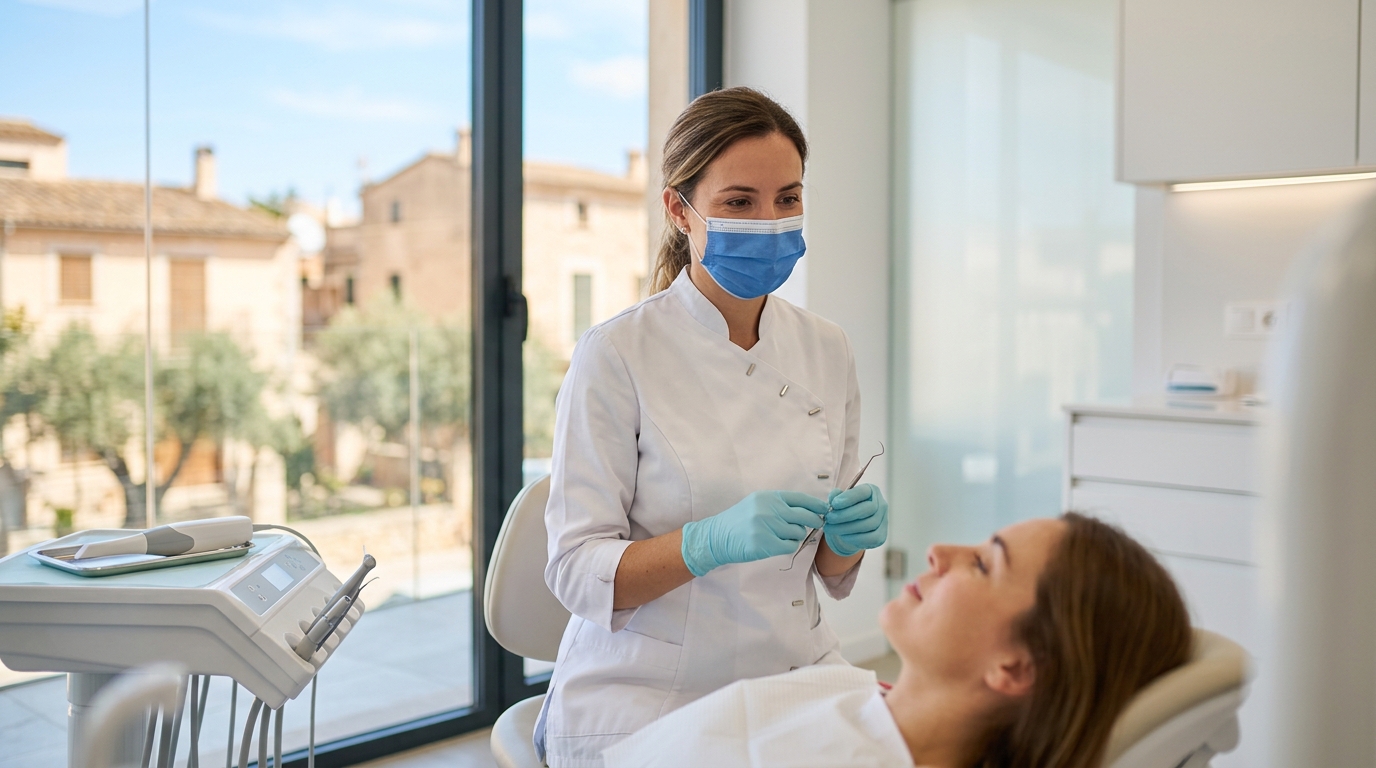
What happens during a cleaning appointment with us
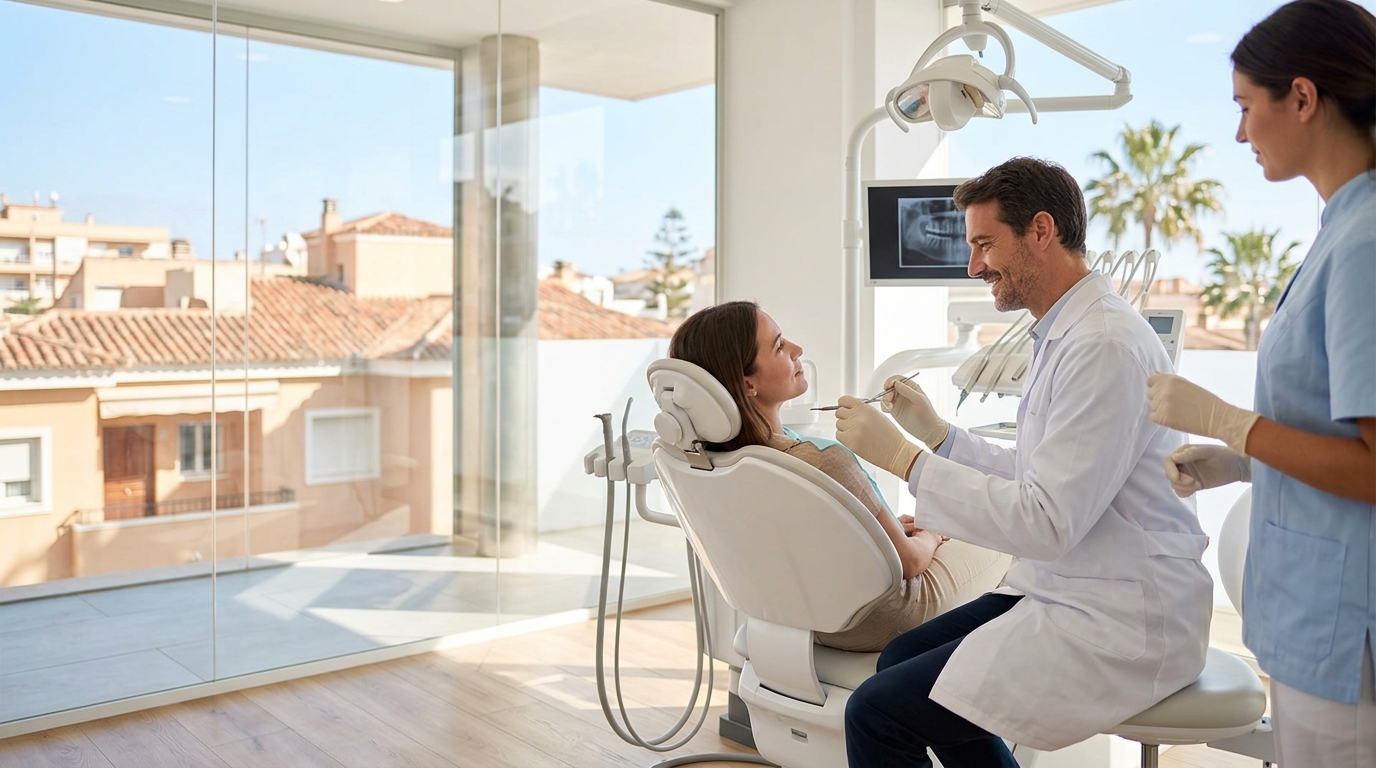
We like patients to know the running order before they sit down, because dentistry is far less stressful when there are no surprises. A routine clean is one of the gentlest appointments we offer.
- A quick look first. We check the gums and teeth, note where tartar has built up and whether the gums bleed or look inflamed.
- Ultrasonic scaling. We work systematically around the mouth, lifting away the hard deposits with the scaler and a water spray.
- Hand finishing. Fine hand instruments deal with anything tucked into tight contacts the ultrasonic tip can’t reach neatly.
- Polishing. A soft cup and paste smooth the surfaces and lift surface stains.
- Advice tailored to you. We’ll show you the spots you’re consistently missing — usually the lower front teeth and the back molars — so the next visit has less to do.
The whole thing usually takes around 30 to 45 minutes. If there’s a heavy build-up of tartar, or your gums are tender, we take it slower and may use a little numbing gel; nobody should grit their teeth through it. For international patients we often fold this into the first day of a longer plan, which makes it an easy, low-stress start to a dental holiday in Antalya before any larger work begins.
How often do you actually need a professional clean?
The honest answer is that it depends on you. The standard guidance of every six months suits a lot of people, but it’s an average, not a rule. Someone who smokes, who’s prone to tartar, who has had gum problems before, or who wears braces will usually benefit from more frequent visits. Others with naturally low build-up can comfortably stretch the interval. The pattern of your own mouth tells us far more than a generic calendar.
| Your situation | Suggested cleaning interval |
|---|---|
| Healthy gums, low tartar build-up | Every 6 to 12 months |
| Average mouth, occasional bleeding | Every 6 months |
| Smoker, heavy tartar, or braces | Every 3 to 4 months |
| History of gum disease | Every 3 months (maintenance) |
These are starting points rather than fixed prescriptions — the right interval for you is something we’d settle at a check-up consultation, where we can actually look at how your gums respond between visits.
The link between cleaning and gum health
This is the part people underestimate. Tartar isn’t just unsightly; it sits against the gum and keeps it irritated. Left alone, that low-grade inflammation can progress from gingivitis (reversible, mostly bleeding and redness) towards periodontitis, where the supporting bone around the tooth starts to recede. Regular scaling is one of the simplest ways to keep that process from ever starting. If you’d like to understand the warning signs — bleeding when you brush, persistent bad breath, gums pulling back from the teeth — our guide to gum disease and how to spot it is a useful read.
When inflammation has already taken hold, a standard clean may not be enough on its own. In those cases we move to deeper cleaning beneath the gumline, and our page on gum treatment in Antalya explains what that involves. The good news is that catching it early, through routine cleans, usually keeps you well clear of needing it.
What does dental cleaning and scaling cost in Antalya?
Cost is naturally one of the first things our UK and European patients ask about. A routine scale and polish in Antalya costs a fraction of the equivalent private appointment at home, and that gap is one reason patients combine a clean with other treatment while they’re here. We work with German and Swiss materials throughout the clinic, so the saving comes from lower running costs, not lower standards. To give a rough sense of scale:
| Treatment | Indicative range with us | Typical UK private range |
|---|---|---|
| Scale & polish (routine clean) | £25 to £50 | £60 to £120 |
| Deep clean per quadrant (gum-line) | £40 to £70 | £100 to £300 |
| Clean combined with a check-up | £30 to £60 | £80 to £150 |
These figures are indicative ranges for general information only and are not a quote. The exact cost of your treatment can only be confirmed after a clinical assessment, as it depends on how much build-up is present and the condition of your gums. Please contact the clinic for a personalised plan.
A point we always make: a routine clean is inexpensive precisely because it’s preventive. Skipping it for years tends to lead to the very treatments — fillings, gum work, extractions — that cost a great deal more and ask far more of you. Results vary from person to person, and the only reliable way to know what your own mouth needs is to have it looked at properly.
Simple habits between appointments
Professional cleaning resets the slate; your daily routine keeps it clean. None of this is complicated:
- Brush twice a day for two full minutes, angling the bristles gently towards the gumline.
- Clean between your teeth daily — floss or interdental brushes reach where the toothbrush never will.
- Cut down on constant snacking and sipping sugary or acidic drinks, which feeds plaque all day long.
- If you smoke, know that it both stains and weakens the gums — cutting back helps your mouth as much as the rest of you.
- Keep your regular check-ups, even when nothing feels wrong; the early signs are the ones you can’t feel.
Do those few things consistently and your professional cleans become quicker, easier and further apart — which is exactly the outcome we’re aiming for.
Frequently Asked Questions
Does dental scaling hurt?
For most people it doesn’t — it feels like a buzzing vibration with a cool water spray rather than anything sharp. If there’s a heavy build-up of tartar or the gums are already inflamed, the area can be a little sensitive, so we work slowly and can apply a numbing gel if you’d prefer. You should never feel you have to endure discomfort during a routine clean.
How often should I have my teeth professionally cleaned?
Every six months suits many people, but it’s an average rather than a fixed rule. Smokers, those prone to tartar, anyone wearing braces or with a history of gum problems usually benefit from cleans every three to four months, while a low build-up mouth may stretch the interval. The right frequency for you is best decided after we’ve seen how your gums respond between visits.
Is a clean and polish the same as teeth whitening?
No. Polishing lifts surface stains from tea, coffee and red wine, so teeth often look brighter afterwards, but it doesn’t change the natural shade of the tooth. A genuine shade change needs whitening, which is a separate treatment. Having a clean first usually gives a more even whitening result, since bleaching works best on a tartar-free surface.
Can scaling damage my teeth or enamel?
When carried out by a trained clinician, scaling removes tartar without harming healthy enamel. You may notice slight sensitivity for a day or two afterwards, especially if a lot of build-up was removed and the gumline was previously hidden — that usually settles quickly. Any sensitivity is generally a sign the area needed cleaning, not that the tooth has been harmed.
How much does a dental clean cost in Antalya compared with the UK?
As an indicative guide, a routine scale and polish with us ranges from around £25 to £50, compared with roughly £60 to £120 privately in the UK, using the same standard of materials throughout. These are general ranges, not a quote — your exact cost can only be confirmed after a clinical assessment, so please contact the clinic for a personalised plan.
İlgili İçerikler
References
The clinical information in this article was cross-checked against the peer-reviewed publications listed below.
- Kwon T et al. Current Concepts in the Management of Periodontitis. Int Dent J, 2021. PMID: 34839889
- Cobb CM et al. A re-evaluation of scaling and root planing. J Periodontol, 2021. PMID: 33660307
- Simpson TC et al. Treatment of periodontitis for glycaemic control in people with diabetes mellitus. Cochrane Database Syst Rev, 2022. PMID: 35420698
This content is for general information only and does not replace an in-person examination, diagnosis or treatment. Please consult a dentist about your own situation.