Porcelain veneers are custom-made ceramic facings bonded to the front of teeth. They are not the same as full-coverage crowns, and choosing treatment in Turkey does not change the need for a tooth-by-tooth assessment. Before booking travel, establish which teeth need treatment, which material is proposed, what tooth preparation is planned and how follow-up will work.
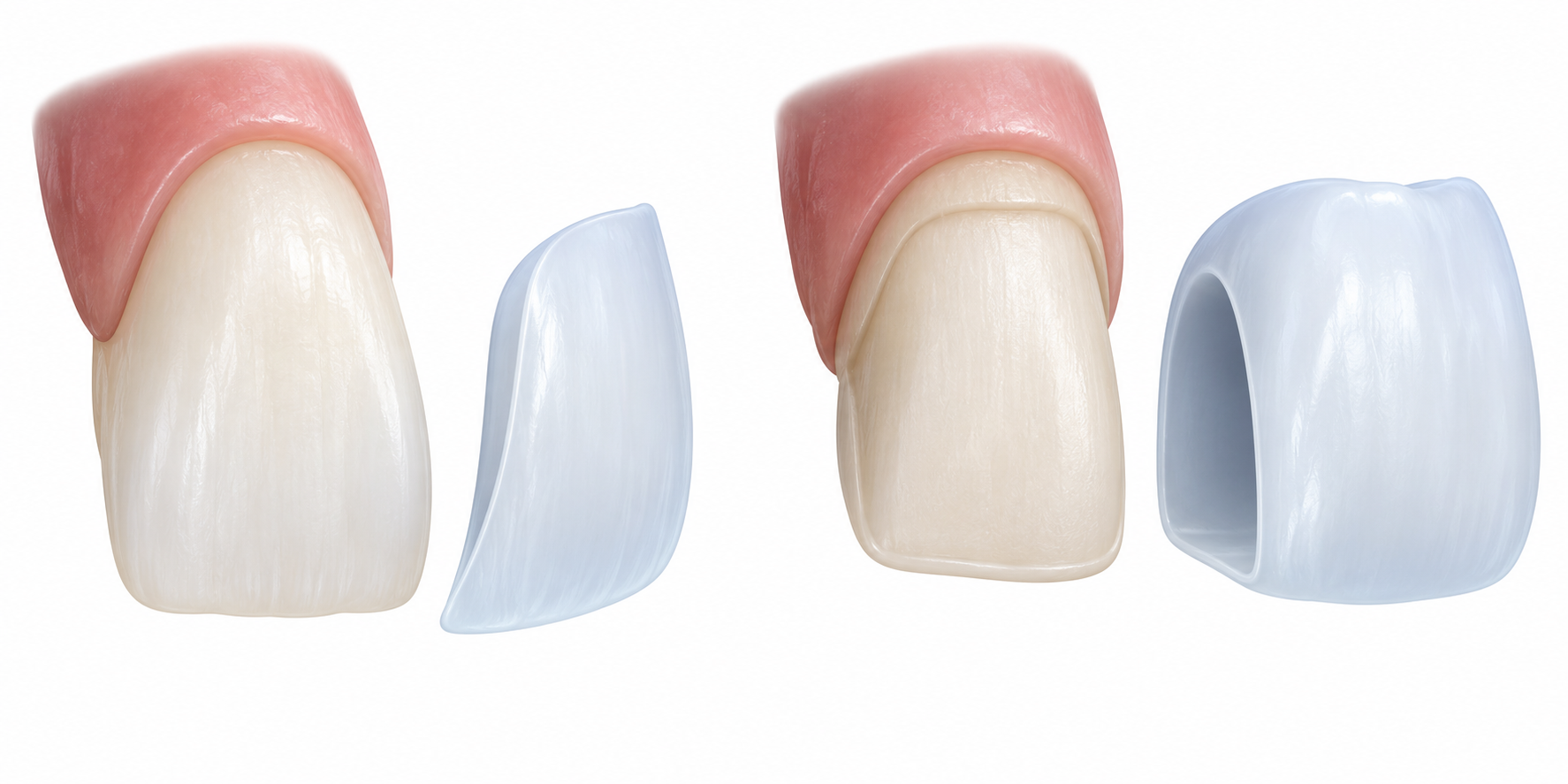
Porcelain veneer or crown: check the actual treatment
A veneer mainly covers the visible front surface; a crown covers more of the tooth. The terms “Turkey teeth”, “E-max” or “smile makeover” do not tell you which restoration is planned. Ask for each tooth’s proposed treatment in writing. A material name alone is not a reason to prepare healthy teeth for crowns.
Our veneers, crowns and implants comparison explains those different treatment categories. This article focuses on porcelain veneer material selection and planning, rather than repeating a package-price or full-mouth guide.
What does “porcelain” mean in a veneer plan?
Dental ceramics are not one interchangeable material. Lithium disilicate glass-ceramics, such as IPS e.max CAD and Press, are used for veneers as well as other restorations. CAD is milled from blocks; Press uses a laboratory pressing process. Layering ceramics and zirconium oxide products are different parts of the wider ceramic family.
The word “E-max” alone is incomplete: ask for the exact product and whether the restoration is a veneer or crown. A manufacturer’s laboratory strength figure does not predict how long your own veneer will last. The tooth underneath, restoration design, bonding and bite all need consideration.
- Material identity: ask for the ceramic product, not just “premium porcelain”.
- Appearance: discuss shade, translucency and how untreated teeth will look beside the restorations.
- Design: ask why the proposed design fits each tooth’s condition and position.
- Alternatives: consider whether whitening, orthodontics or a smaller restoration could meet the goal with less intervention.
Read the ceramic material comparison alongside the individual plan. Composite resin is another veneer option, but it is not porcelain and should not automatically be described as reversible.
Who might be suitable—and what needs checking first?
Veneers can change the appearance of stained, chipped or misshapen teeth and some gaps. Suitability depends on dental health, remaining tooth structure and bite. Decay or gum disease needs attention first; grinding, clenching or an unfavourable bite may make veneers a poor choice or require a different plan. A photograph cannot settle all of these questions.
Cosmetic masking is not the same as moving teeth orthodontically. If a proposal would require extensive reduction to hide crowding, ask about alignment before irreversible work. The number of veneers should follow the agreed goal and examination, not a standard package size.
Is tooth preparation reversible?
Where enamel is removed, that removal cannot be undone. Do not assume “thin”, “minimal-prep” or “no-prep” means suitable for every tooth or guarantees easy removal later. There is no single preparation depth that applies to every patient. Ask what will be changed on each tooth and why.
Useful questions include: What are the alternatives? How much of the change comes from tooth position rather than colour? What happens if I decide not to proceed before preparation? What can be checked with a proposed design or trial before final bonding?
The usual stages—not a guaranteed travel timetable
- Assessment and agreement: clarify the dental findings, alternatives, proposed teeth and consent before preparation.
- Preparation and records: where needed, the teeth are prepared and an impression or digital record is taken for fabrication. Discuss whether temporary restorations are needed.
- Try-in and review: fit, shape, colour and bite are assessed; adjustments may be needed before bonding.
- Bonding and follow-up: obtain care instructions, review arrangements and a contact route if problems develop.
These stages may need additional appointments if dental problems must be treated or the design needs adjustment. A competitor’s five-day package is not a confirmed Morsia treatment duration. Ask for your case-specific appointment plan before buying non-refundable travel, including what happens if extra visits are required.

Compare written proposals on the same basis
A headline price is not enough to compare two offers. Request the following details and mark unanswered items before making a decision:
- The number of teeth and the restoration type proposed for each one.
- The exact ceramic product, laboratory work and temporary restorations included.
- Any separately charged dental treatment or change to the plan after examination.
- The appointment schedule, travel services and conditions of any accommodation or transfers.
- Aftercare responsibilities, records you receive and arrangements if a veneer chips, loosens or needs replacement after returning home.
This article does not quote a current Morsia package fee or promise a set number of treatment days. For an individual assessment, see laminate veneer treatment in Antalya and discuss the proposed scope with the clinic.
Maintenance and problems after treatment
Brush with fluoride toothpaste twice a day and clean between the teeth daily. Veneers do not prevent decay around the treated tooth. Avoid biting hard objects, and tell your dentist if the bite feels wrong or a restoration becomes chipped or loose. Review frequency and any protective appliance should be agreed for your individual needs.
Porcelain veneers are not a lifetime guarantee. Repair, re-bonding or replacement may be needed, and the correct response depends on the tooth and restoration. Do not wait for a holiday return date to seek assessment for persistent pain, swelling or a loose restoration.
Questions before booking
Can veneers replace braces?
Veneers change a tooth’s appearance; they do not move its root. Ask whether orthodontic alignment would preserve more tooth structure for your goal.
Do I need a full set?
No standard number applies to everyone. Ask why each tooth is included and how untreated teeth will match the planned restorations.
Will treatment be finished during one trip?
That must be confirmed for your individual plan after the necessary assessment. Laboratory work, additional treatment or changes at try-in can affect the schedule.
Who is the relevant Morsia specialist?
Morsia Dental lists Dr. Dt. Aykut Önol as a prosthetics specialist. This public professional attribution is not a record that he has examined a particular patient or clinically reviewed this article on a stated date.
Sources
- American Dental Association: veneers — differences, suitability, treatment stages and care.
- Ivoclar: IPS e.max CAD — lithium disilicate, CAD and Press processing.