Last updated: 12 August 2026
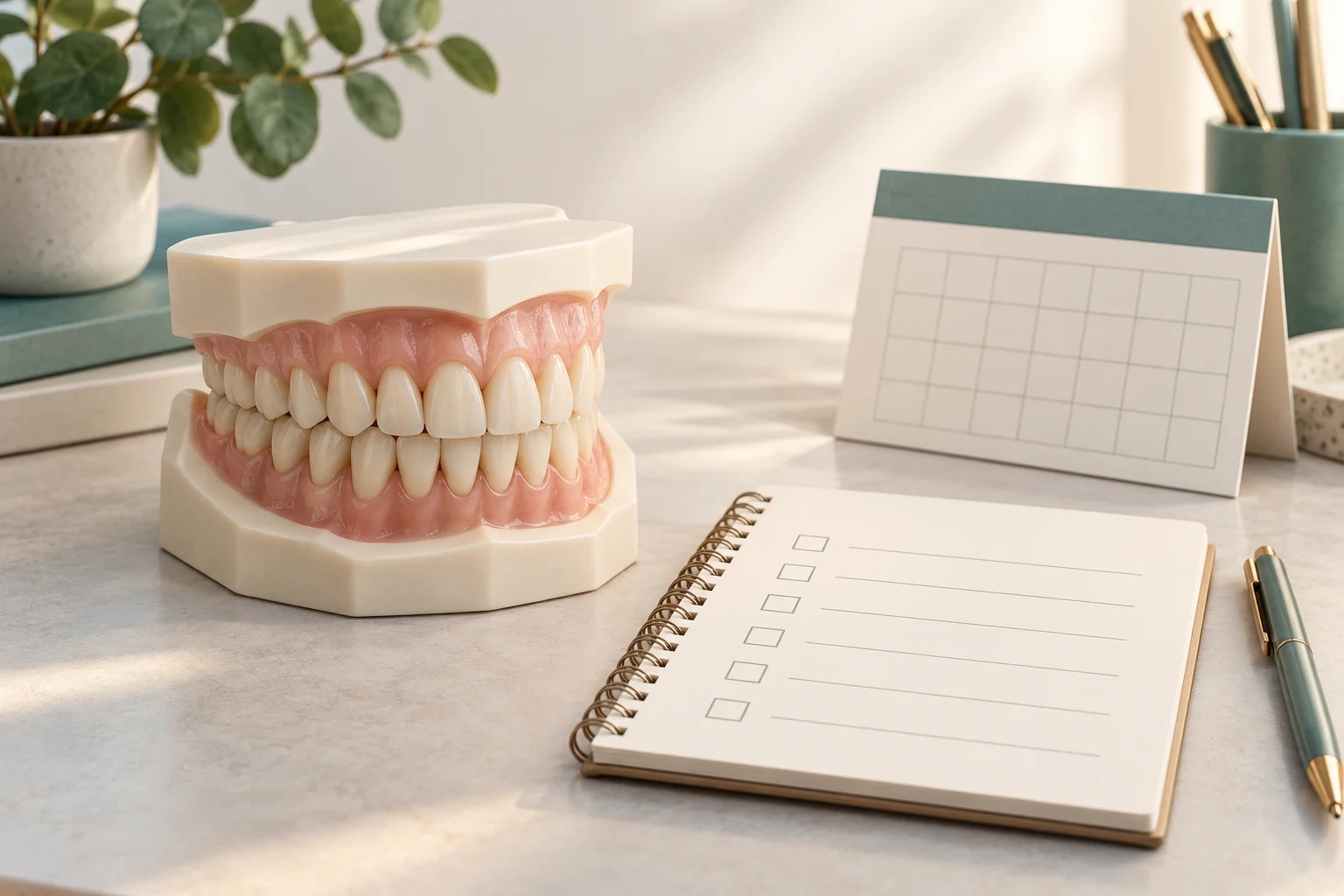
If you have spent any time researching full-arch implants, you have almost certainly run into the same fork in the road: All-on-4 or All-on-6? Both replace a whole arch of missing or failing teeth with a fixed bridge anchored to implants — no plate covering the roof of your mouth, no nightly soaking glass on the bedside table. The difference comes down to how many implants carry the load, and that single number quietly shapes your candidacy, your bone requirements, your cost and, in some cases, your long-term peace of mind. At Morsia Dental in Antalya, we have placed both protocols across thousands of arches, and the honest answer is the one patients least expect: neither is “better” — they solve slightly different problems.
This guide lays the two side by side so you can walk into your consultation knowing the right questions to ask. We will not pretend the choice is purely a personal preference, though. The deciding factor is usually your jawbone, and that is something only a clinical assessment and a CT scan can settle.
The core difference in one sentence
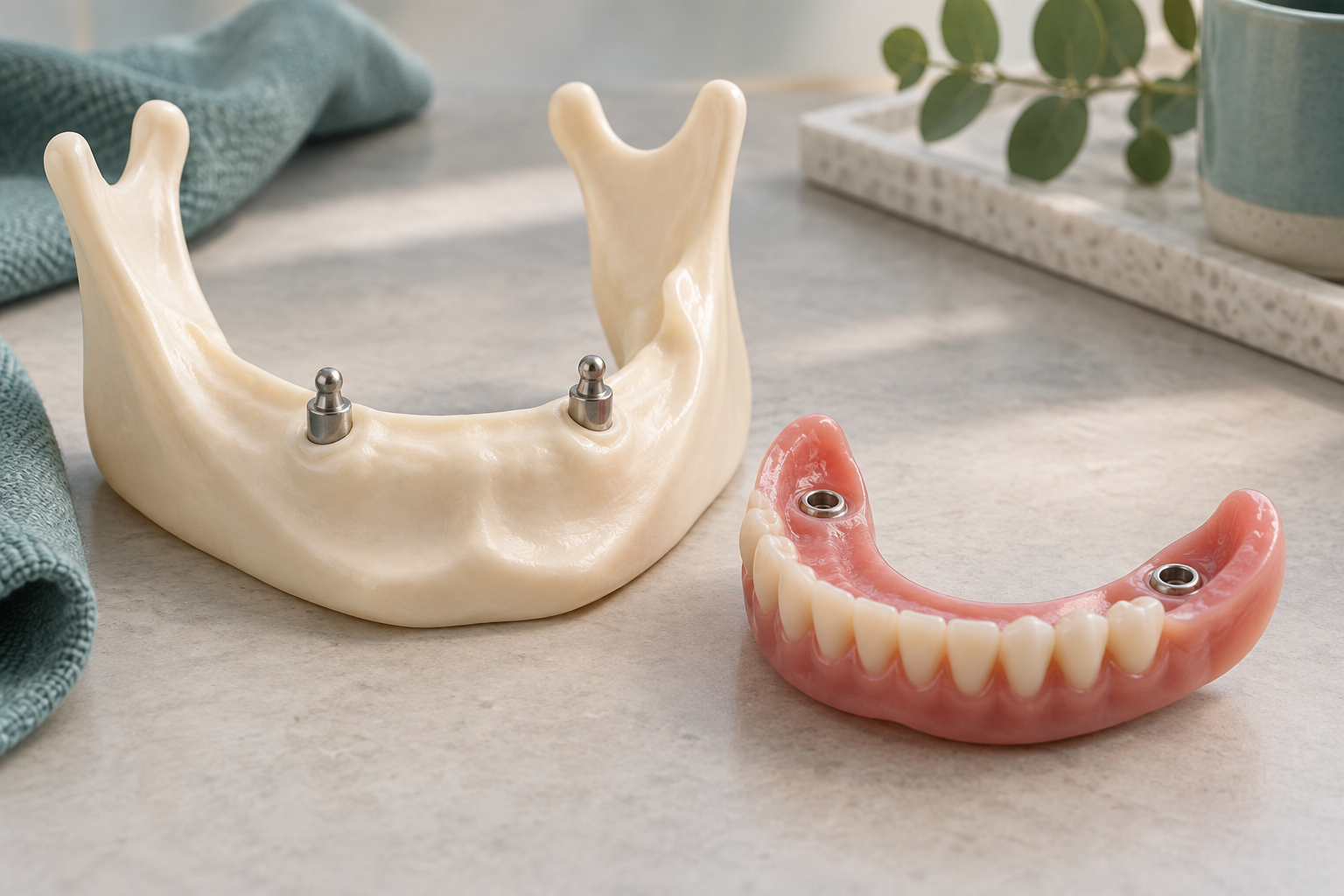
All-on-4 supports a full fixed bridge on four implants, with the two rear implants angled to make the most of available bone. All-on-6 does the same job on six implants, adding two more anchors for extra support and load distribution. That is genuinely the whole headline — everything else flows from those two numbers.
Where it gets interesting is the “why”. The All-on-4 concept was developed precisely so that patients with reduced bone could still avoid grafting, by tilting the back implants forward to engage denser bone at the front of the jaw. All-on-6 takes a different stance: if you have the bone to host two more implants, spreading the chewing forces across six points can reduce strain on each individual implant and on the prosthesis itself.
Side-by-side comparison
Here is how the two protocols stack up on the factors patients ask us about most. Treat the figures as a starting point for conversation, not a verdict — your own mouth always has the final say.
| Factor | All-on-4 | All-on-6 |
|---|---|---|
| Implants per arch | 4 (rear two angled) | 6 (often 2–4 angled) |
| Typical bone requirement | Works with moderate bone loss | Needs more available bone volume |
| Grafting likelihood | Often avoids it | More likely to need it if bone is thin |
| Load distribution | Spread across 4 points | Spread across 6 points |
| Indicative cost per arch (UK) | £9,000 to £15,000 | £11,000 to £18,000 |
| Indicative cost per arch (Antalya) | £3,000 to £5,500 | £3,800 to £6,500 |
| Same-day fixed teeth | Frequently possible | Frequently possible |
The figures above are indicative ranges shared for information only and are not a quote or a price guarantee. Costs vary with your bone condition, the number of arches, the implant brand and the type of final bridge. We can only give you an exact cost after a clinical assessment, so please contact the clinic to arrange one.
When All-on-4 tends to make sense
All-on-4 earns its popularity because it is forgiving. When the back of the jaw has lost height — which is common after years in a denture or after long-standing tooth loss — angling the rear implants lets us anchor into the bone that is still there, often without bone grafting or a sinus lift. That usually means a shorter overall journey and a lower upfront cost.
We tend to lean towards All-on-4 when a patient:
- Has moderate bone loss and wants to avoid grafting if clinically reasonable
- Is keen to keep the treatment timeline and budget as lean as possible
- Wants fixed teeth in a single trip rather than a staged plan spread over months
- Has good gum health and a manageable bite force
For a deeper breakdown of the protocol, candidacy and what is included, our dedicated page on All-on-4 dental implants walks through the full picture.
When All-on-6 tends to make sense
All-on-6 is the choice when there is enough bone to host the extra implants and when we want more support under a long bridge — particularly in the lower jaw, where biting forces run higher, or for patients who grind their teeth. Two additional implants share the workload, which can ease the strain on each one and on the prosthesis over the years.
We often discuss All-on-6 with a patient who:
- Has adequate bone volume across the arch (or is happy to consider grafting to get there)
- Has a heavier bite, clenches or grinds, or wants the reassurance of extra anchors
- Is restoring the lower arch, where load distribution matters more
- Prioritises long-term load sharing over a slightly lower upfront figure
You can read the specifics of the six-implant approach on our All-on-6 dental implants page, including how we plan implant positions around your anatomy.
The factor that actually decides it: your bone
Patients often arrive with a number already in mind, and we understand why — the internet loves a clean comparison. But the choice is rarely yours alone to make. Dr. Dt. Aykut Onol and our surgical team base the recommendation on a 3D CT scan that shows the height, width and density of your jawbone in each region. Two more implants are only an advantage if there is bone to hold them; forcing six into a jaw that comfortably supports four does no favours, and stretching four implants across a demanding bite when six are warranted is equally short-sighted.
This is also why we are cautious about absolute promises. Implant treatment has an excellent track record, but outcomes still depend on your bone, your gum health, your habits and your aftercare. Results vary from person to person, which is exactly why a proper assessment comes before any plan. If your situation is more complex — failing teeth alongside gum disease, or a mix of issues across both arches — a broader full mouth restoration plan may be the more sensible framing, with All-on-4 or All-on-6 forming one part of it.
Cost: why Antalya changes the maths
In the UK, a full-arch fixed bridge on implants typically runs from around £9,000 to £18,000 per arch depending on the protocol and materials. The same treatment in Antalya generally lands at a fraction of that, and the gap rarely reflects cut corners — it reflects lower clinic running costs, not lower-grade implants. At Morsia Dental we work with German and Swiss implant systems and the same internationally recognised brands you would expect at home.
That said, the price you compare matters. A genuine like-for-like comparison should include the surgery, the temporary bridge, the final bridge and your follow-up reviews — not just the implants. We set this out transparently, and our broader page on dental implants in Turkey explains what is and is not included so there are no surprises mid-treatment.
Timeline and the same-day question
One of the biggest draws of both protocols is that, in many cases, you leave the clinic on the day of surgery with a fixed temporary bridge rather than going home toothless. This is the appeal of same-day implants, and it applies to All-on-4 and All-on-6 alike when the bone and your bite allow it.
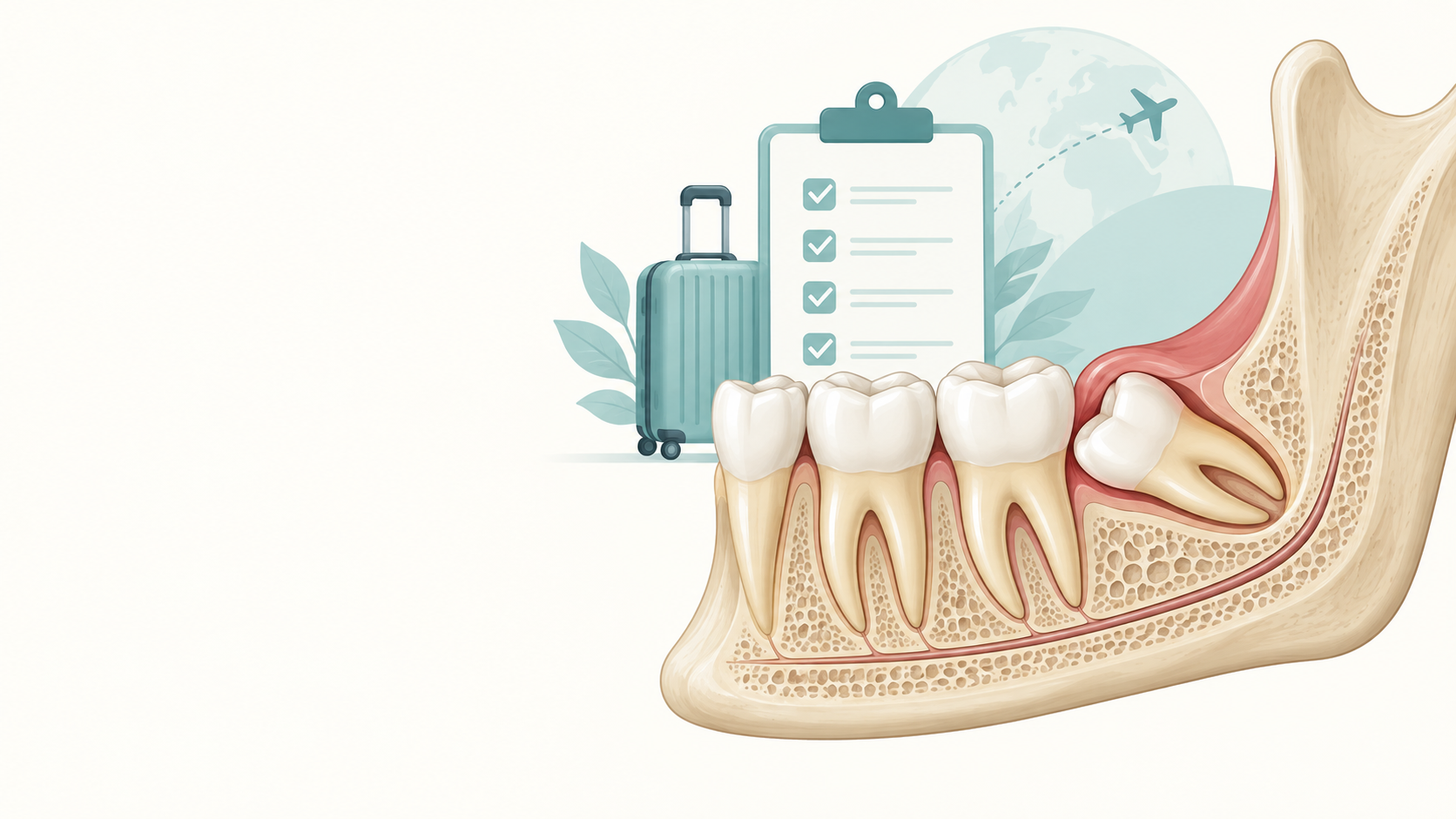
A typical journey looks like this:
- Day 1: CT scan, planning, and your treatment decision confirmed with the surgical team
- Day 2–3: Implant placement and your fixed temporary bridge fitted
- Healing at home: Roughly three to six months for the implants to integrate with the bone
- Second visit: Your permanent bridge fitted — this is usually a shorter trip
We will not rush a final bridge before the implants have integrated, regardless of how good the temporary looks. That patience is part of why full-arch implants last as long as they do.
Longevity and maintenance
Both All-on-4 and All-on-6 are designed to be long-term solutions, and well-maintained full-arch bridges routinely serve patients for many years. The implants themselves are the durable part; the bridge on top is a wearing component that may need refreshing over a long lifespan, much like any hard-working restoration. All-on-6 spreads the load more widely, which is one reason it is sometimes favoured for heavier bites — but a well-planned All-on-4 in the right candidate performs reliably too.
Whichever route you take, the maintenance is refreshingly ordinary: brush around the bridge, clean underneath it with the tools we show you, and keep your review appointments. Looking after the gum and bone around the implants is what protects your investment over time.
So, which is right for you?
If you take one thing from this comparison, let it be this: the better question is not “four or six?” but “what does my jaw support, and what does my bite demand?” All-on-4 is often the efficient, graft-sparing route for moderate bone loss and lighter bites. All-on-6 earns its keep where there is bone to spare and a bite that benefits from extra support. The right call sits at the intersection of your anatomy, your habits and your goals — and it is a call best made together, with the scan in front of us.
If you are weighing up your options, send us your panoramic X-ray or recent dental records and we will give you an honest assessment of which protocol suits you, with no pressure either way.
Frequently Asked Questions
Is All-on-6 always stronger than All-on-4?
Not necessarily. All-on-6 spreads chewing forces across more implants, which can be an advantage for heavier bites or the lower jaw. But a well-planned All-on-4 in a suitable candidate is also a robust, reliable solution. Strength depends on planning, bone quality and your bite far more than on the implant count alone, so the right choice is the one matched to your anatomy.
How much do All-on-4 and All-on-6 cost in Antalya compared with the UK?
As an indicative guide, a UK arch typically ranges from £9,000 to £18,000, while in Antalya the same treatment commonly falls between £3,000 and £6,500 per arch depending on the protocol and materials. These are information-only ranges, not a quote. We can confirm your exact cost only after a clinical assessment, so please contact the clinic.
Can I get fixed teeth on the same day with either option?
In many cases, yes. Both All-on-4 and All-on-6 can support a fixed temporary bridge fitted on the day of surgery, so you avoid going home without teeth. Whether same-day teeth are suitable depends on your bone and bite, which we confirm during planning. Your permanent bridge is fitted later, once the implants have integrated.
Will I need a bone graft for All-on-6?
You might, but not always. All-on-6 needs enough bone to host two extra implants, so if your bone volume is reduced, grafting or a sinus procedure may be suggested to make it possible. All-on-4 is often chosen precisely to avoid grafting by angling the rear implants. A CT scan tells us exactly what your jaw can support before any decision is made.
How long do full-arch implants last?
With good care and regular reviews, full-arch implants are designed to be a long-term solution and routinely serve patients for many years. The implants are the durable foundation, while the bridge on top is a wearing part that may need refreshing over a long lifespan. Daily cleaning around the bridge and keeping your check-ups are what protect the result. Outcomes vary from person to person.
İlgili İçerikler
References
The clinical information in this article was cross-checked against the peer-reviewed publications listed below.
- Berzaghi A et al. Occlusion and Biomechanical Risk Factors in Implant-Supported Full-Arch Fixed Dental Prostheses-Narrative Review. J Pers Med, 2025. PMID: 39997342
- Messias A et al. Different Interventions for Rehabilitation of the Edentulous Maxilla with Implant-Supported Prostheses: An Overview of Systematic Reviews. Int J Prosthodont, 2021. PMID: 33571327
- Chan MH et al. All-on-4 Concept Update. Dent Clin North Am, 2021. PMID: 33213711
This content is for general information only and does not replace an in-person examination, diagnosis or treatment. Please consult a dentist about your own situation.