What Are Laminate Veneers?
A laminate veneer is a thin ceramic facing, usually between 0.3 and 0.7 mm thick, bonded permanently to the visible surface of a tooth. It covers the front and the biting edge, leaving the back of the tooth untouched — which is the main point of the technique.
The ceramic is made in a laboratory from an impression or digital scan of your prepared teeth, then bonded with a resin cement that chemically secures porcelain to enamel. Once bonded, the veneer and the tooth behave as one unit under chewing load.
How thin are they, and how much tooth is removed?
Preparation typically removes between 0.3 and 0.5 mm of enamel from the front surface — roughly the thickness of a fingernail — and in some cases nothing at all. This is the most important number in veneer dentistry, and it is the one most clinics leave out.
Where almost no preparation is possible, ultra-thin no-prep options such as Lumineers are an alternative, though they suit a narrower range of cases. The reason the number matters: enamel is what a veneer bonds to, and it does not grow back. A veneer bonded to enamel holds securely for years. A veneer bonded mostly to dentine, after aggressive preparation, is a weaker join and a decision that cannot be reversed.
Laminate veneers vs crowns: what’s actually different?
A veneer covers the front of a tooth; a crown covers all of it. That difference determines how much healthy tooth structure is removed — a crown requires reduction on every surface, which is why it is a restoration for damaged or heavily filled teeth rather than a cosmetic change for sound ones.
This distinction is also where the “Turkey teeth” reputation originated. Crowns fitted where veneers were promised require far more tooth reduction, and patients only discover the difference years later.
| | Laminate veneer | Crown | Composite bonding |
|---|
| Tooth reduction | 0.3–0.5 mm, front only | All surfaces, 1–2 mm | Usually none |
| Material | Porcelain / E-max | Zirconia, E-max, PFM | Composite resin |
| Typical lifespan | 10–15 years | 10–15 years | 3–7 years |
| Reversible? | No | No | Largely yes |
| Stain resistance | High | High | Moderate — stains over time |
| Best for | Sound teeth, cosmetic change | Damaged, root-treated or heavily filled teeth | Small chips, gaps, trial changes |
What Problems Can Laminate Veneers Fix?
Veneers work best on teeth that are structurally sound but cosmetically compromised — discolouration that whitening cannot shift, small chips, worn edges, minor crowding, gaps between front teeth, and teeth that differ in size or shape. They change the surface, not the underlying foundation.
Intrinsic staining is the clearest example. Tetracycline discolouration and fluorosis sit inside the tooth rather than on it, so no amount of bleaching reaches them, and a veneer is the practical answer.
When laminate veneers are NOT the answer
Veneers are the wrong tool for active decay, gum disease, significant crowding, a collapsed bite or heavy untreated grinding. In each of those cases, bonding porcelain to the front of a tooth either fails prematurely or hides a problem that keeps progressing underneath.
Significant crowding is the one patients most often push back against. Rotated or crossed teeth can be masked with veneers, but doing so means removing more enamel from some teeth than others, and orthodontics first usually produces a better result with less tooth loss. We will tell you when that is the case, even though it means a longer route.
Are You a Suitable Candidate?
You are a candidate if your teeth are free of decay, your gums are healthy, and enough enamel remains for a dependable bond. Those three conditions carry more weight than what you want changed cosmetically, because they decide whether the result holds.
Gum health and enamel: the two conditions that decide
Healthy gums give a veneer a stable margin to sit against; inflamed gums recede, and a receding margin exposes the join between porcelain and tooth. Any gum treatment therefore comes before veneer work, not alongside it.
Enamel is the other half. If previous dentistry, erosion or wear has thinned it, a veneer has less to bond to and a crown may genuinely be the better restoration. This is a clinical judgement made from examination, not from a photograph.
Do you grind your teeth?
Grinding does not rule veneers out, but it changes the plan — bruxism transmits repeated force to the biting edge, and porcelain chips under it. Patients who grind are treated with a night guard as part of the case rather than as an afterthought.
Be honest about this at consultation, including if you only suspect it. Worn edges, morning jaw tightness and a partner who mentions the noise are all signs.
Six-point suitability check:
- No active decay in the teeth being treated
- Gums healthy, or treated first
- Enough enamel remaining for a dependable bond
- Bite is stable and teeth meet correctly
- Any grinding is recognised and managed with a night guard
- Expectations reviewed against a digital mock-up before preparation
Which Material: E-max, Porcelain or Composite?
E-max lithium disilicate is the usual choice for laminate veneers because it combines translucency with sufficient strength for thin sections, while zirconia is reserved for cases needing more opacity or strength. Composite is a different category altogether — applied directly, more affordable, reversible, and shorter-lived.
Material selection depends on how dark the underlying tooth is, how much light the veneer needs to transmit, and where in the arch it sits. We compare the two ceramics in depth, including how each handles a discoloured tooth underneath, in our guide to E-max vs zirconia veneers.
How Many Veneers Do You Need? 4, 8, 10 or 20?
The number is determined by your smile line — how many teeth show when you smile fully — not by a package. For most people that is between six and ten upper teeth; a wide smile that reveals premolars needs more, and a narrow one fewer.
Treating too few is the usual error. If four veneers are placed and the fifth tooth still shows at the corner of the smile, the colour break is visible in every photograph. Deciding the count from your own smile line avoids that.
| Teeth visible when smiling | Typical veneer count | What it achieves |
|---|
| 4 front teeth only | 4 | Central correction; corner teeth must already match |
| 6 upper teeth | 6 | Most common; covers canine to canine |
| 8–10 upper teeth | 8–10 | Full smile-line coverage including premolars |
| Upper and lower visible | 16–20 | Both arches matched; needed when lower teeth show at rest |
The Laminate Veneer Process in Antalya: Day by Day
A full veneer case runs across around five working days, with the laboratory work sitting in the middle. You arrive with your own teeth, leave with temporaries in place mid-week, and go home with the finals bonded.
Day 1: consultation, digital smile design and shade
The first appointment sets everything that follows — examination, photographs, a digital scan and a mock-up showing the proposed shape and length before any tooth is touched. Shade is chosen in daylight, against your skin tone, not from a chart under surgery lighting.
Day 2: minimal preparation and temporaries
Preparation removes the planned 0.3–0.5 mm of enamel under local anaesthetic, and temporary veneers are fitted the same day. The temporaries are a rehearsal — you live with the shape and length for a few days and tell us what to alter.
Days 3–4: laboratory and try-in
The laboratory builds the veneers while you are still in Antalya, which is what makes a single-visit case possible. A try-in appointment checks fit, contact points and colour against your face before anything is bonded.
Day 5: final bonding and bite check
Veneers are bonded individually with resin cement and cured, then the bite is checked and adjusted. You leave with care instructions and, where grinding is a factor, an impression taken for a night guard.
| Day | Time at the clinic | What happens | That evening |
|---|
| 1 | 1.5–2 hours | Examination, photos, digital scan, mock-up, shade | Normal eating |
| 2 | 2–3 hours | Preparation and temporary veneers | Soft food; teeth may feel sensitive |
| 3–4 | 30–45 min try-in | Laboratory work; fit and colour check | Free days in Antalya |
| 5 | 2–3 hours | Final bonding, bite adjustment, care briefing | Avoid hard food for 24 hours |
How Long Do You Need to Stay in Antalya?
Plan five to seven nights for a standard veneer case, which covers the working days above plus a buffer. One visit is enough for most patients — unlike implant work, veneers do not require a healing interval between stages.
Two trips become necessary when gum treatment, orthodontics or root canal work has to happen first. That is identified during the planning stage from your photographs and X-rays, before flights are booked.
Laminate Veneers Cost: Antalya Compared With the UK
Per-tooth pricing in Antalya sits considerably below UK private pricing, and the difference comes from clinic overheads and laboratory costs rather than from the ceramic itself. E-max is E-max in either country.
We do not publish a per-tooth figure, because the exact number depends on how many veneers your smile line needs, which material suits the tooth underneath, and whether preparatory treatment is required first. A quote before examination would be a guess dressed as a price.
What changes the price per tooth?
Four things affect it: the ceramic chosen, the number of units, whether preparatory work is needed, and the complexity of the case — a dark underlying tooth needs more layering than a light one, and layering is laboratory time.
What should a written quote include?
Ask for the list below in writing before paying a deposit. Anything not itemised is an assumption, and assumptions are what turn a quoted figure into a final bill that differs from it.
- Number of veneers and precisely which teeth
- Ceramic type (E-max, feldspathic, zirconia)
- Temporary veneers — included or additional
- Any preparatory treatment: gum therapy, fillings, root canals
- Night guard, when grinding is a factor
- Accommodation, transfers and number of nights
- What happens if a veneer needs adjustment once you return home
| Factor | Effect on cost | Why |
|---|
| Ceramic type | Significant | Layered feldspathic work takes more laboratory hours than pressed E-max |
| Number of units | Direct | Priced per tooth; smile line sets the count |
| Preparatory treatment | Variable | Gum therapy or fillings must precede bonding |
| Shade of underlying tooth | Moderate | Dark stumps need more opacity and layering |
| Night guard | Minor | Protects the investment where grinding is present |
How Long Do Laminate Veneers Last?
Well-bonded porcelain veneers typically last ten to fifteen years, and the bond to enamel is what carries that lifespan. Veneers bonded to dentine after heavy preparation do not perform the same way, which is another reason minimal preparation is more than a marketing phrase.
What shortens their life?
Grinding without a night guard, biting hard objects, gum recession that exposes the margin, and acidic erosion around the edges. Fingernails, pens and ice cause more chipped veneers than food does.
Can a single veneer be replaced?
Yes — a single unit can be removed and remade without disturbing its neighbours, though matching the shade of an aged veneer to a new one requires care. This is one advantage veneers hold over a bonded bridge, where a failure affects the whole span.
Caring for Your Veneers
Veneers need the same care as natural teeth with two additions: protection from grinding and attention to the gum margin. The porcelain itself does not decay, but the tooth behind it and the gum around it still can.
First 48 hours
The resin cement reaches full strength over the first day or two, so hard and chewy food is off the list for 24 hours. Mild sensitivity to cold is normal during this window and settles within a week or two.
Daily routine, floss and night guard
Brush twice daily with a non-abrasive paste, floss around each veneer including its margin, and wear the night guard if one was made. Whitening toothpastes with high abrasivity dull the glaze over time — a standard fluoride paste is the better choice.
Food and drink: what actually stains them?
Porcelain itself resists staining well; the vulnerable point is the resin cement at the margin, which picks up colour over years. Red wine, coffee, tea, dark cola and tobacco act on that line rather than on the veneer face.
| Do | Avoid | Why |
|---|
| Non-abrasive fluoride toothpaste | High-abrasion whitening pastes | Abrasives dull the glazed surface |
| Floss around every margin daily | Skipping the gum line | Margin health decides long-term appearance |
| Wear the night guard | Untreated grinding | Repeated force chips the biting edge |
| Rinse after coffee, tea or wine | Prolonged sipping through the day | Staining acts on cement margins |
| Six-monthly hygiene visits | Missing recalls | Recession exposes the join |
Risks and Honest Expectations
Veneers are irreversible, and that is the risk worth considering above all others. Enamel removed for preparation does not return, so the tooth will need a veneer or a crown from that point onwards.
Sensitivity: how common, how long?
Temporary sensitivity to cold affects most patients in the first days after preparation and typically resolves within one to two weeks. Sensitivity that persists beyond a few weeks is worth reporting — it can indicate an issue at the margin.
What if a veneer chips or debonds after you fly home?
Contact the clinic before any local repair, because a dentist without your case record cannot match the ceramic or the shade. Morsia Dental keeps your material specification, shade record and laboratory notes on file and coordinates with a local dentist when immediate care is needed.
Individual outcomes vary and nothing here is a guarantee of a specific result. What we do commit to is a documented plan, a written material specification, and a defined route back to us.
The “Turkey Teeth” Problem — Read This Before You Book
The phrase describes a real pattern: heavily reduced teeth, crowns fitted where veneers were quoted, and shades chosen much brighter than the face they sit in. It is a description of a technique failure, not of a country.
Three questions protect you anywhere in the world — how much enamel will be removed, are these veneers or crowns, and can I see a mock-up before preparation. We set out the full pattern and how to avoid it in our guide to veneers in Turkey.
Before and After: What Results Look Like
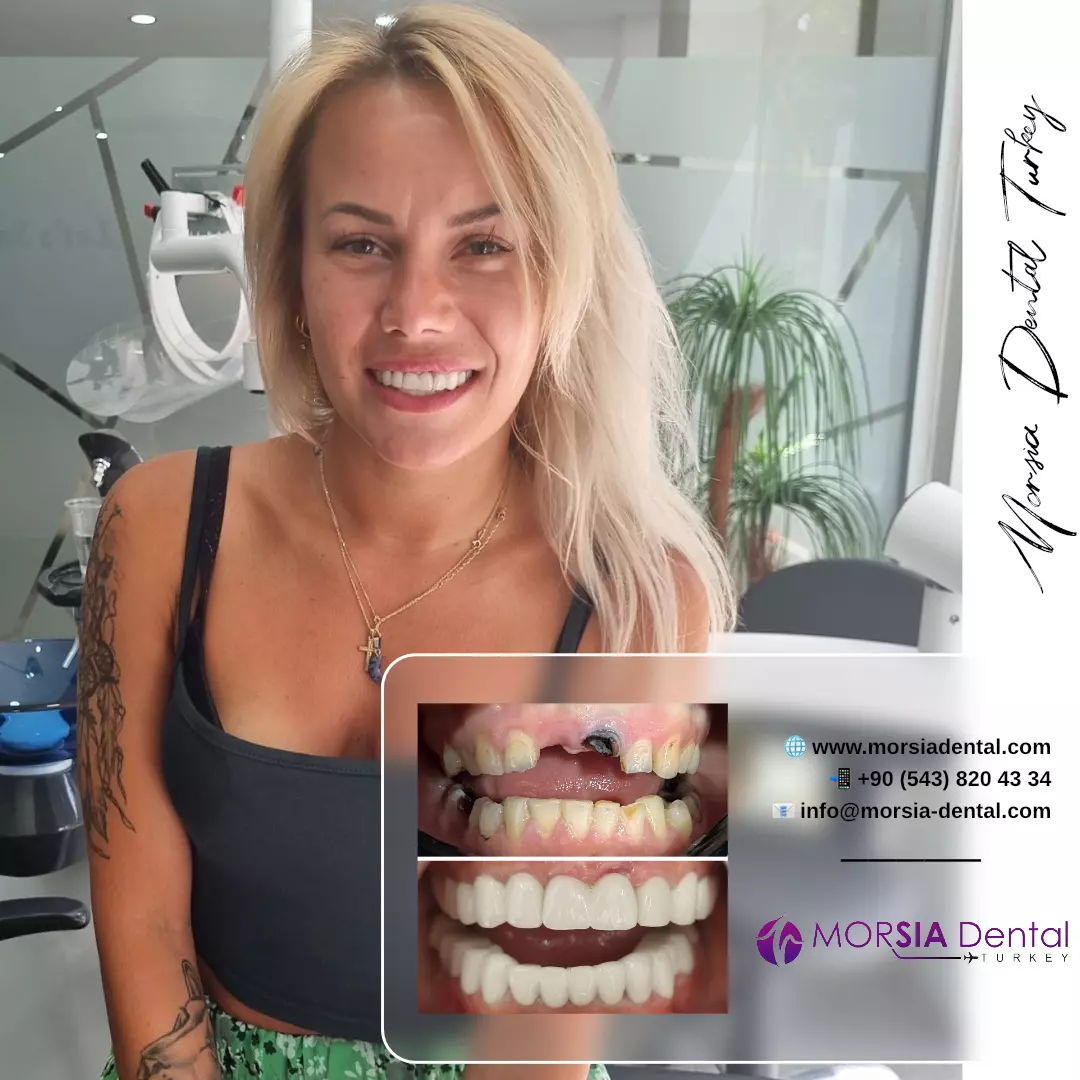
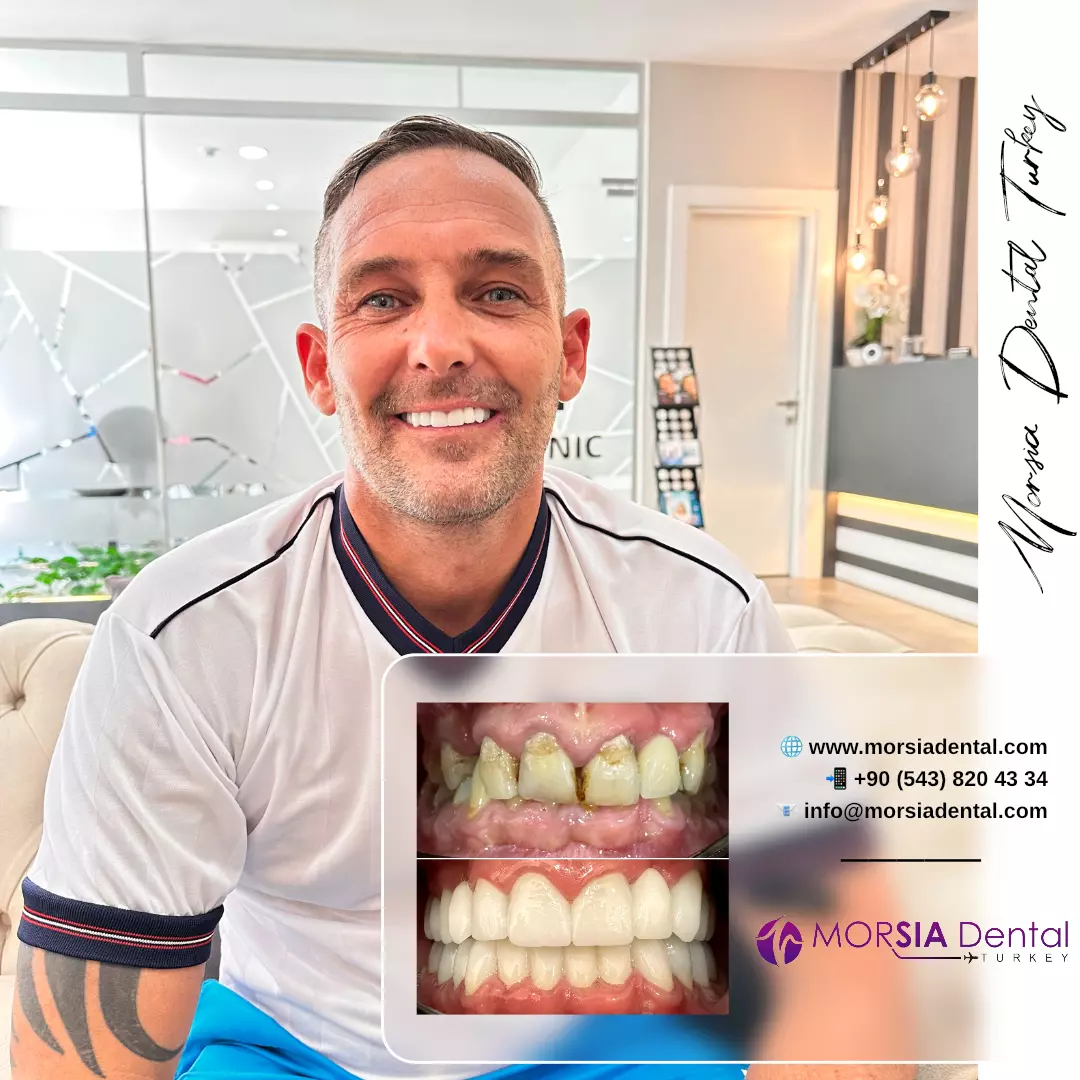
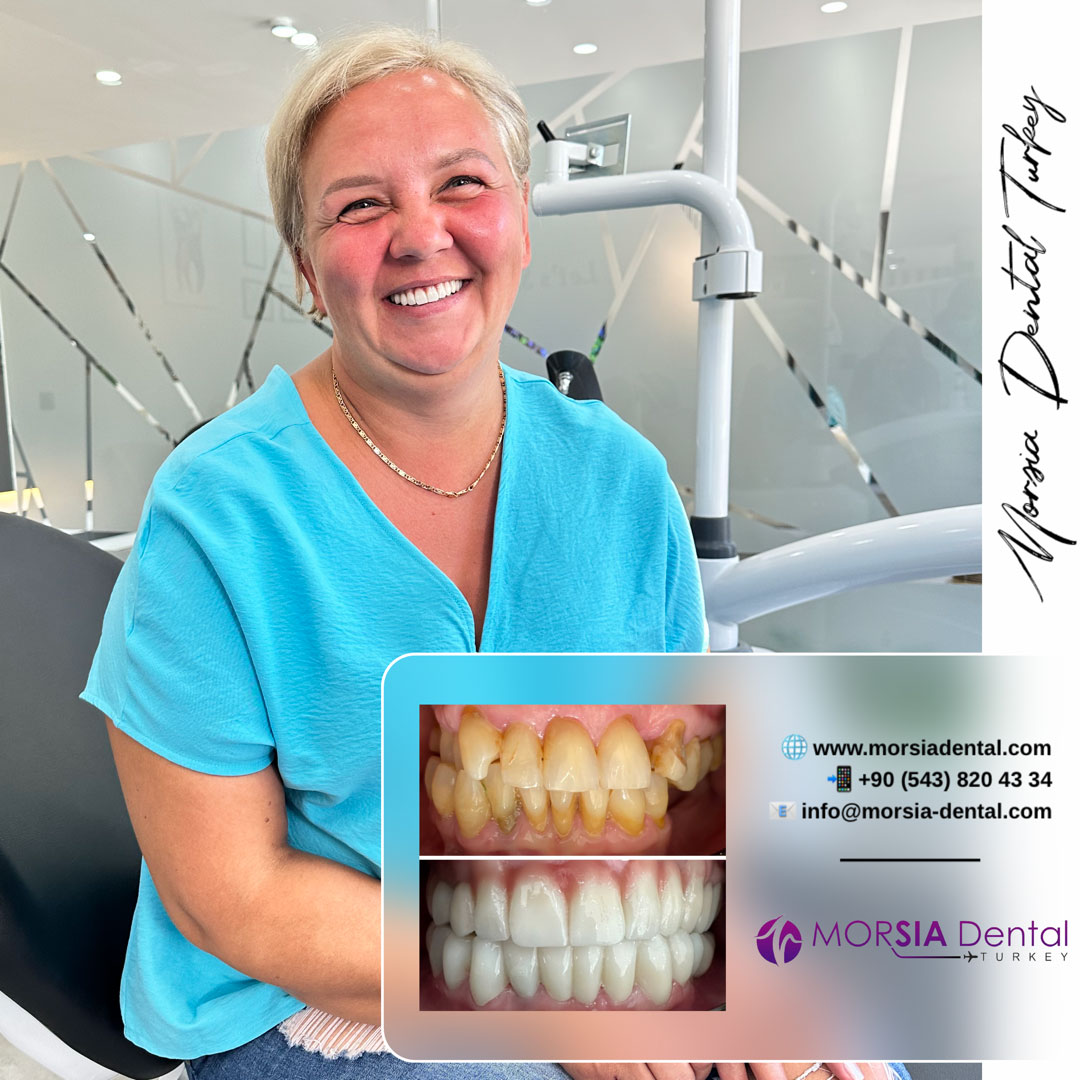
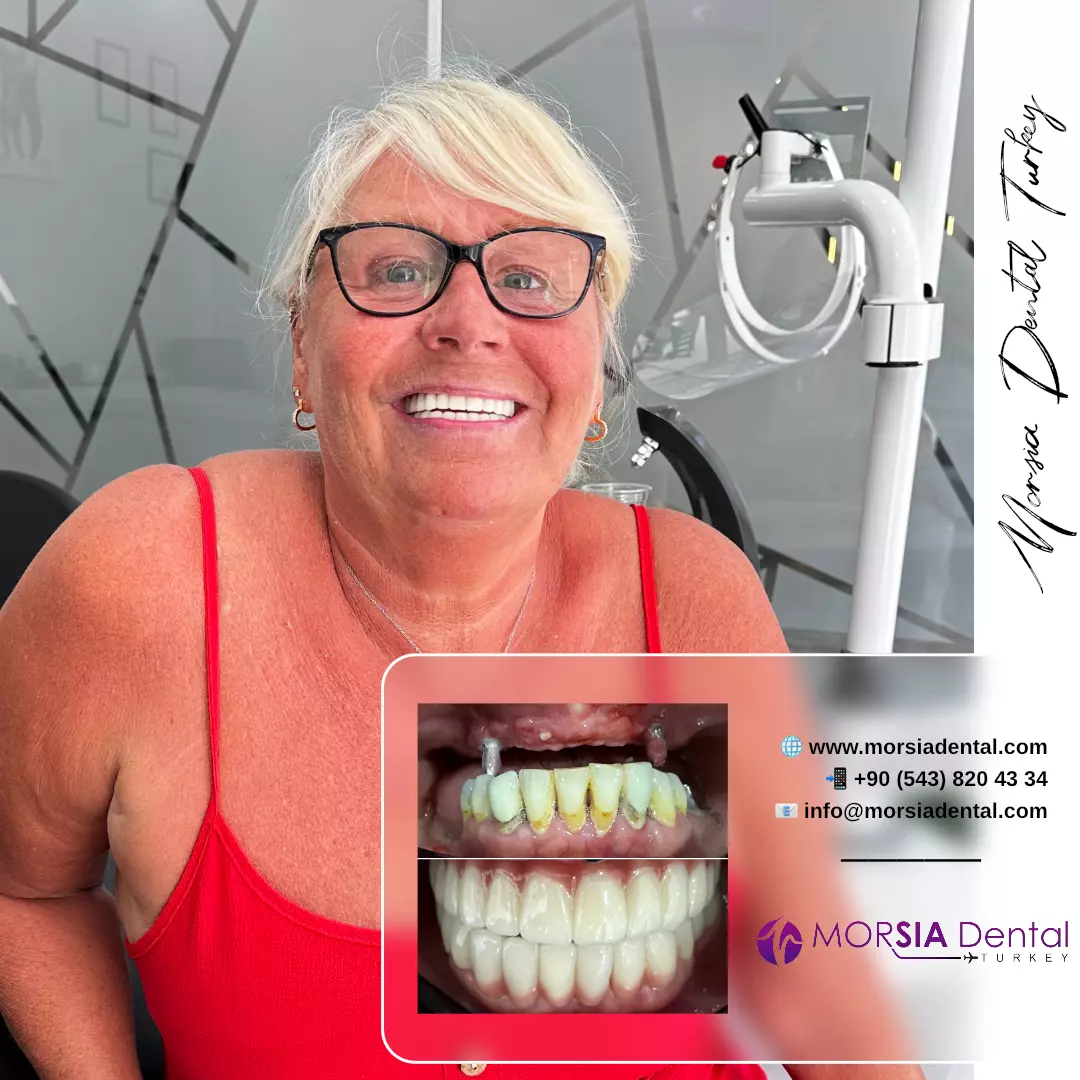
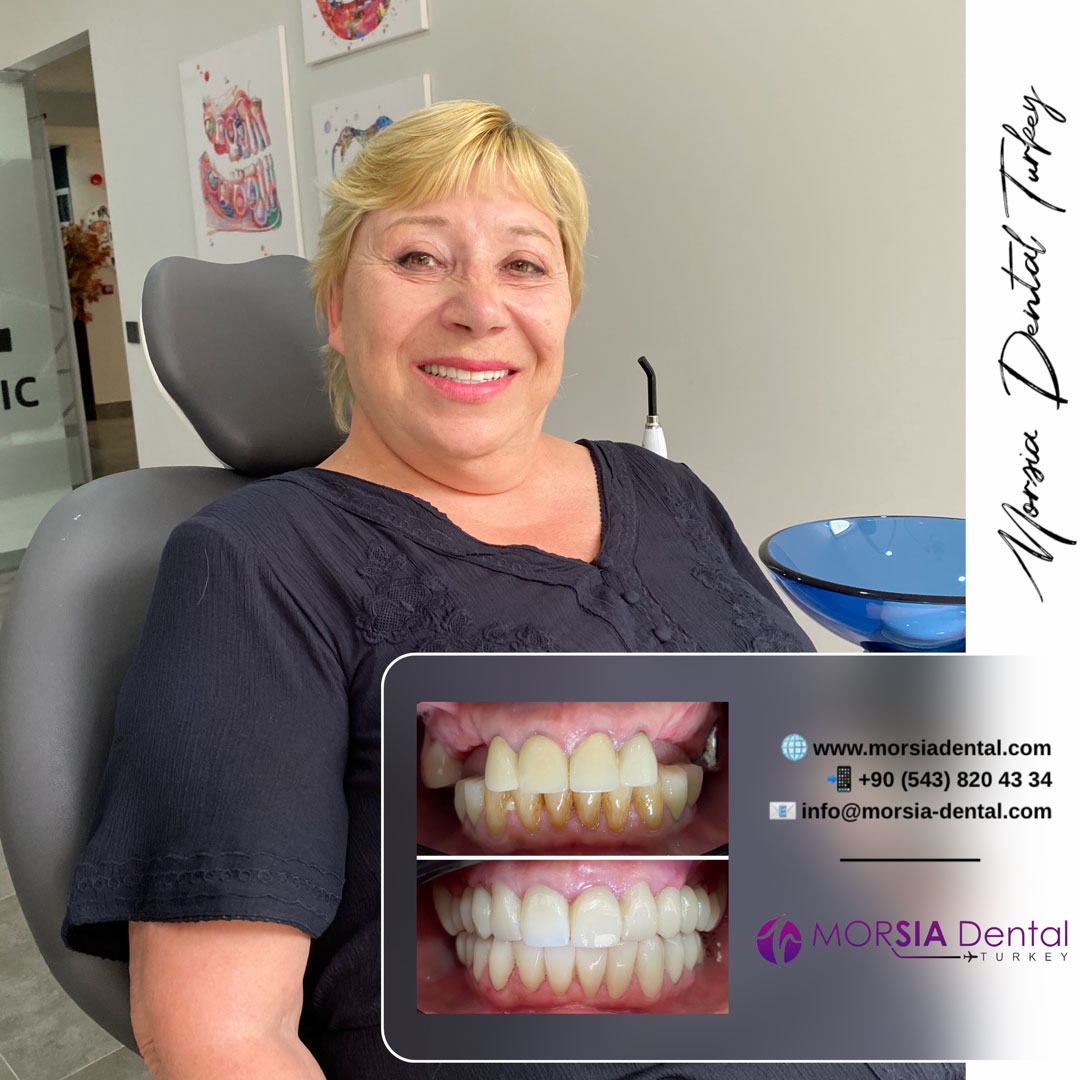
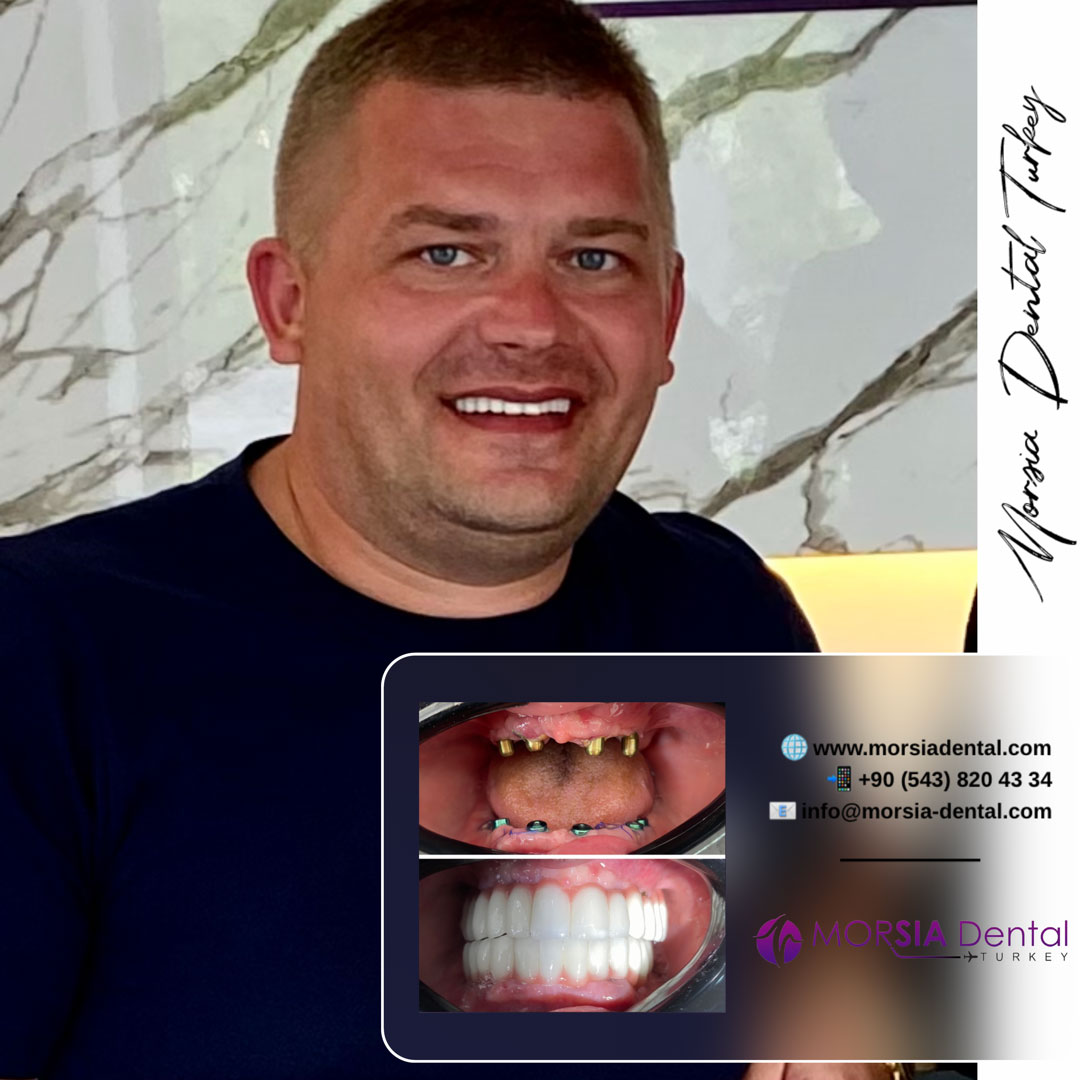
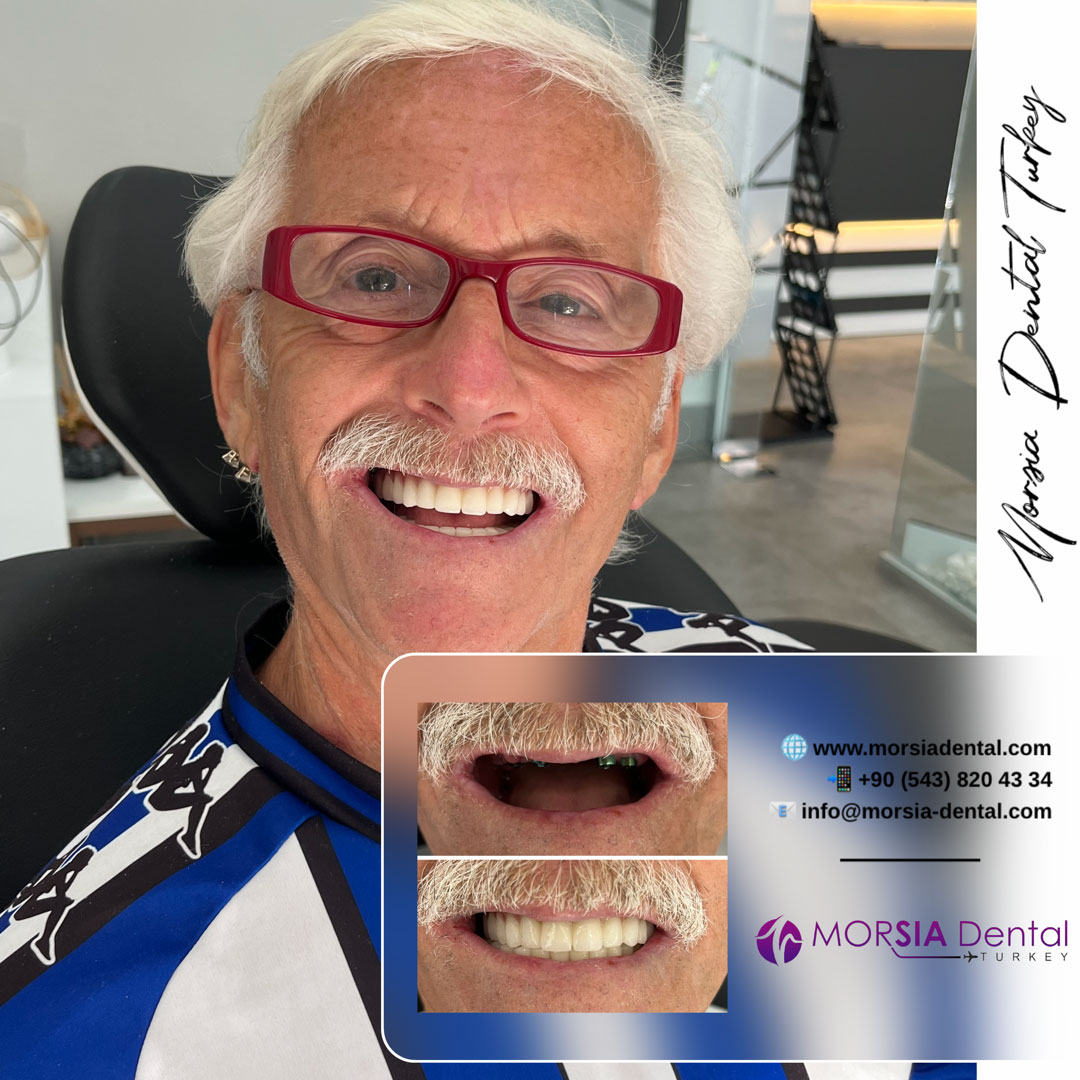
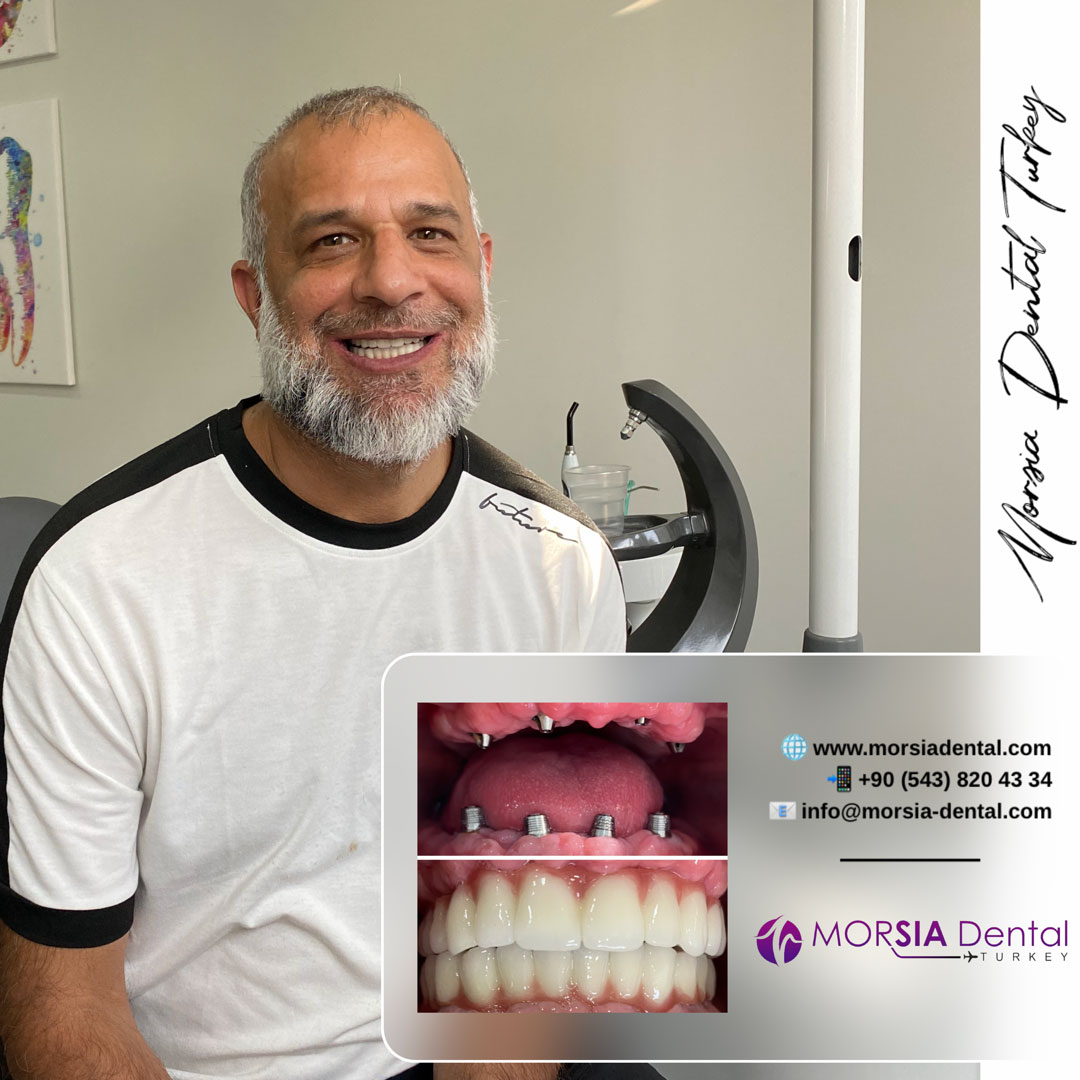
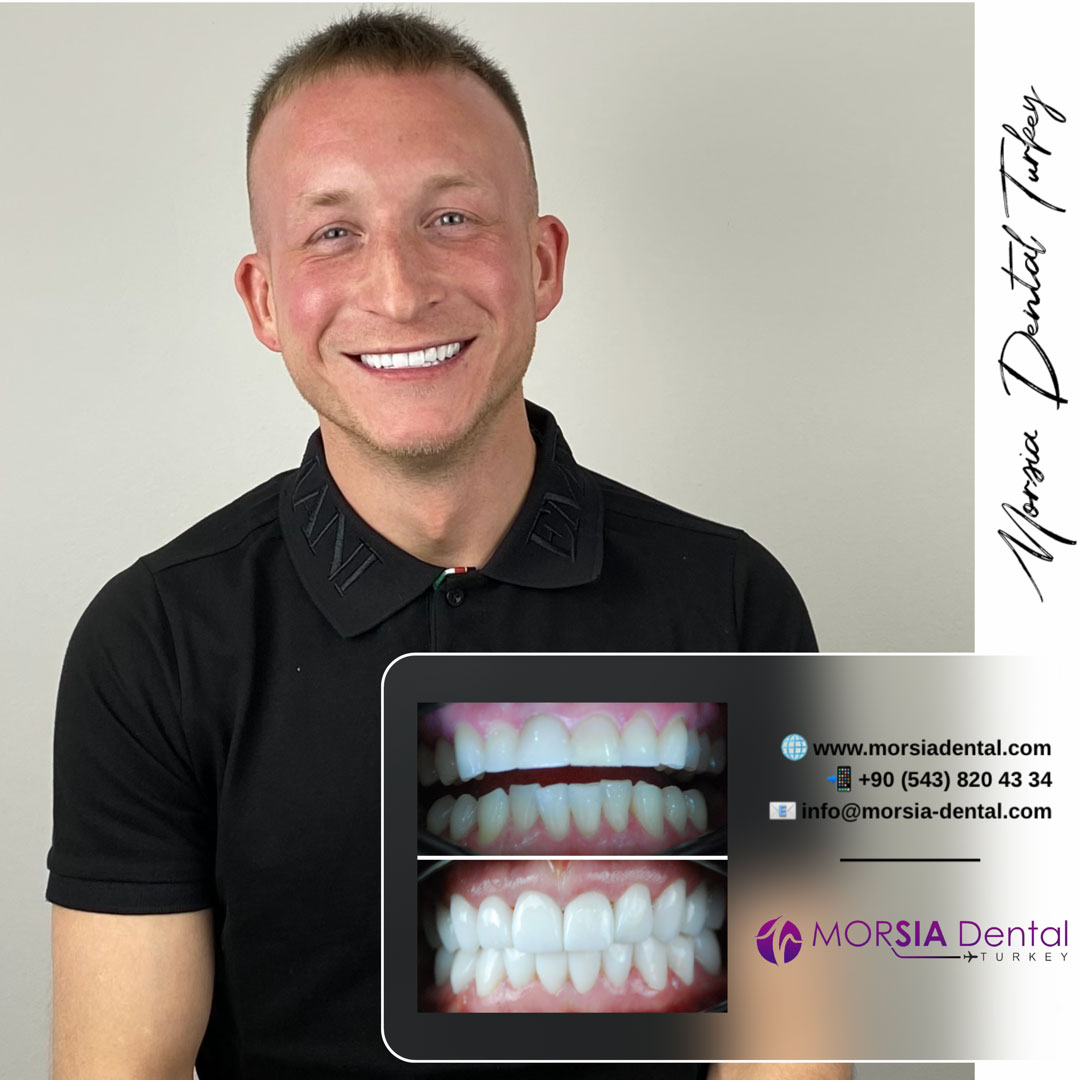
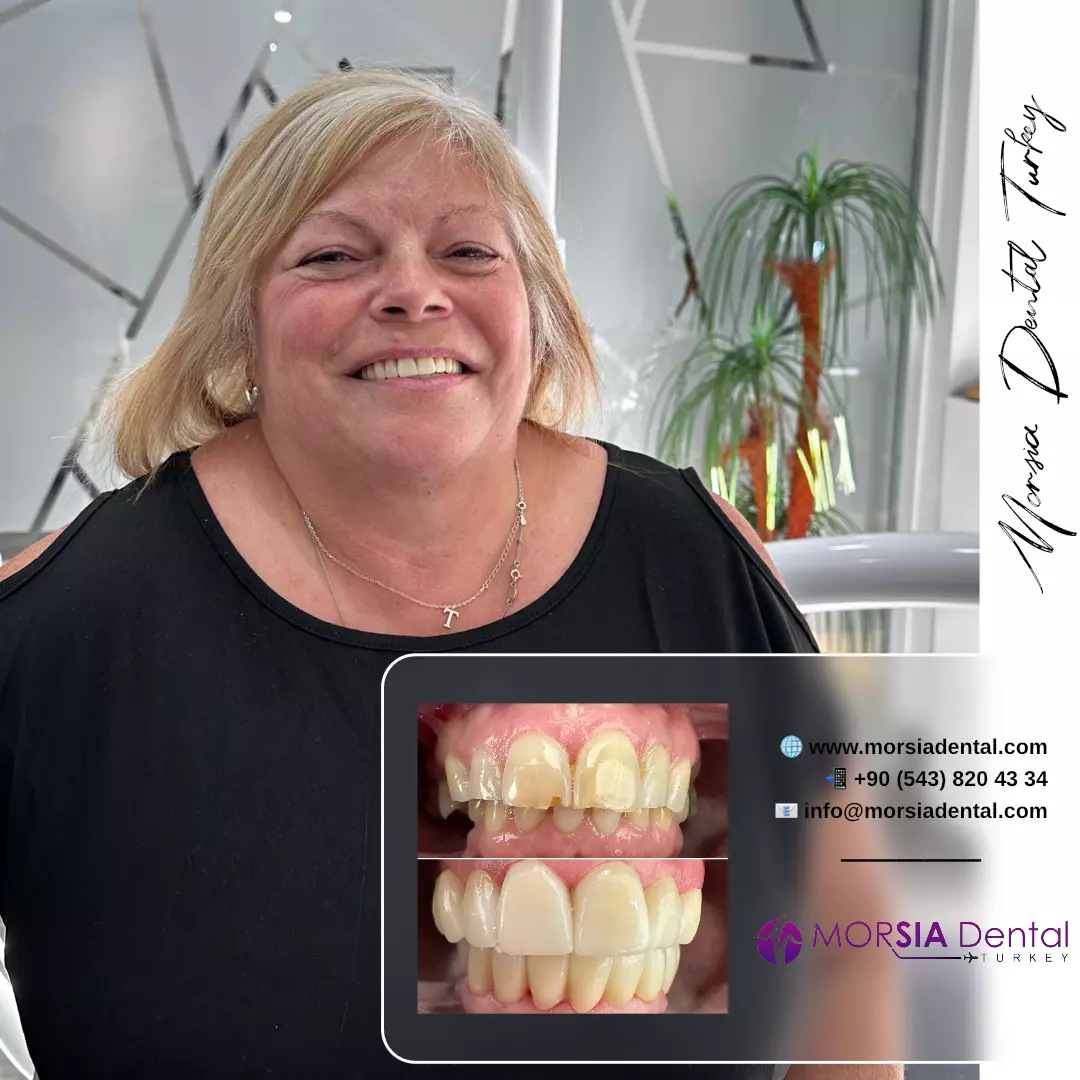
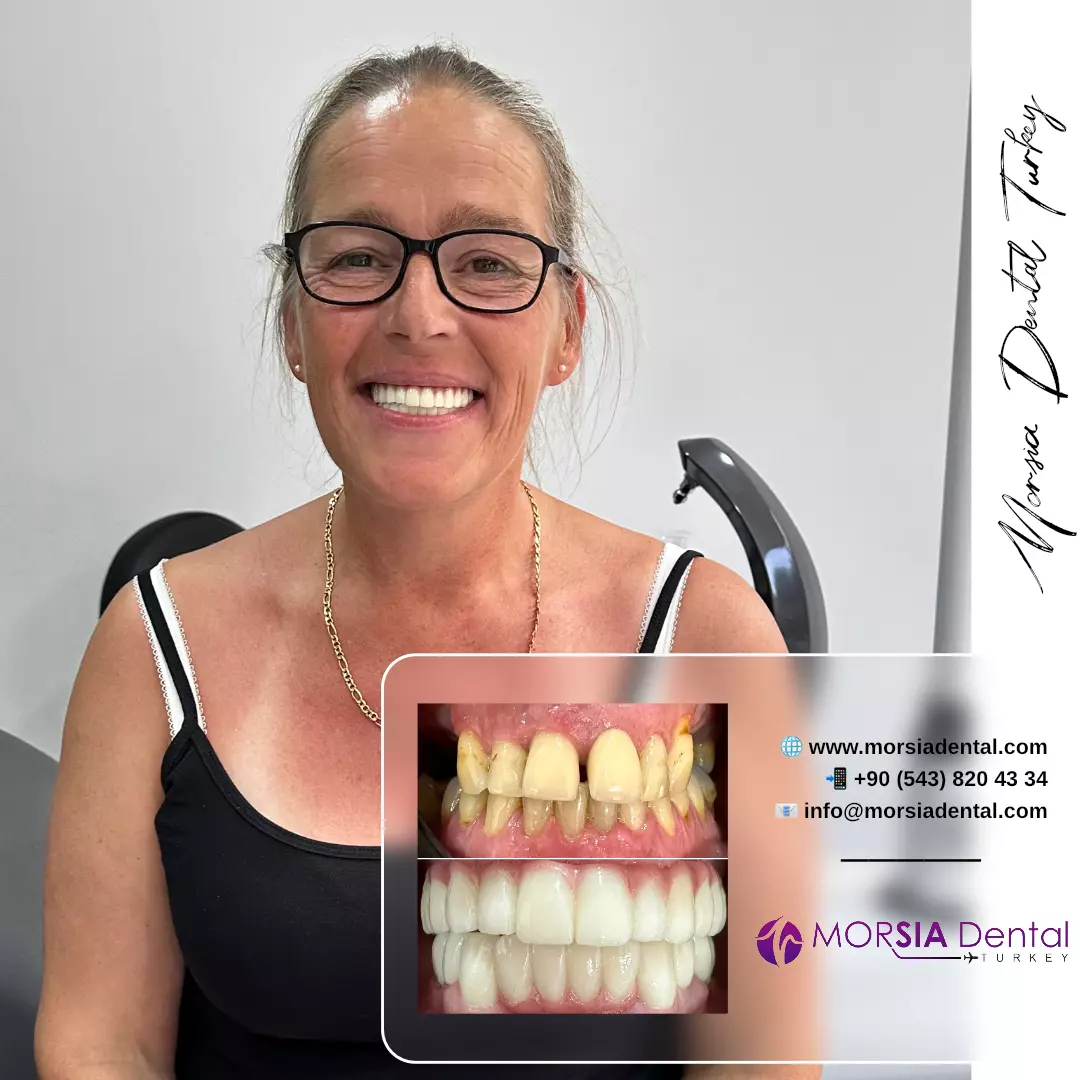
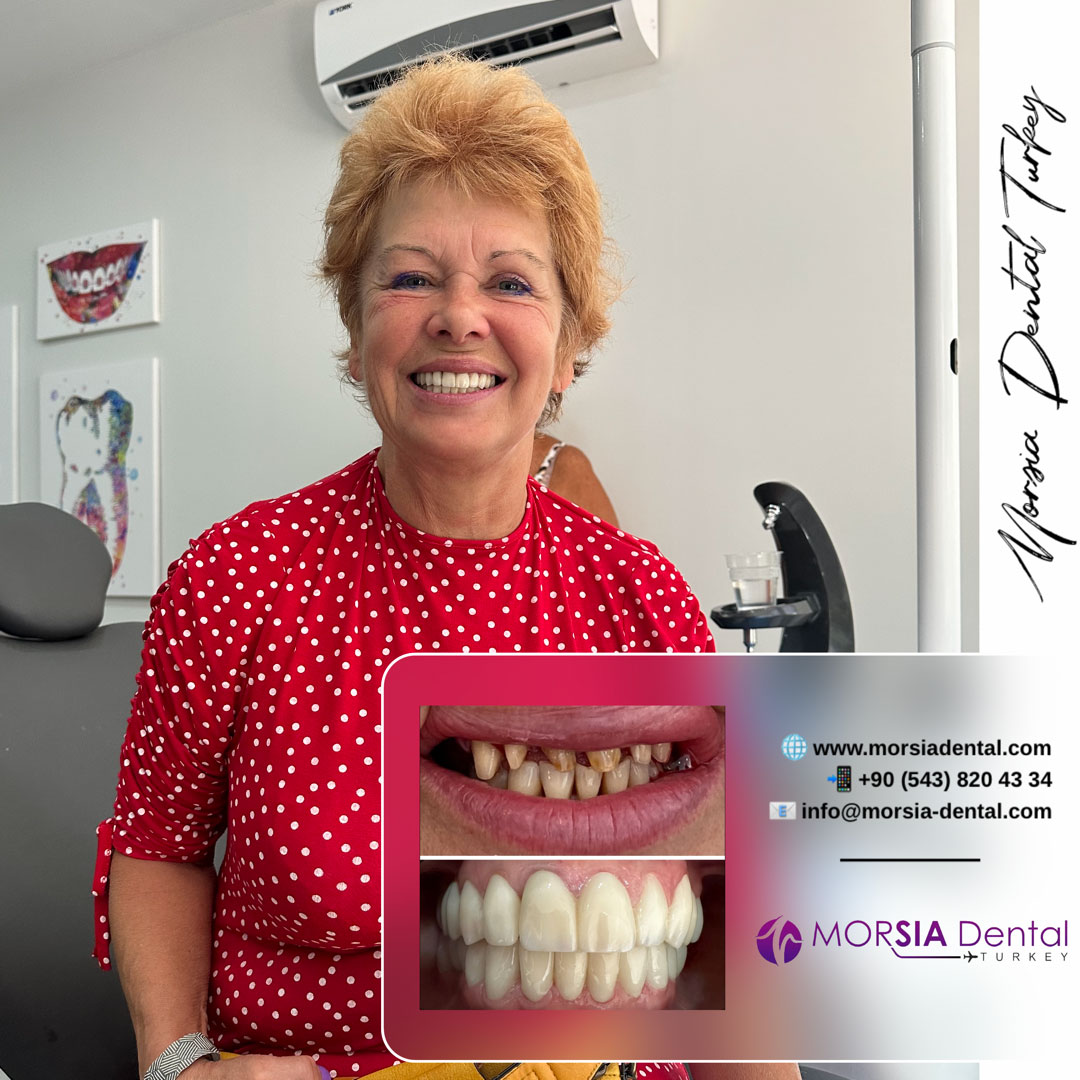
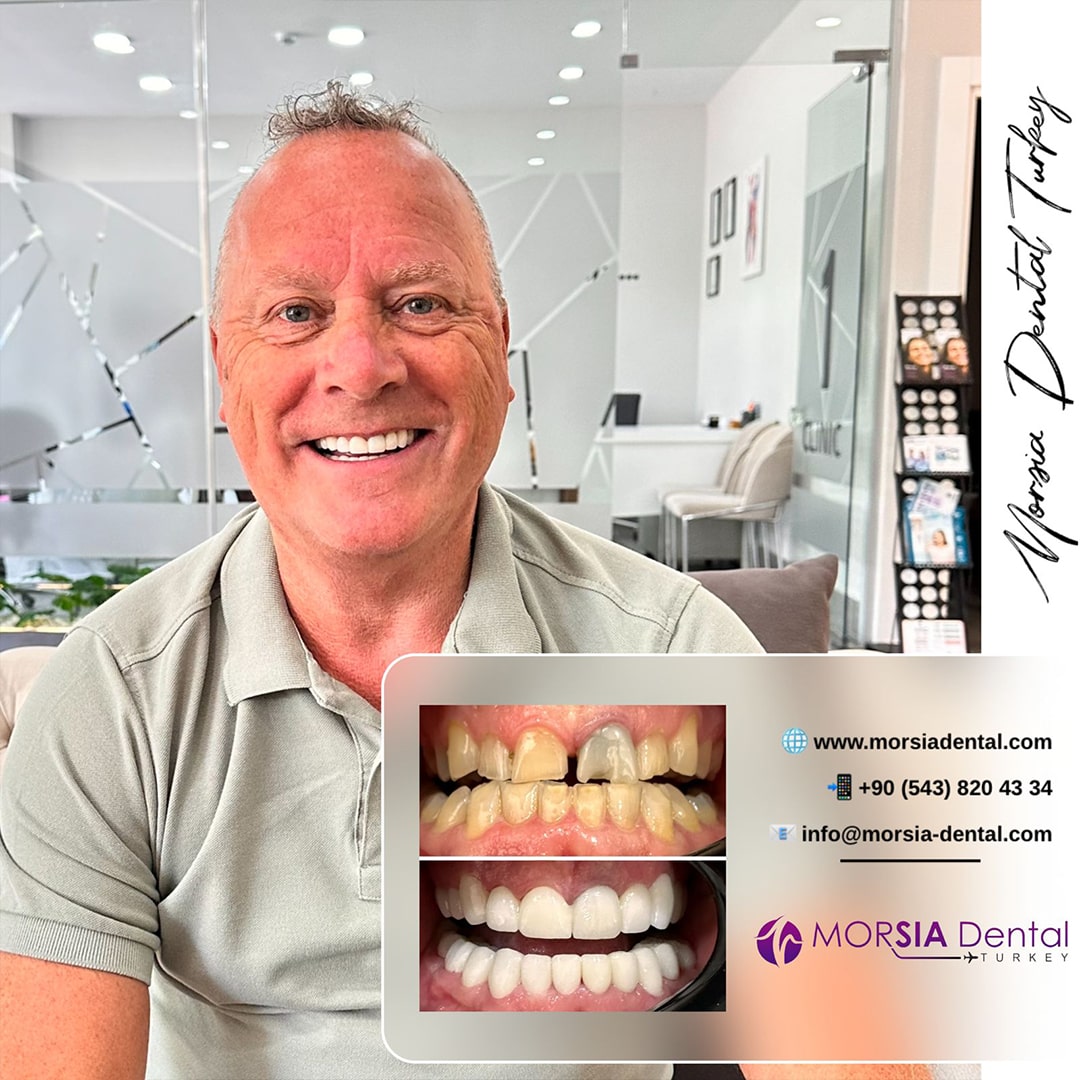
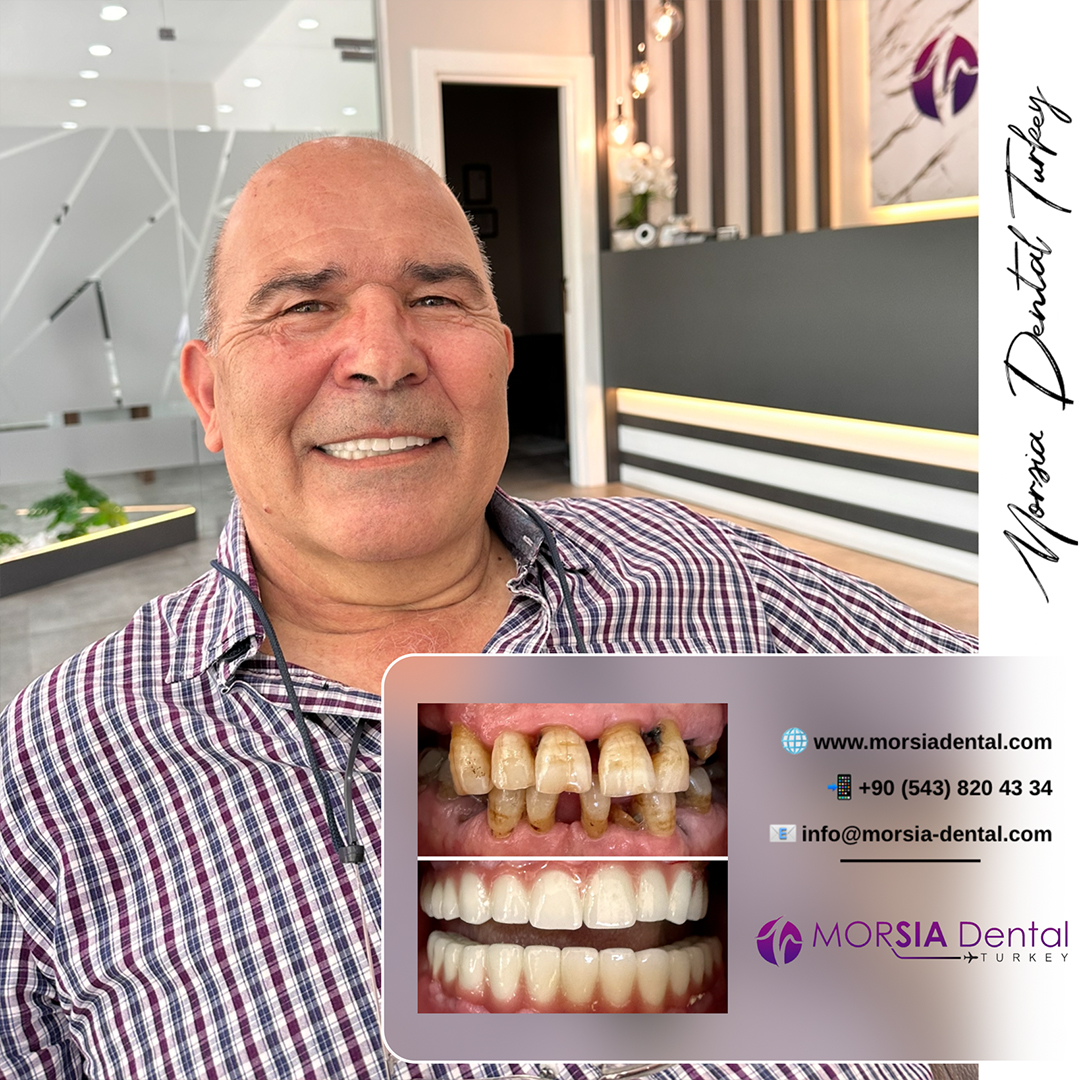
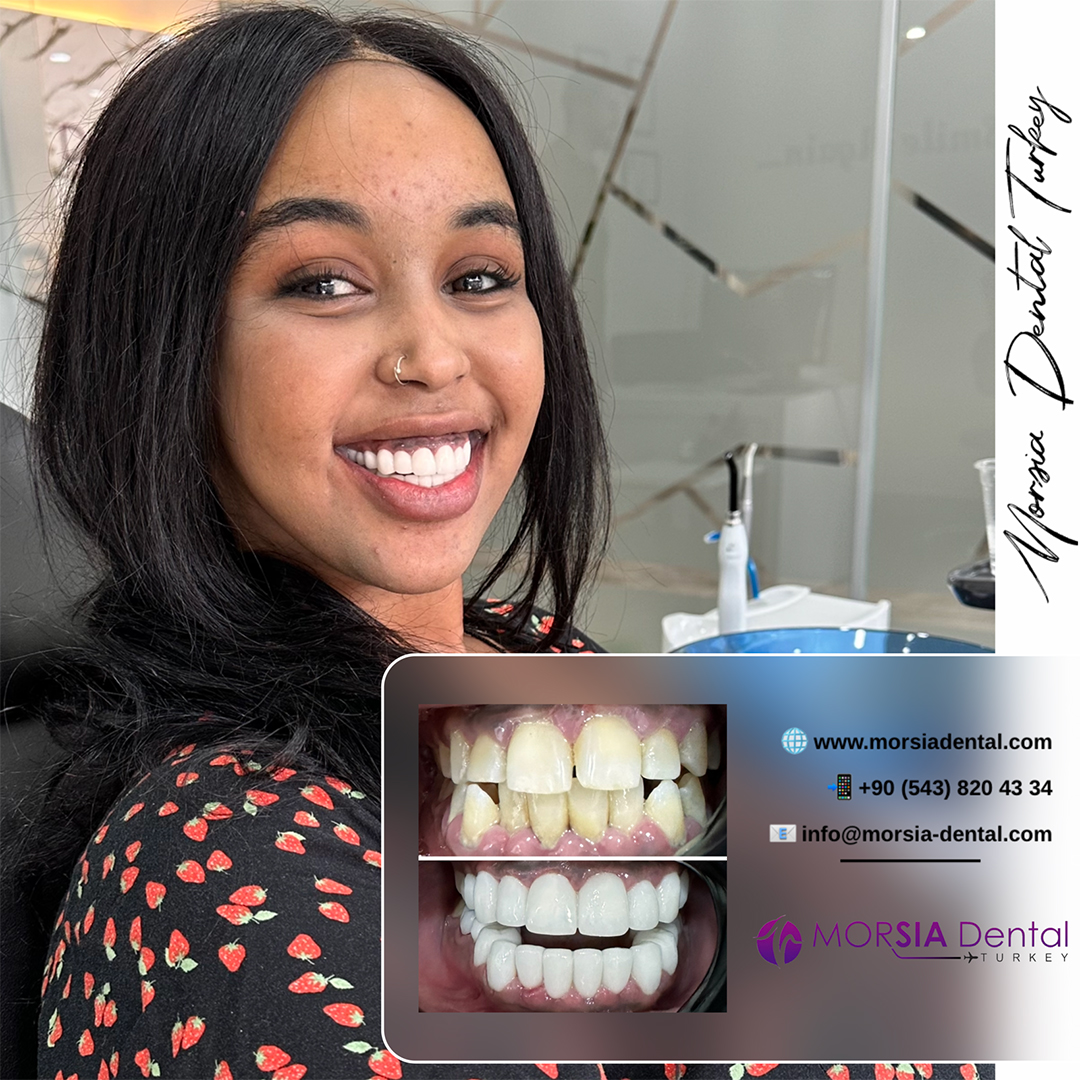
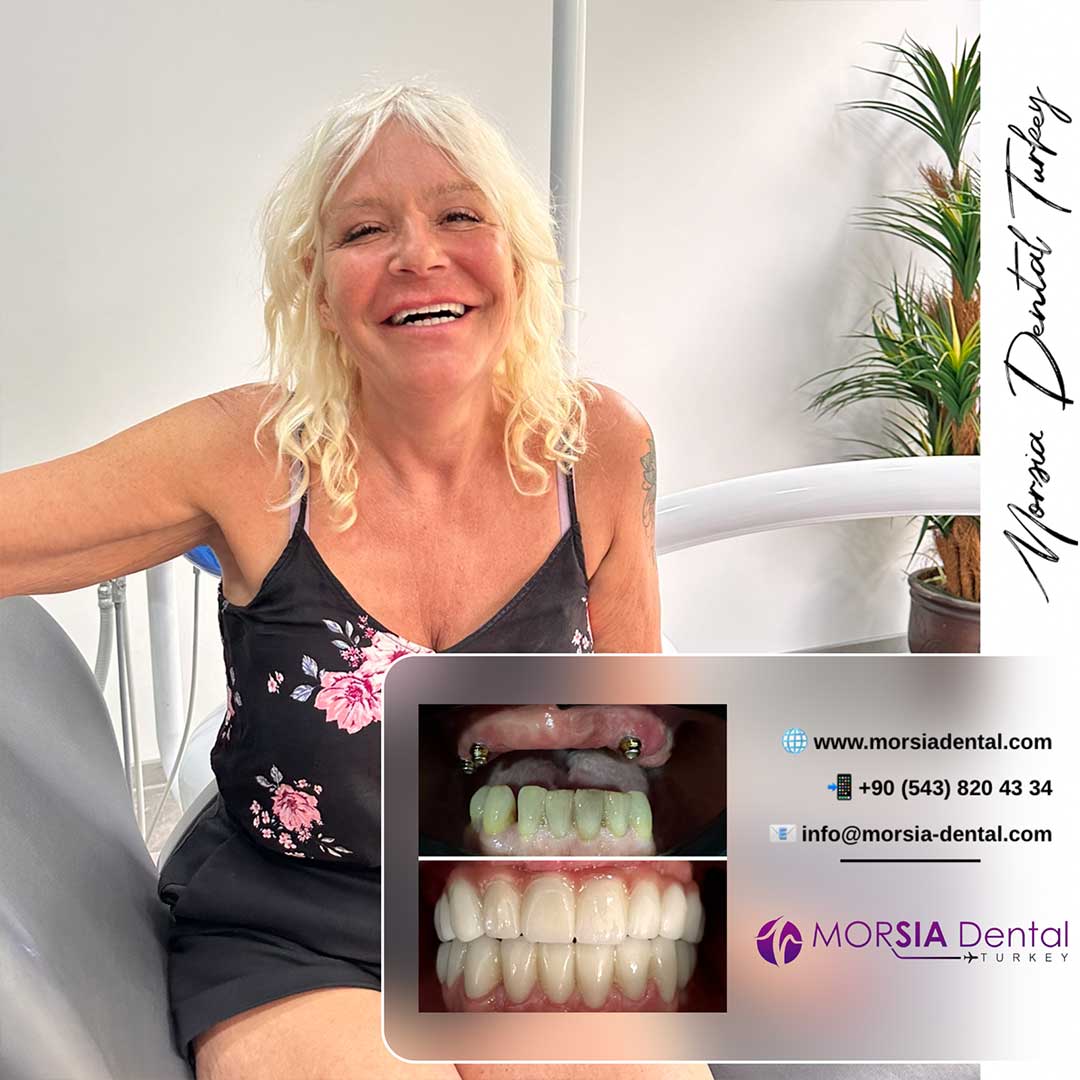
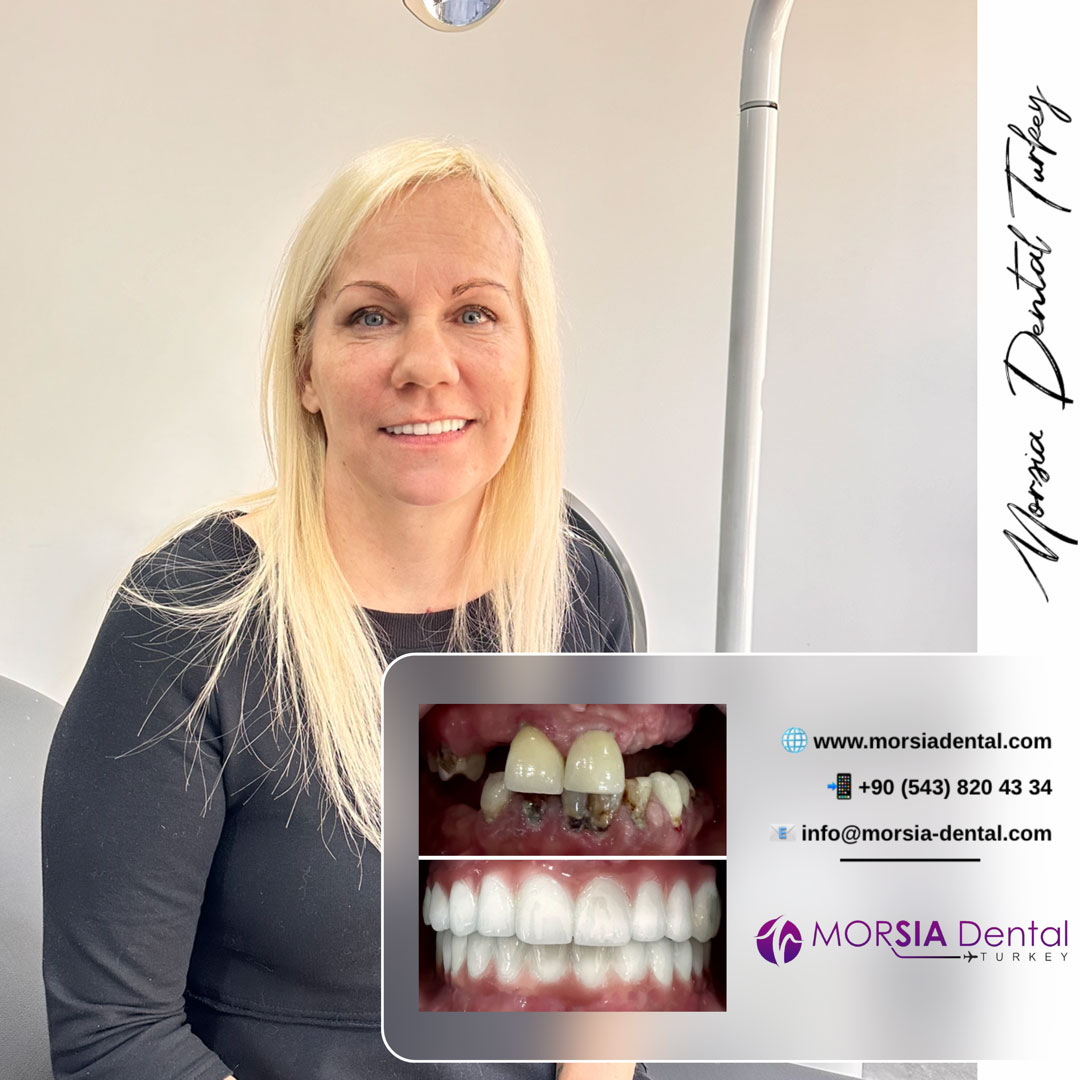
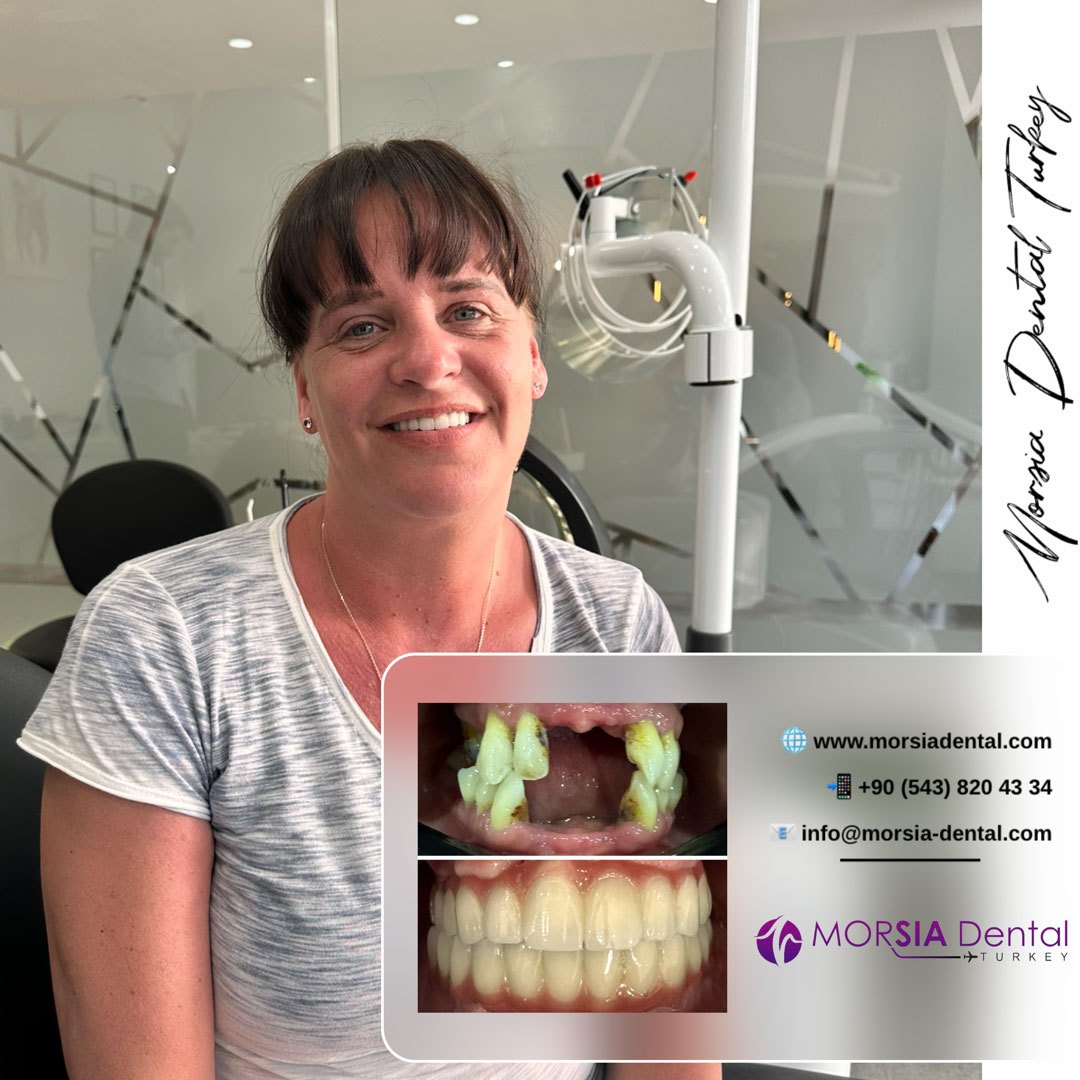
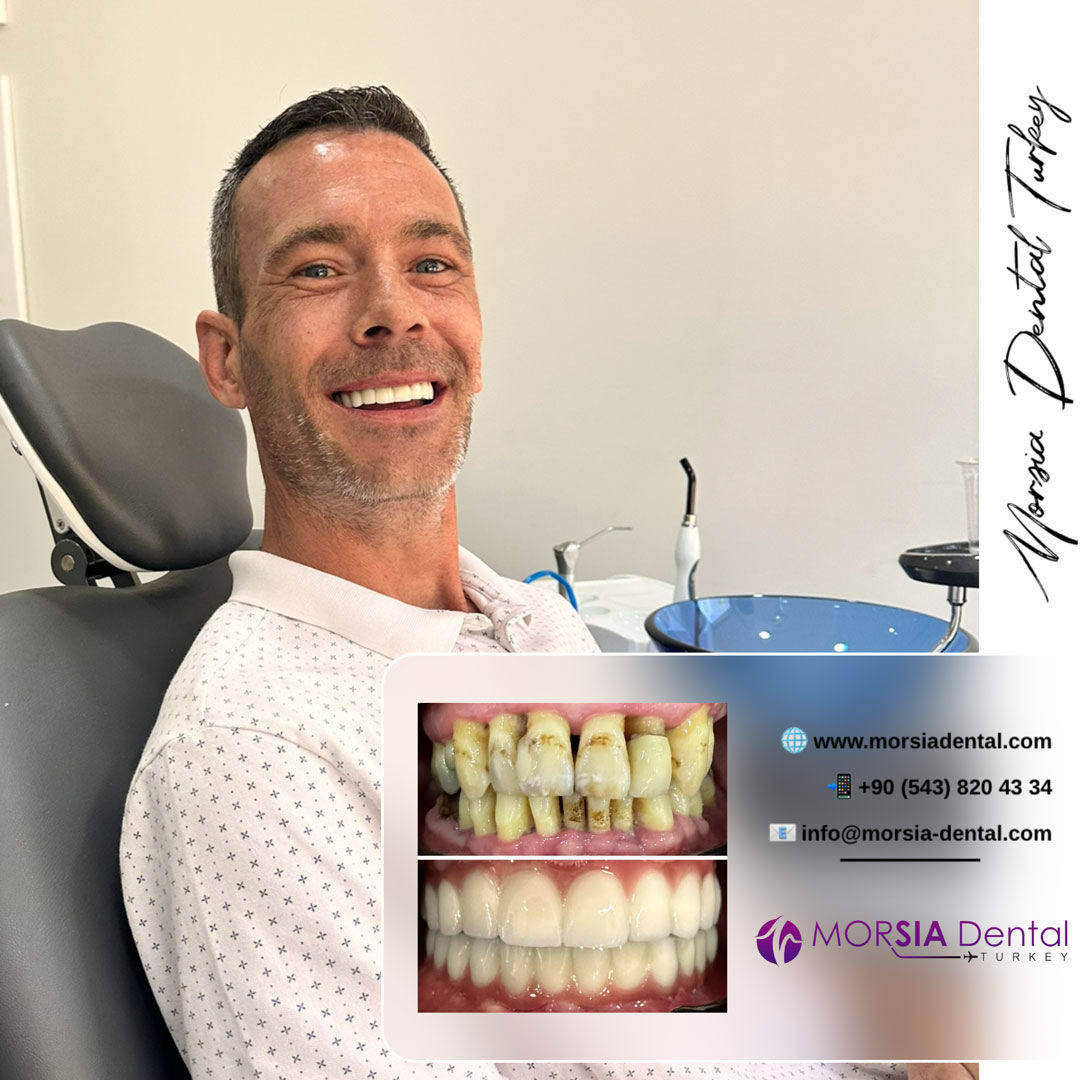
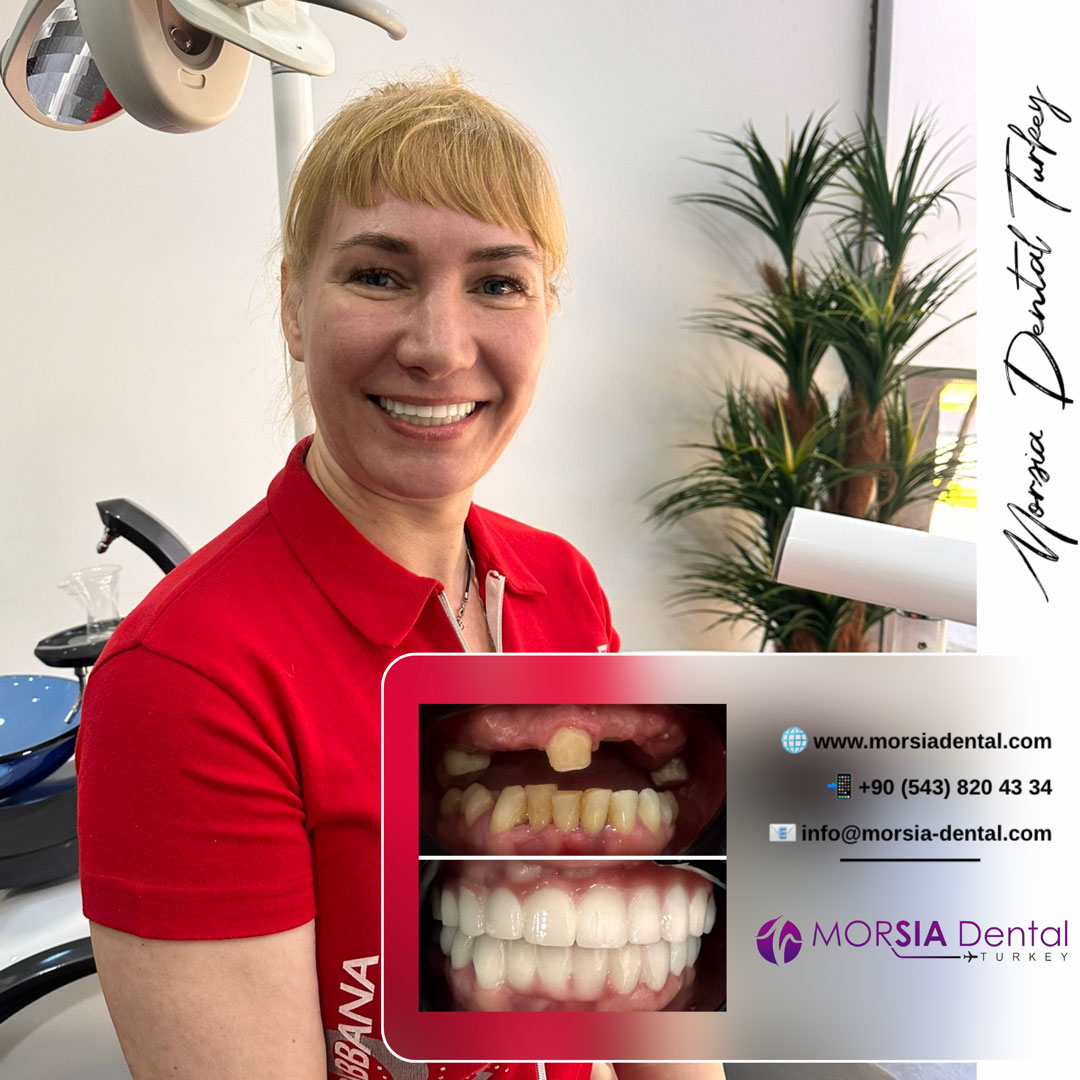
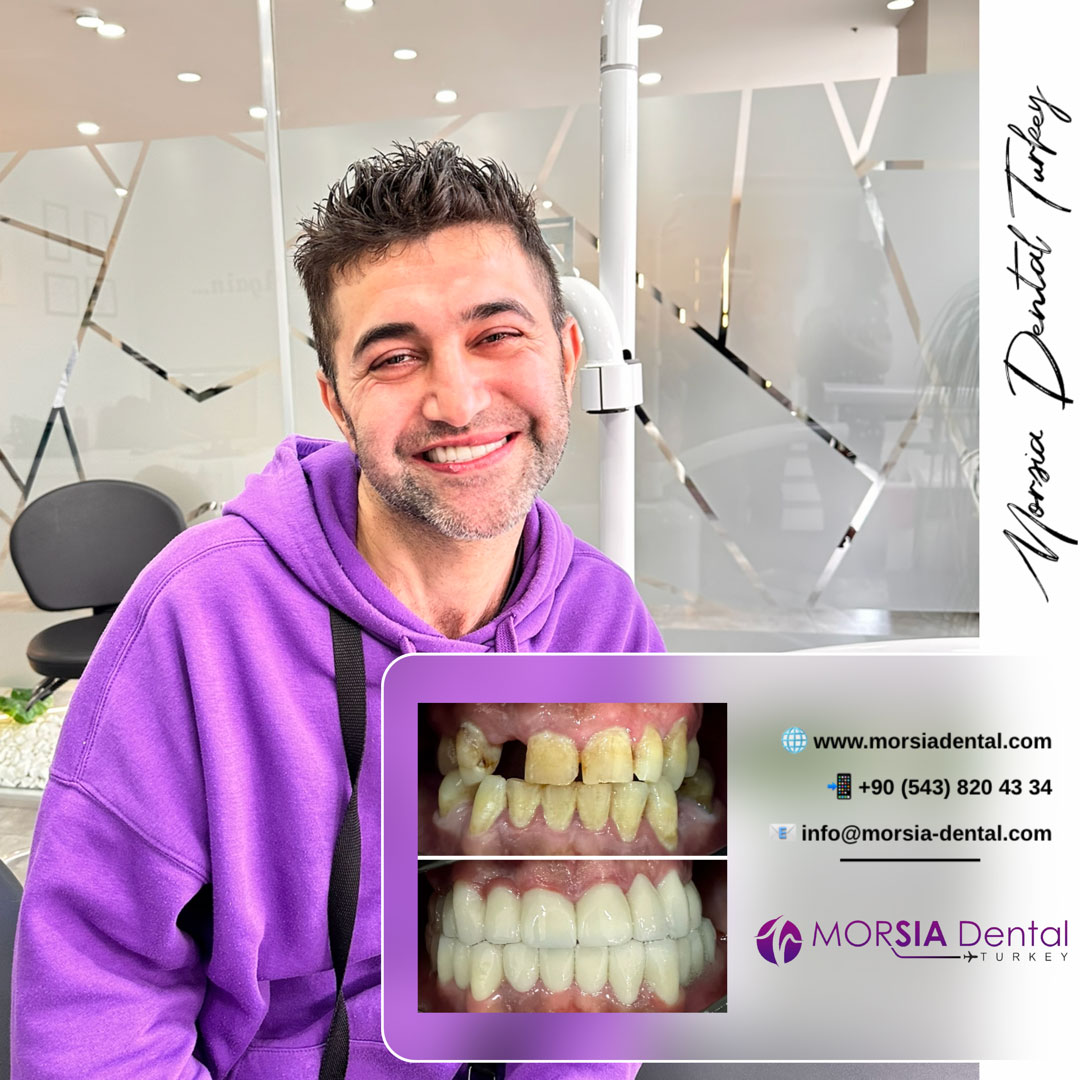
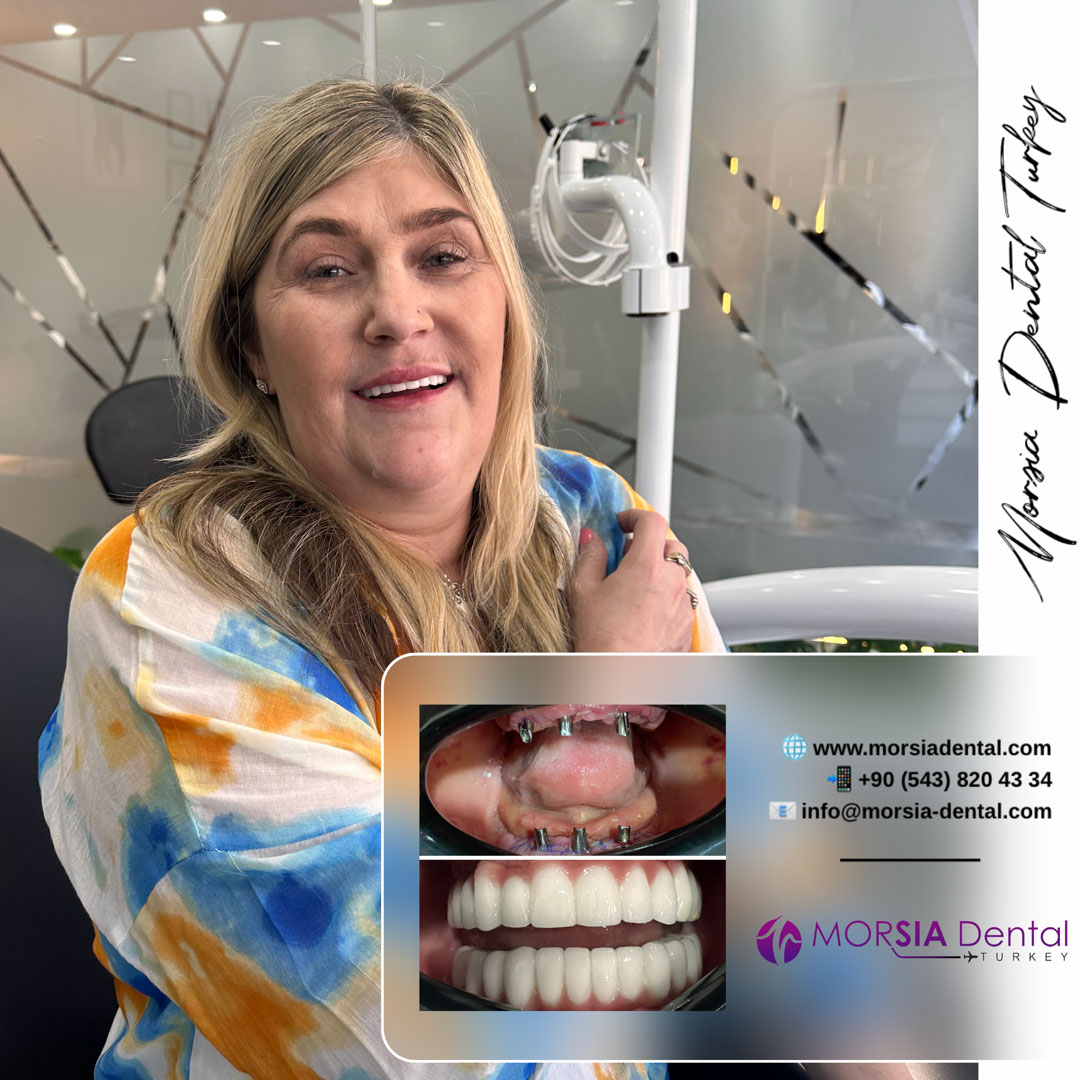
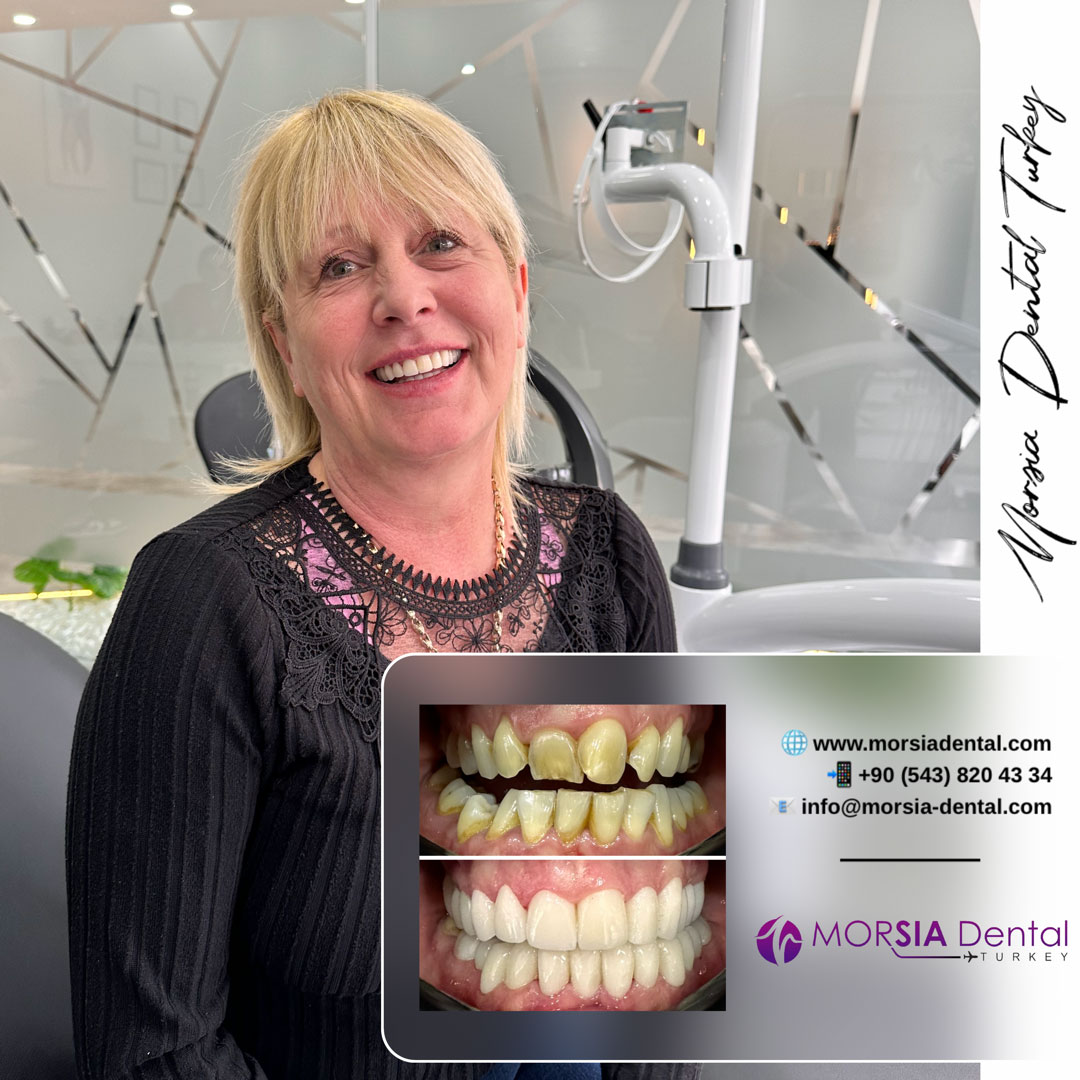
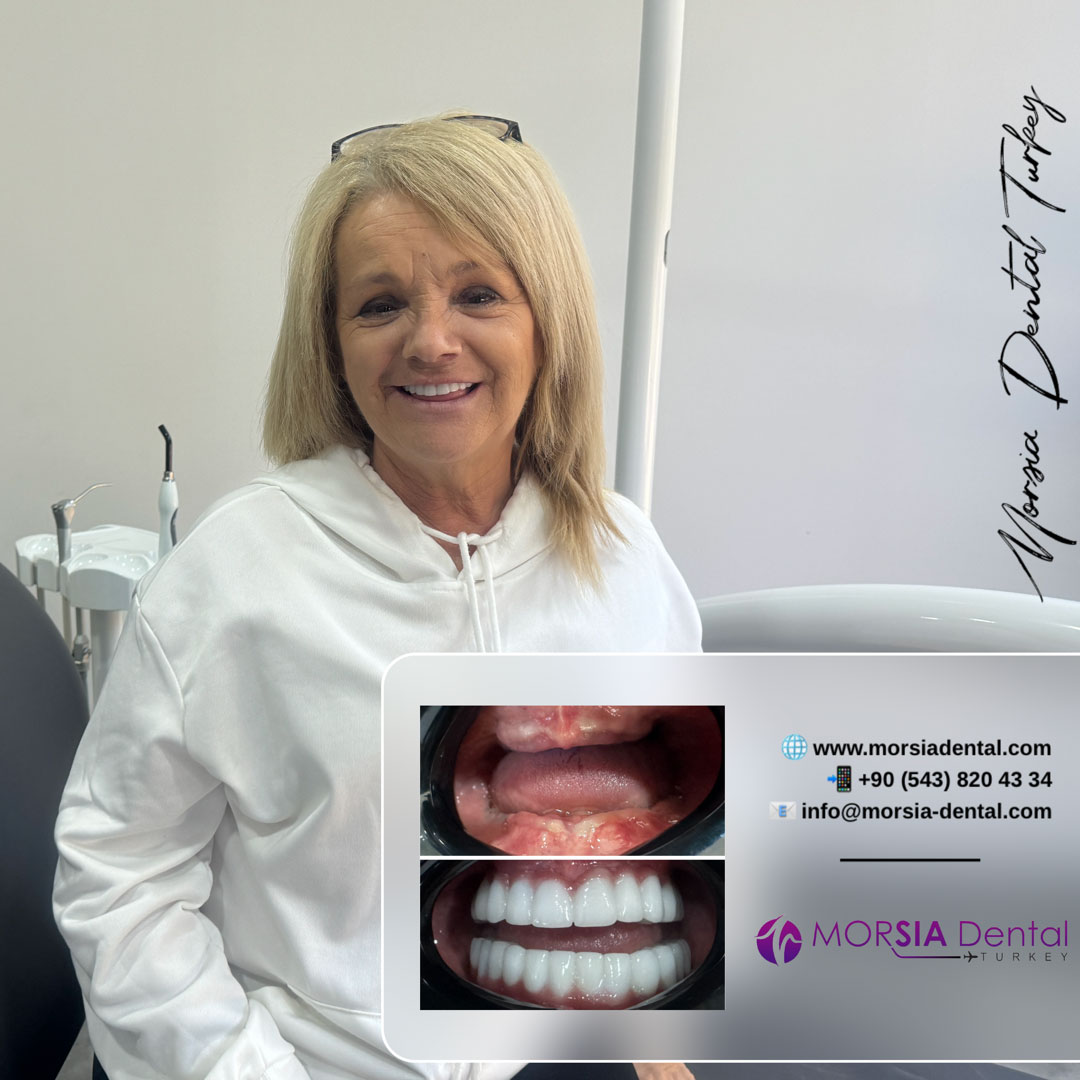
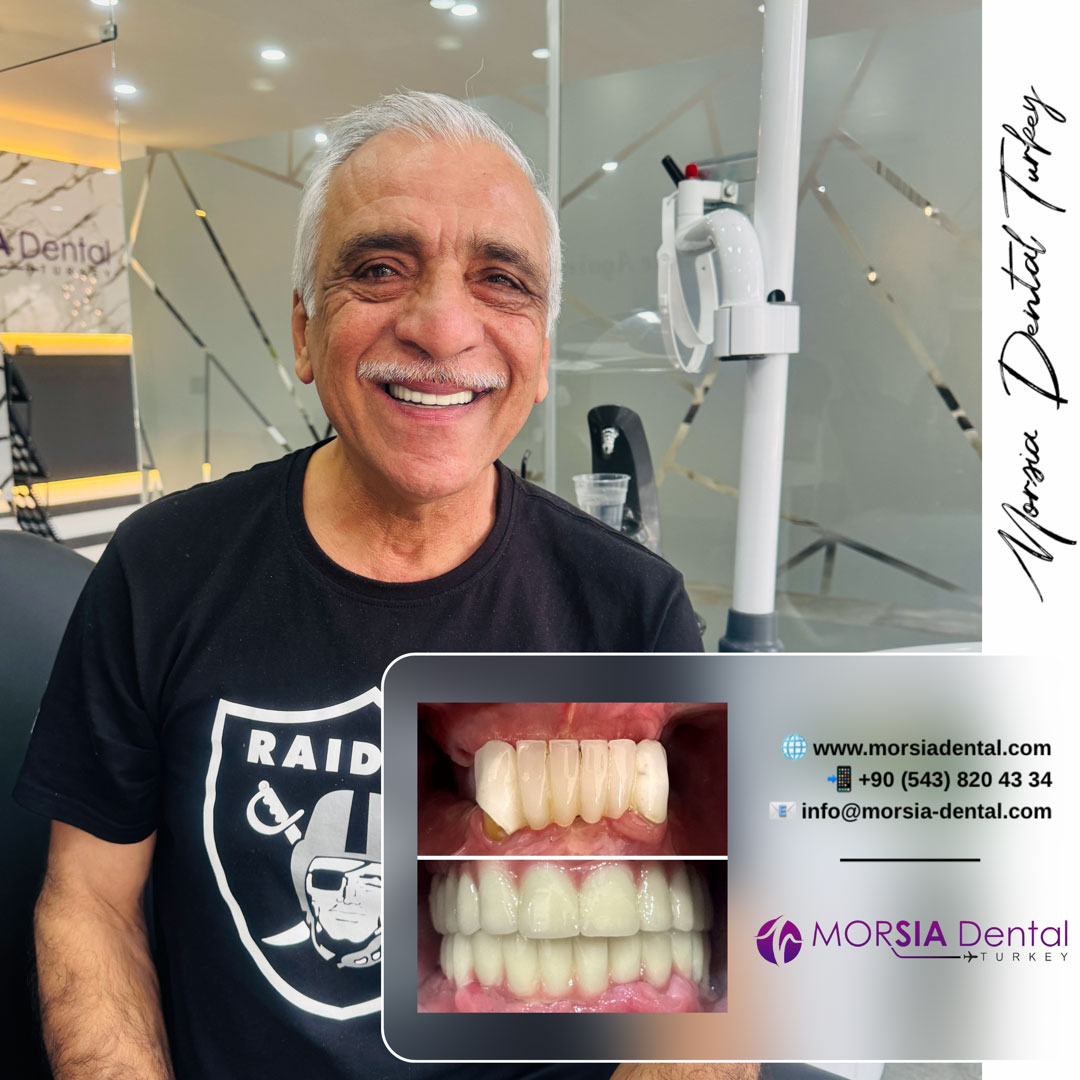
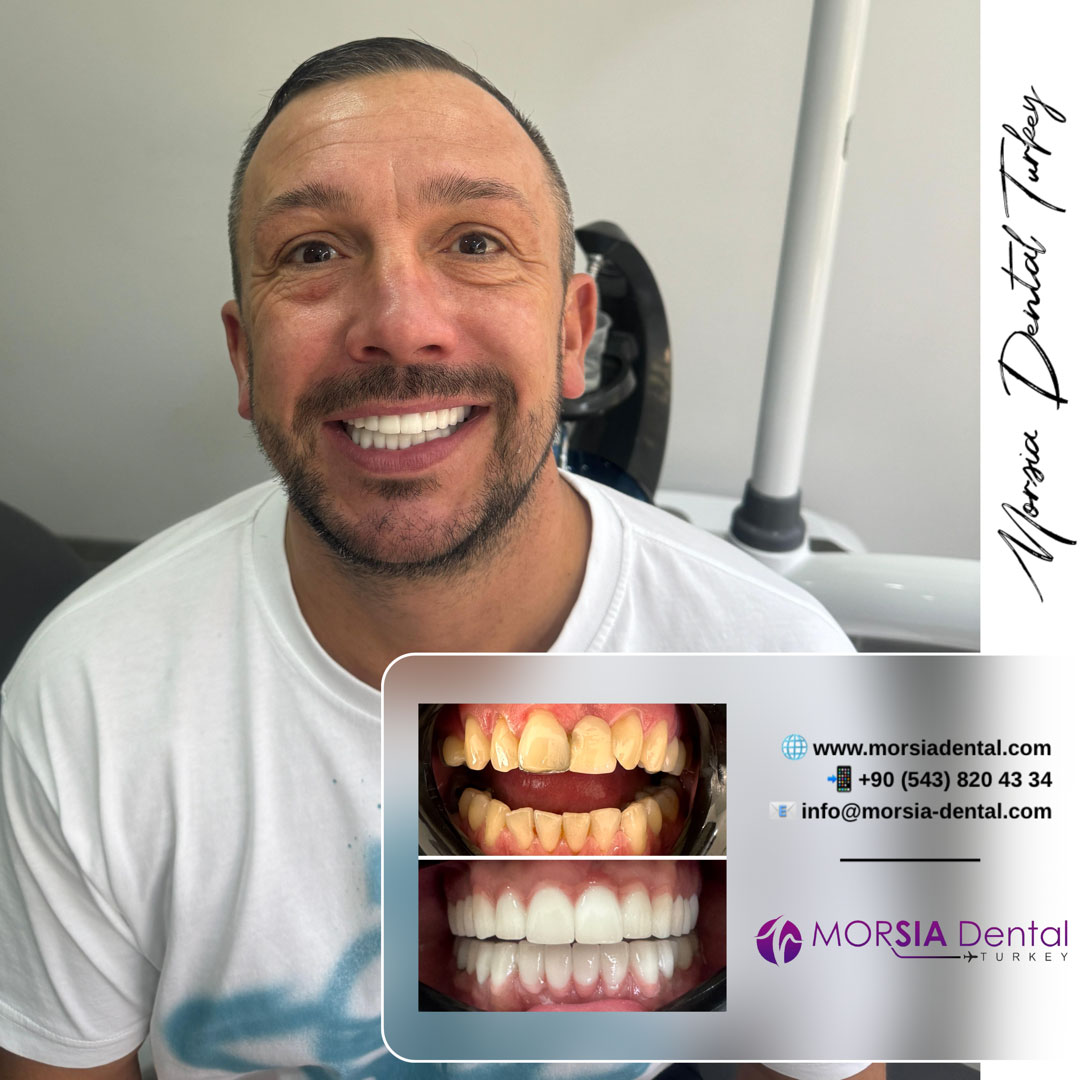
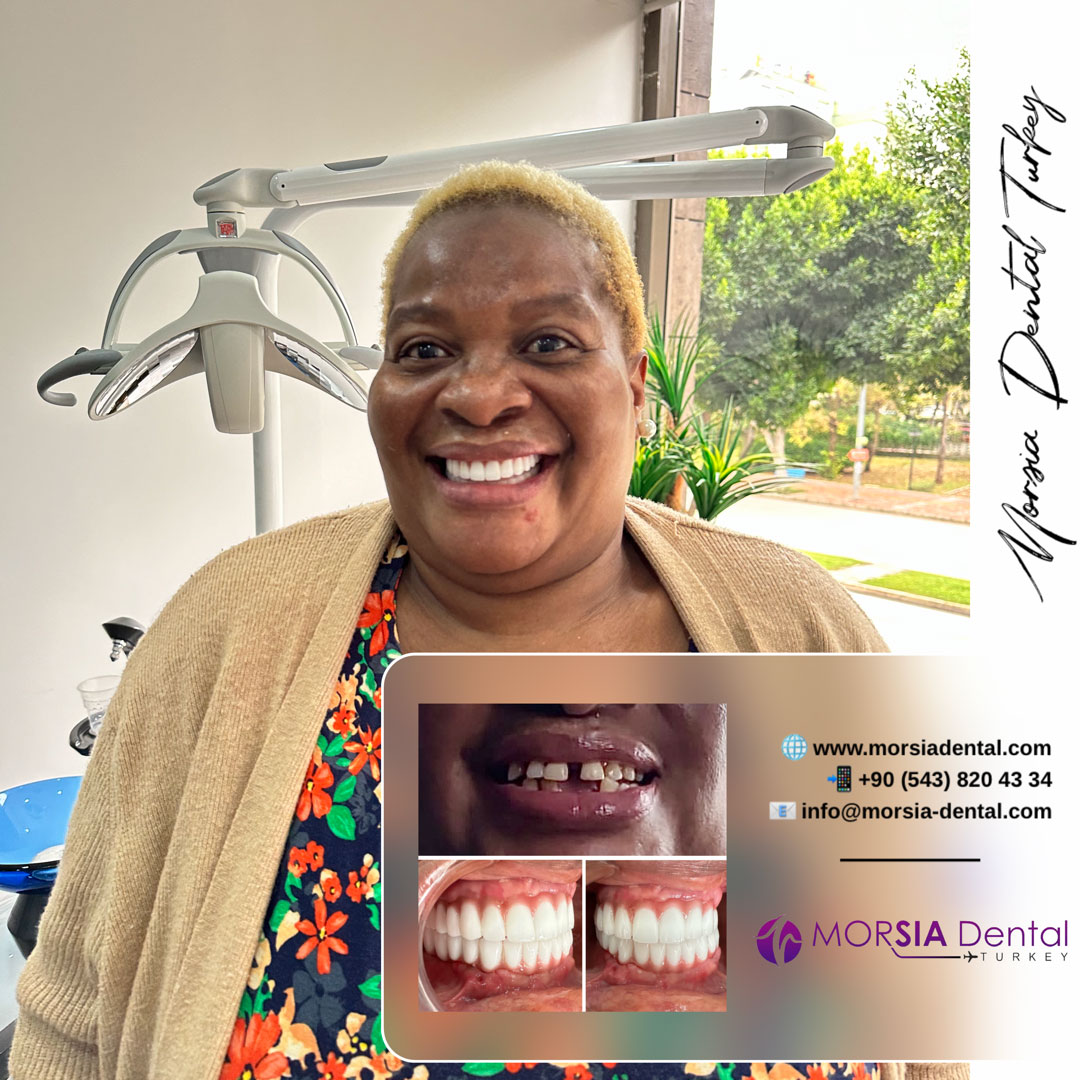
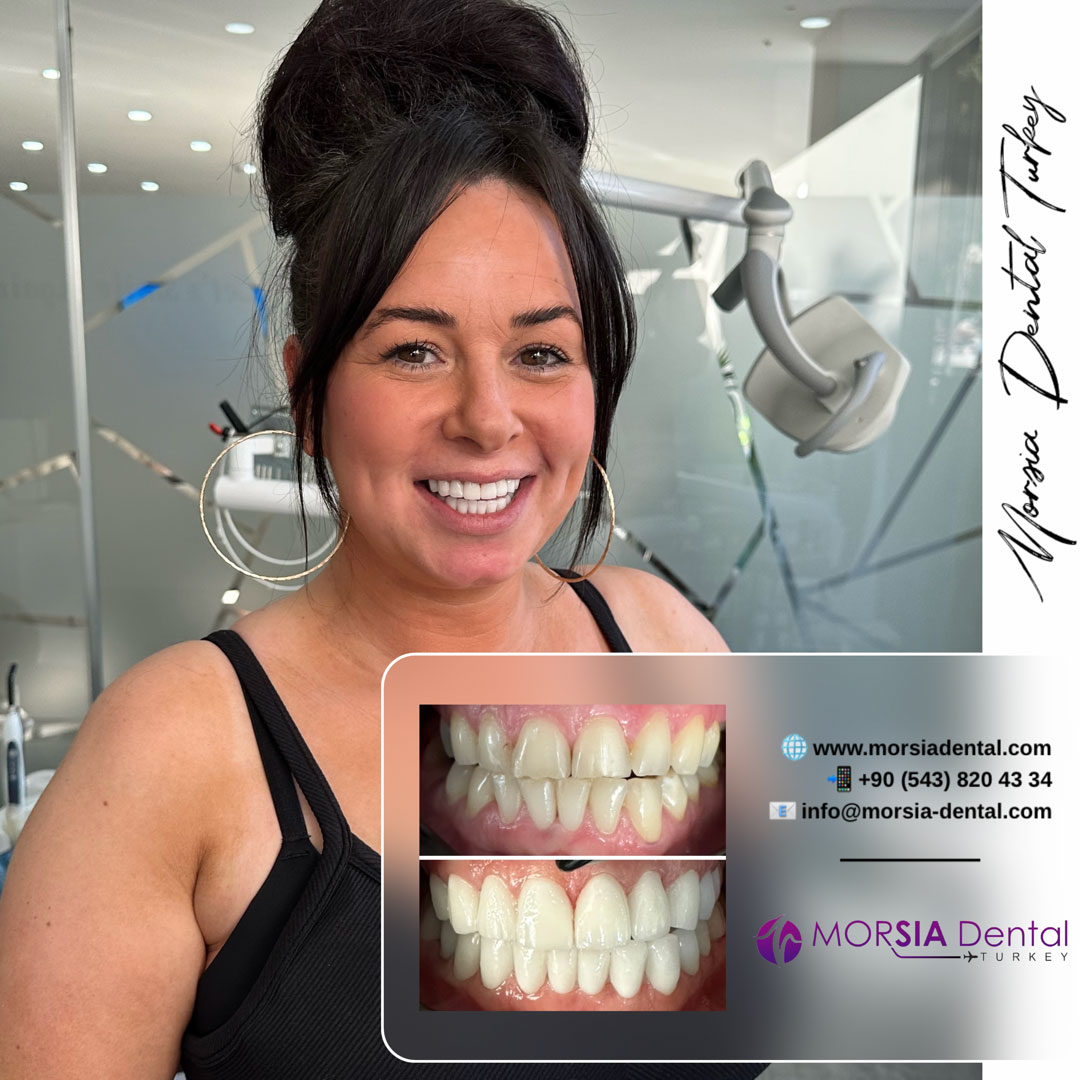
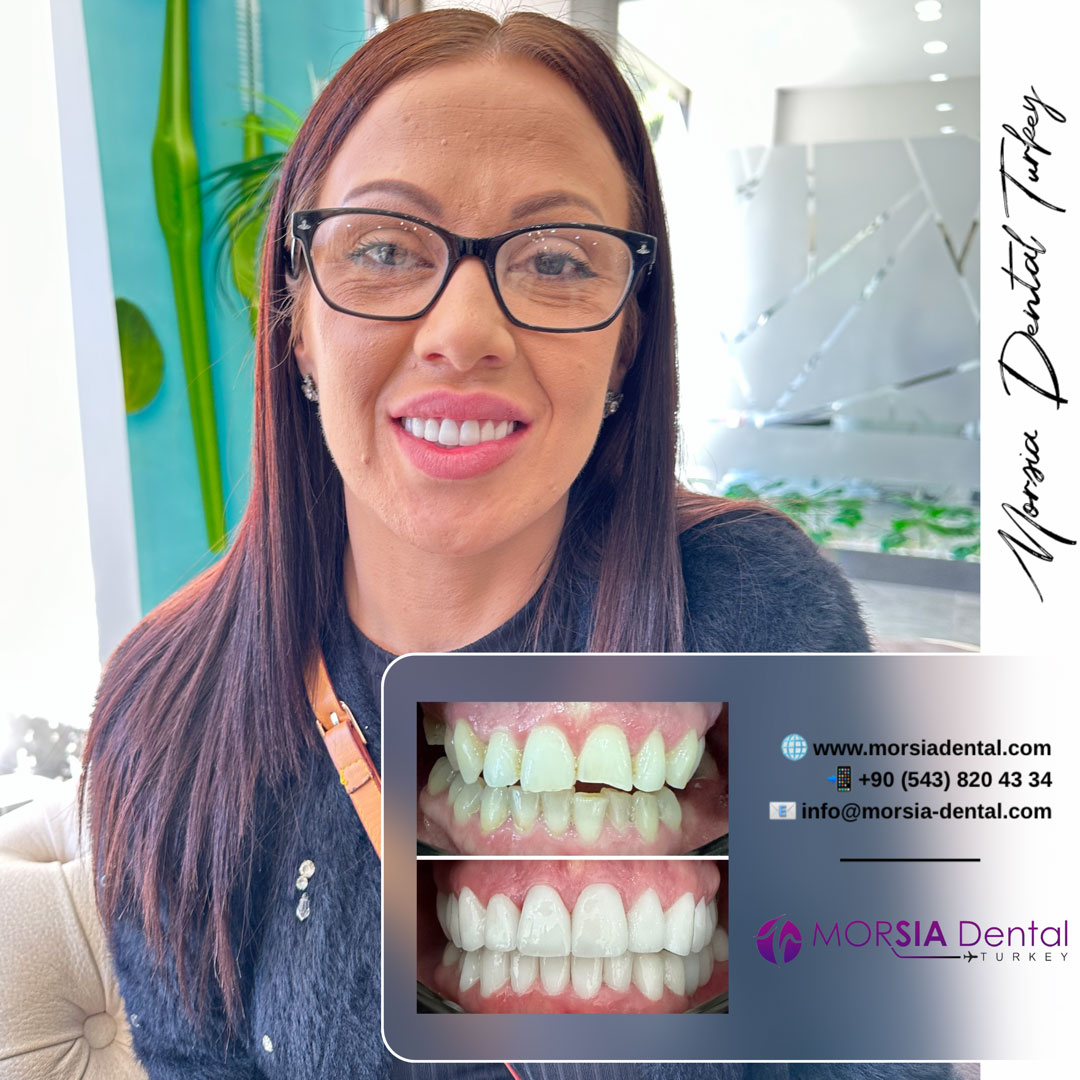
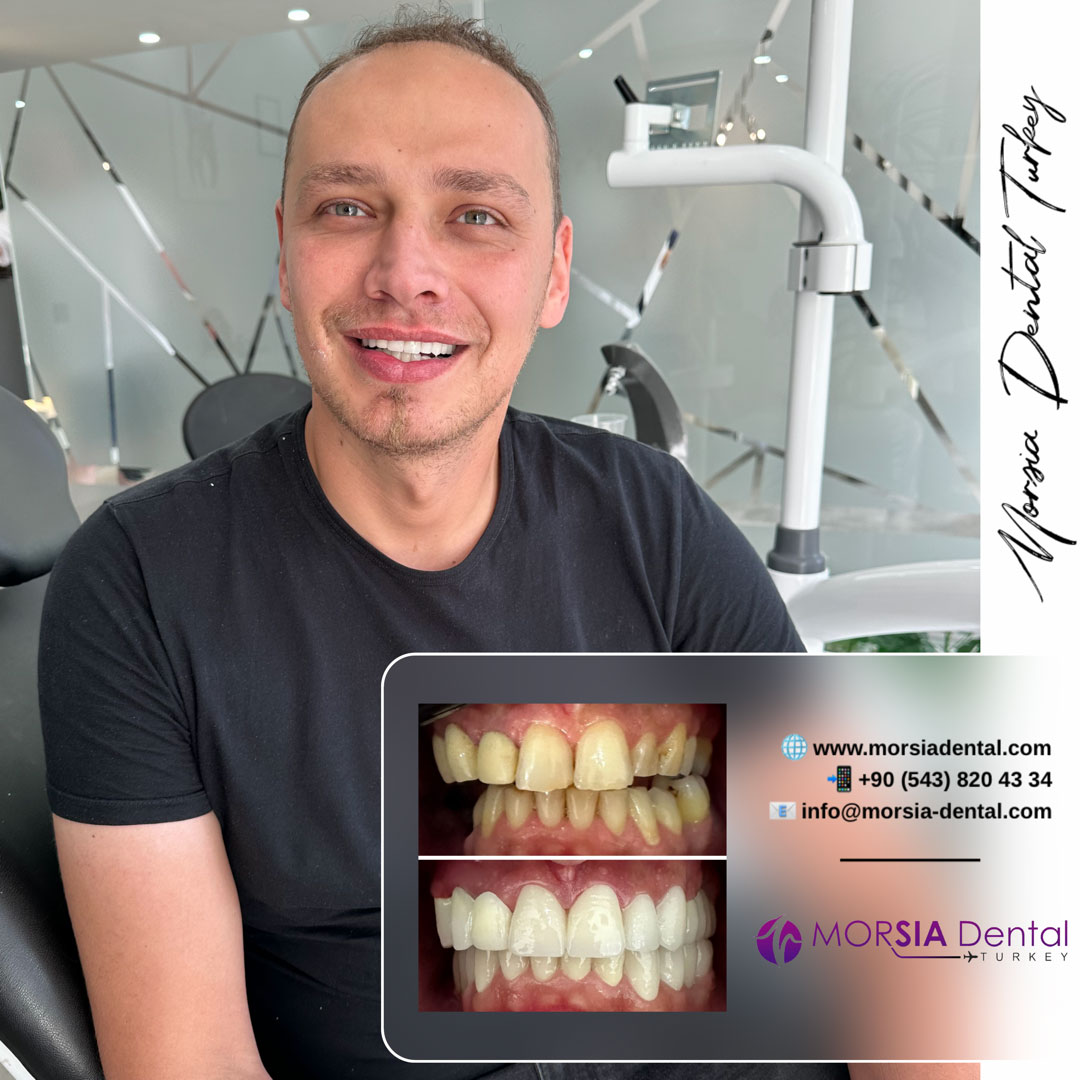
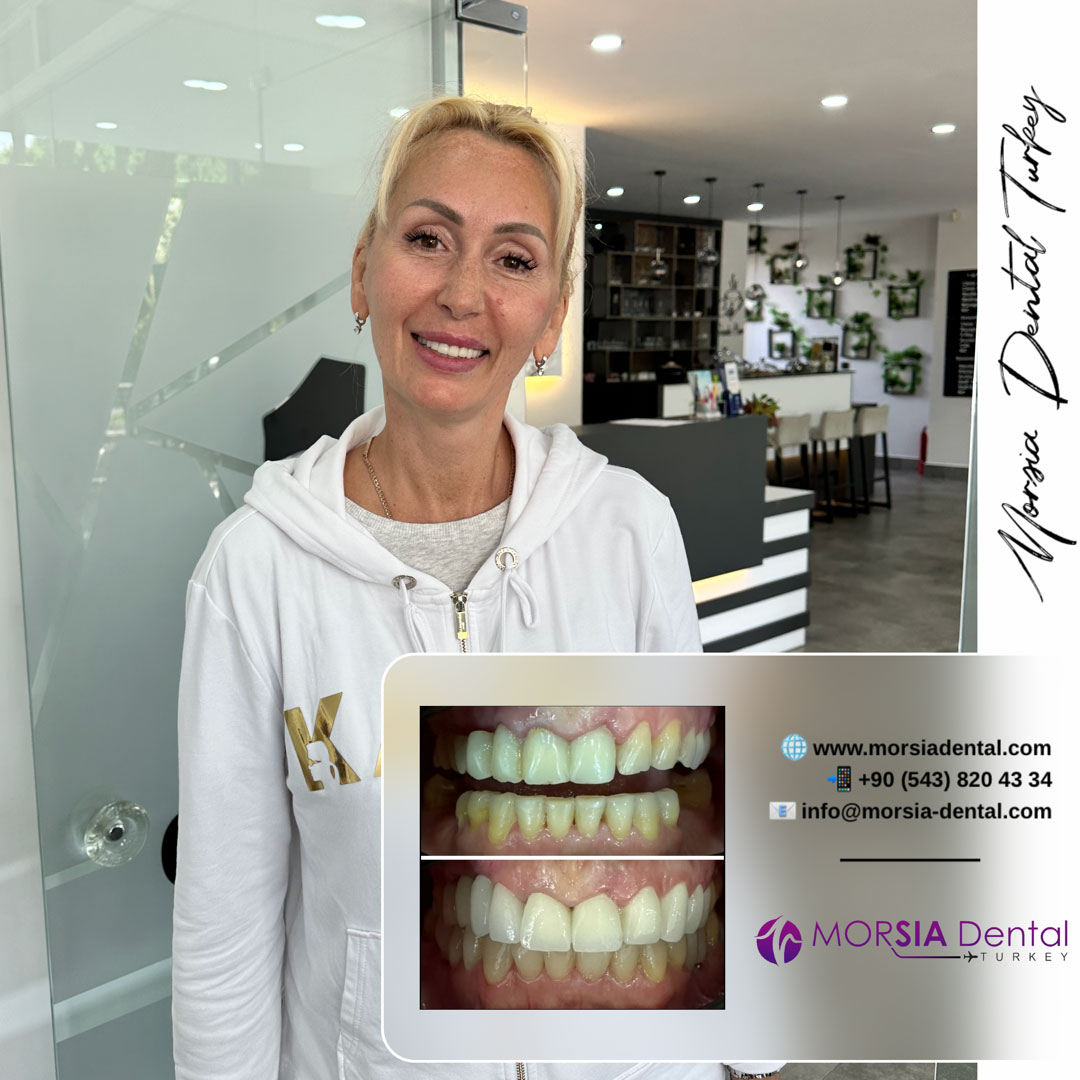
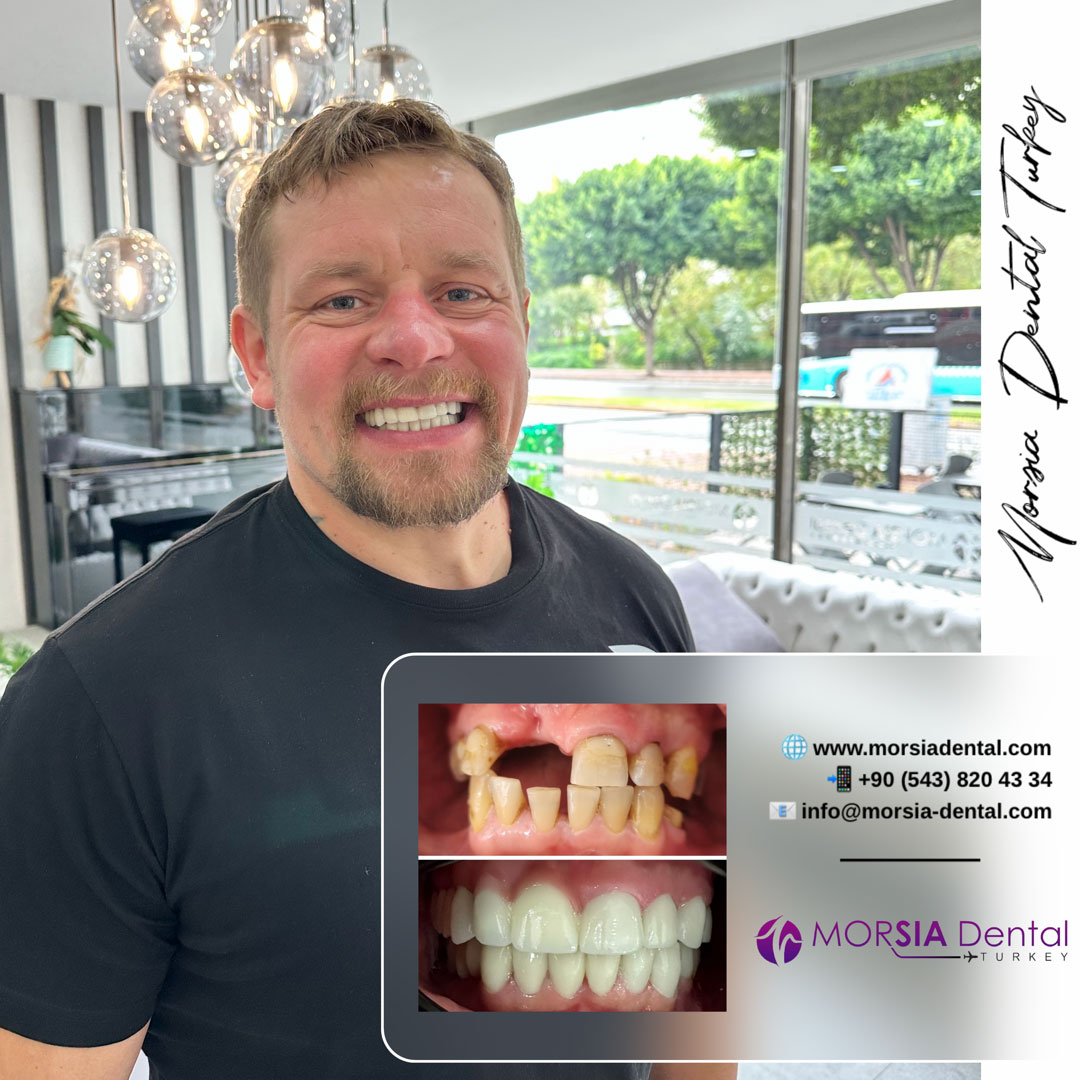
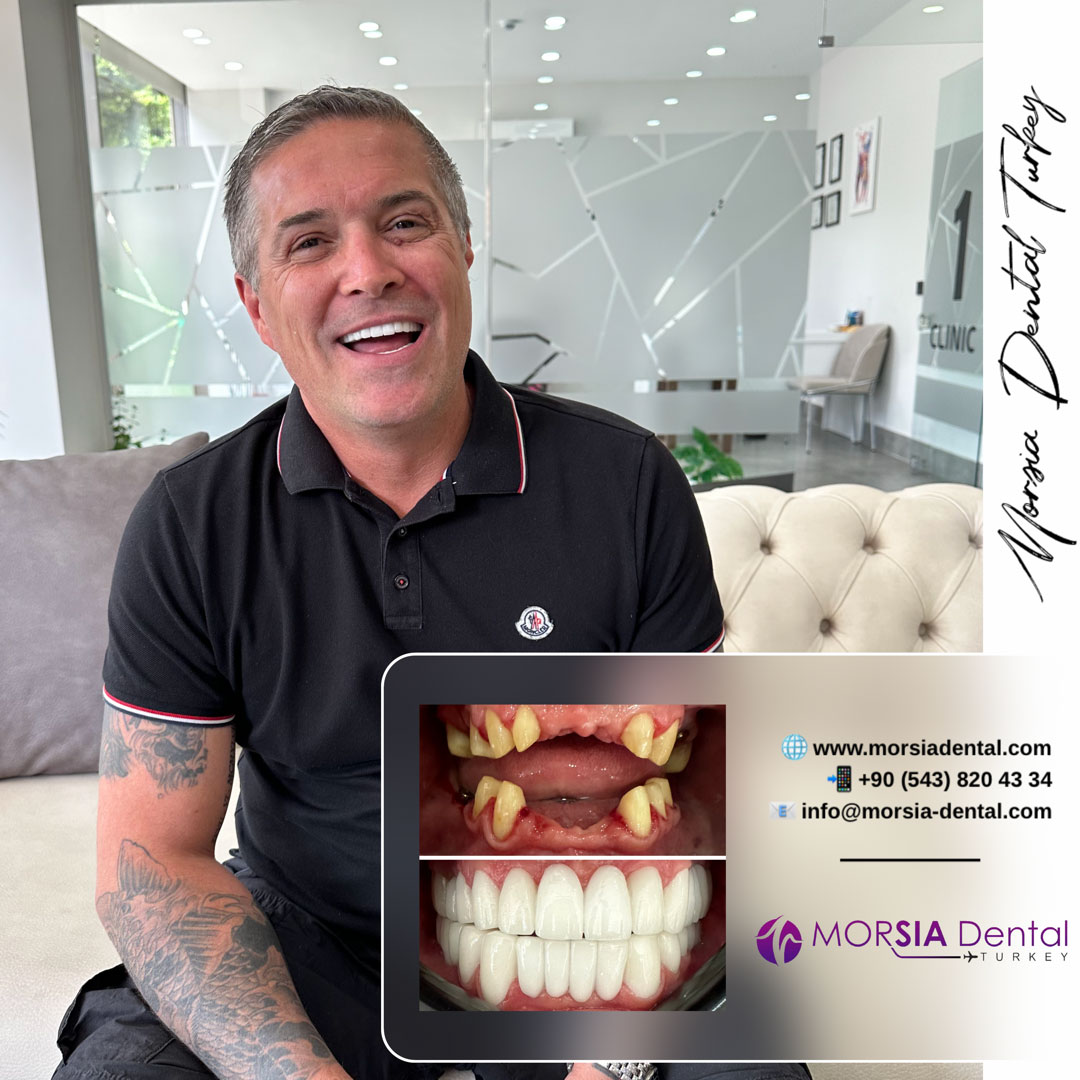
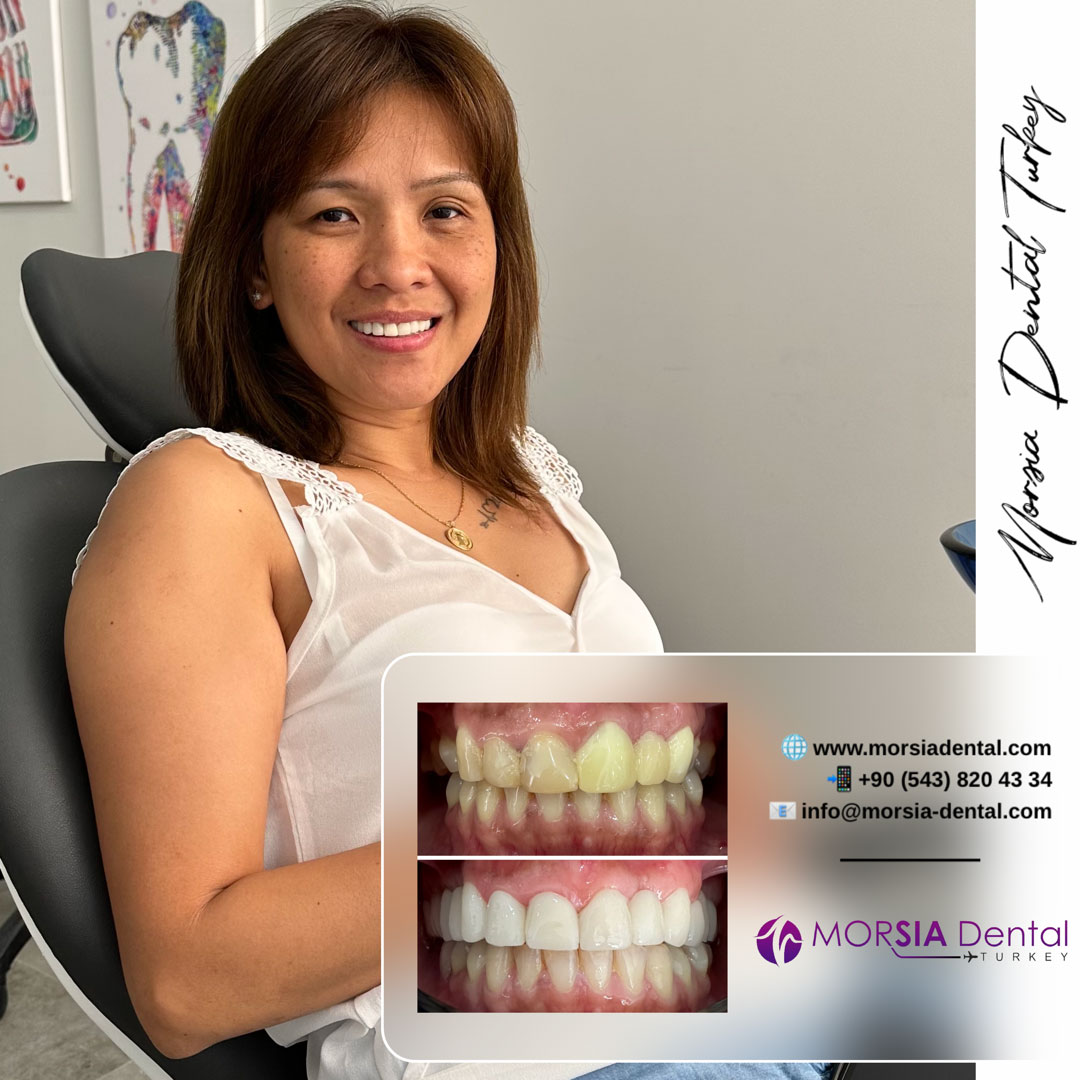
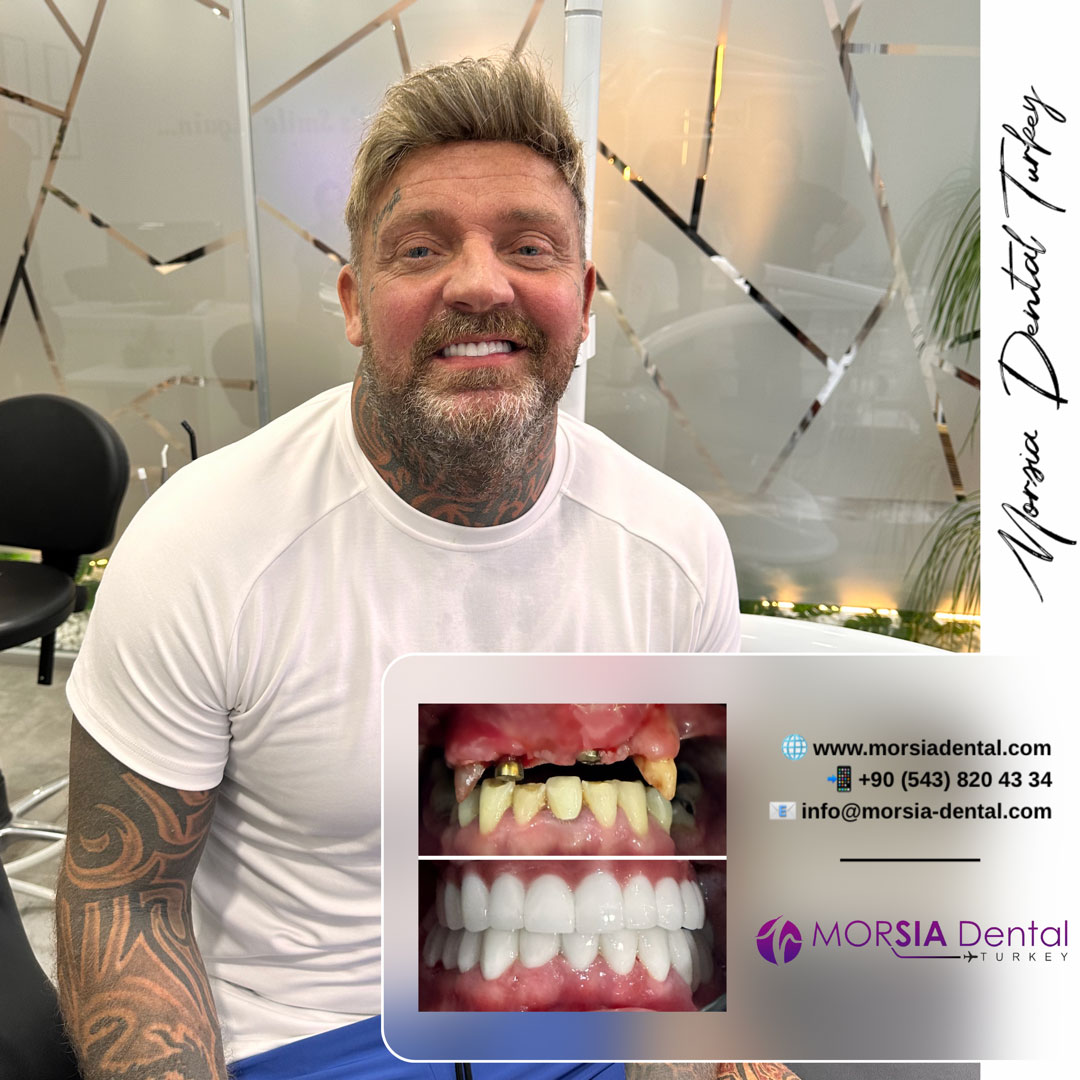
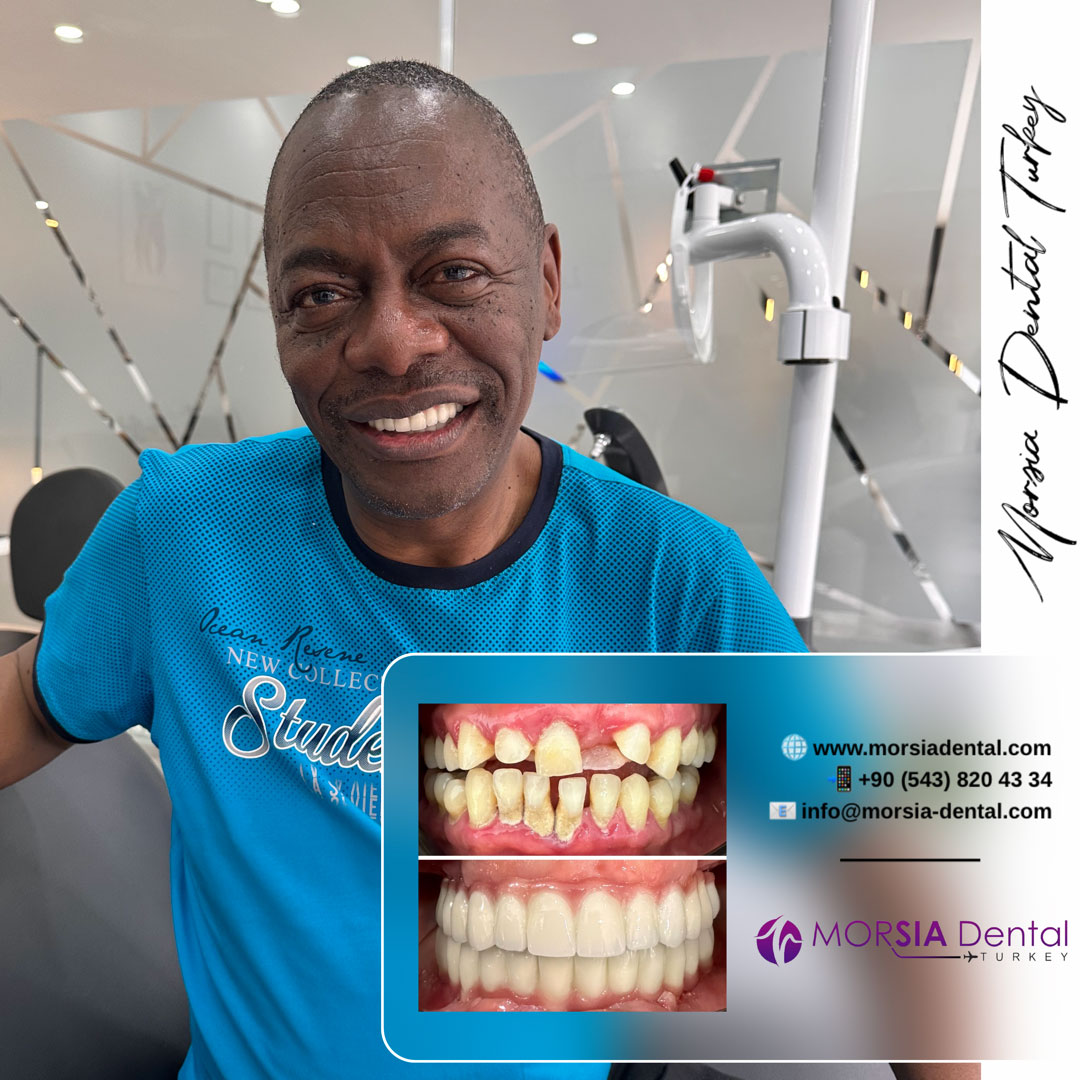
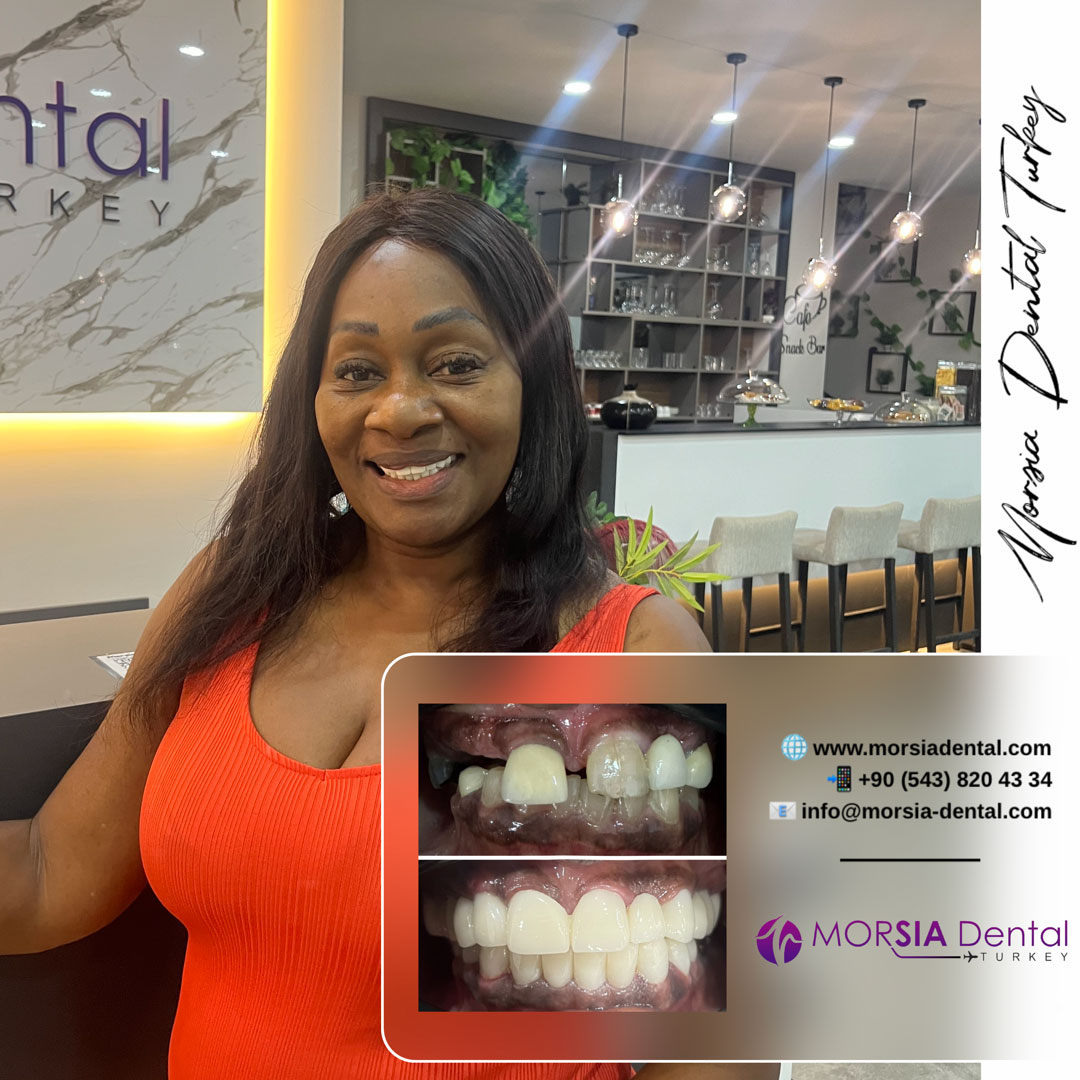
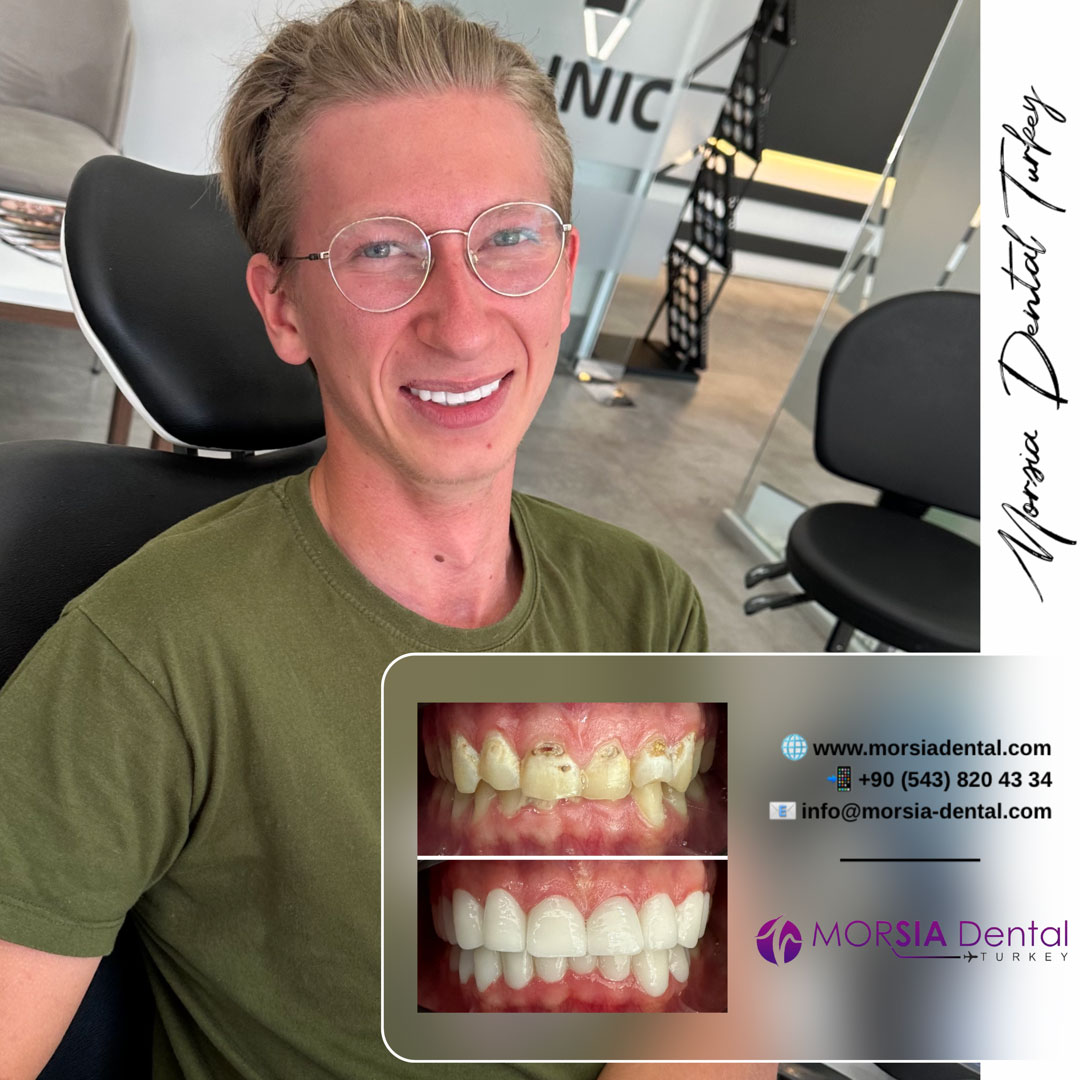
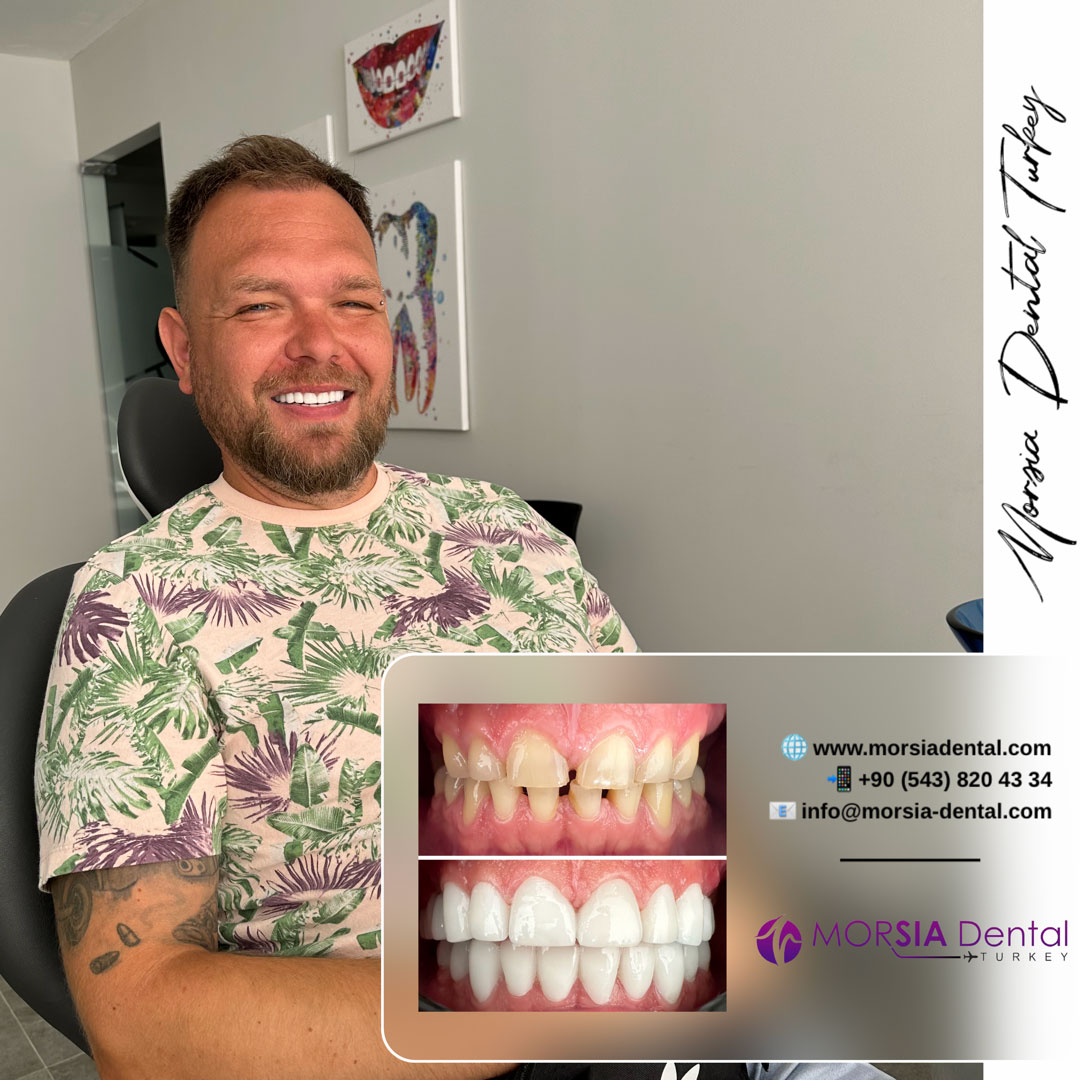
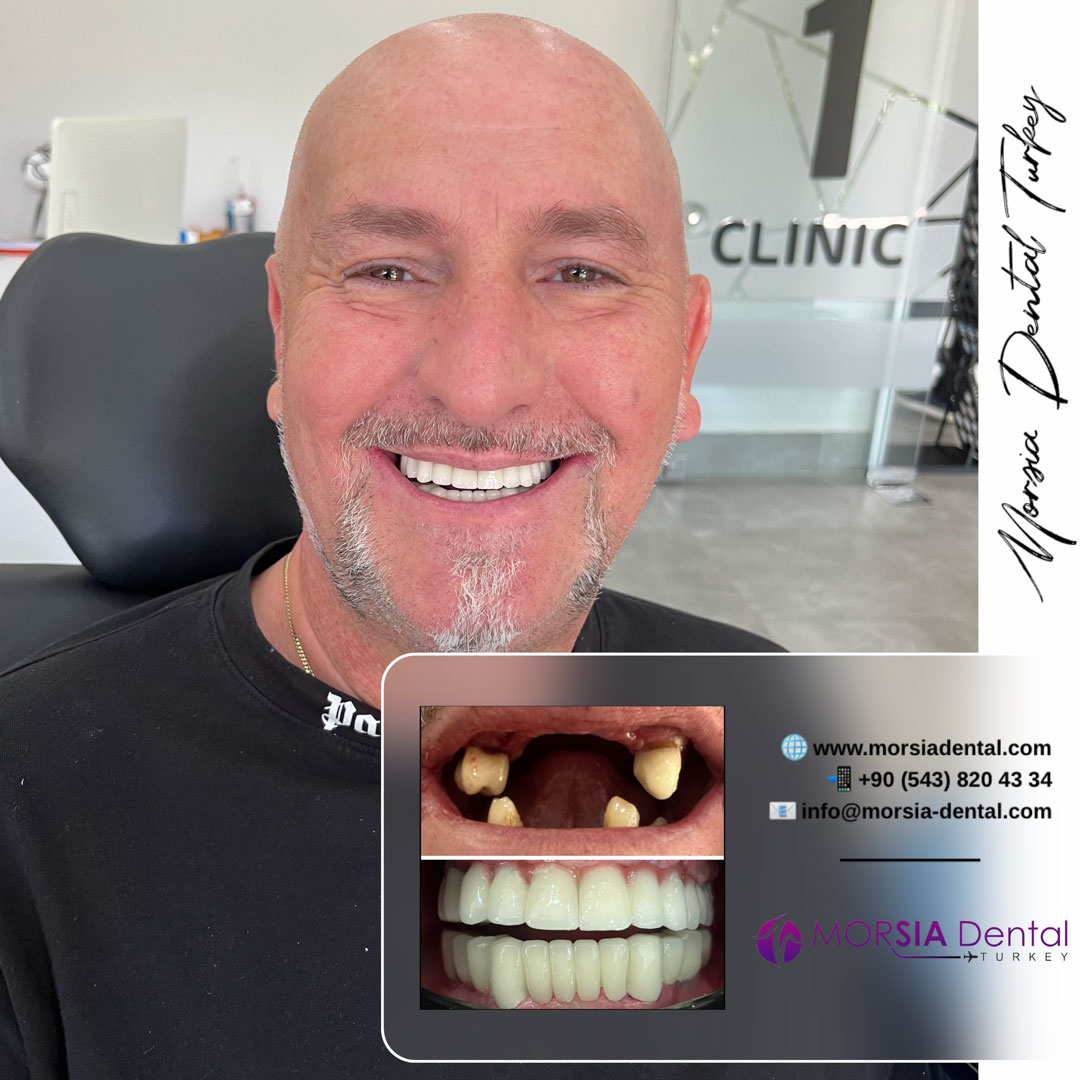
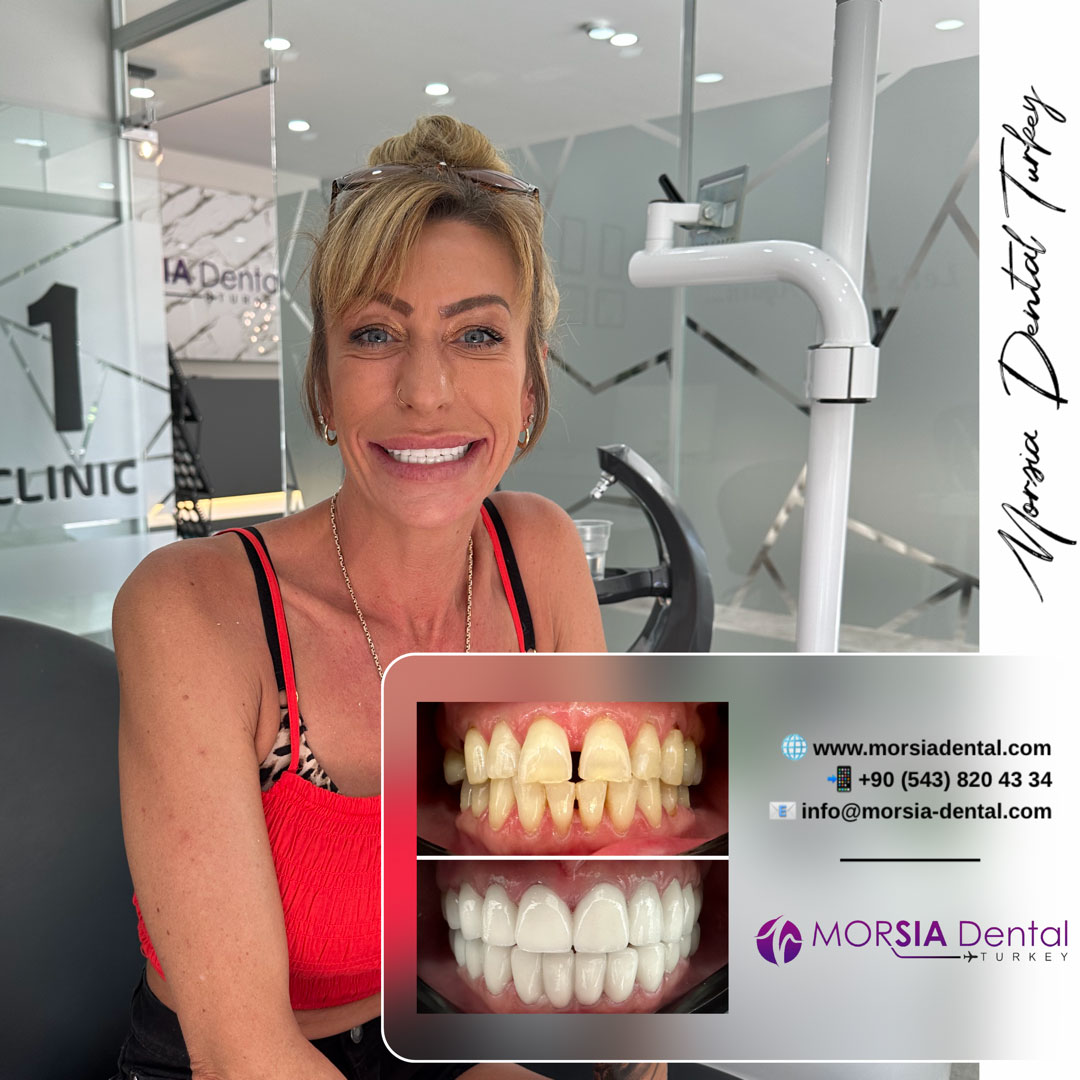
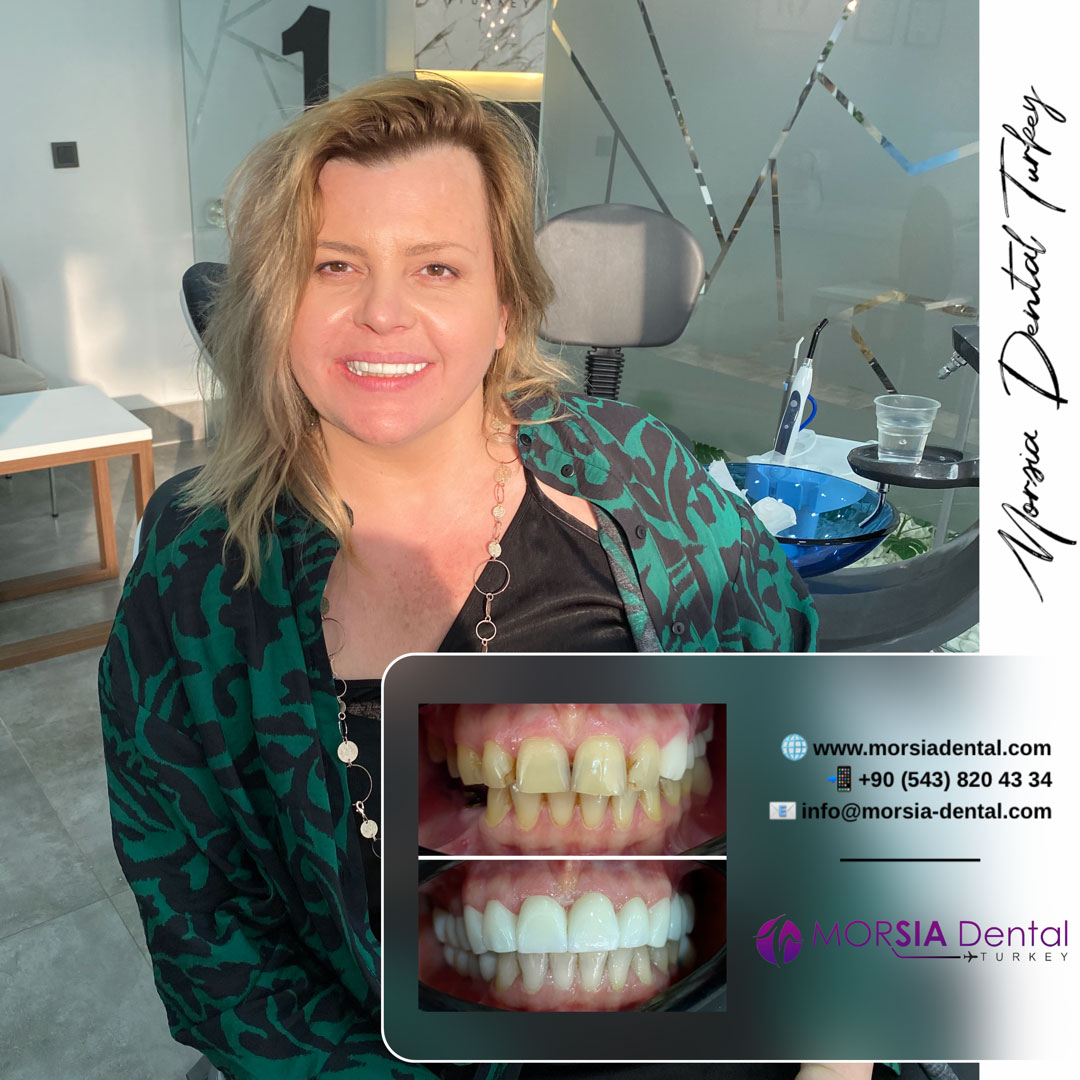
Before-and-after images show one patient’s starting point and outcome, and they are only meaningful when you can see both. Two people with the same request will not get the same result if their enamel, gum line and smile width vary.
Images in our gallery are published with the patient’s written consent. Results shown are individual and are not a promise of the same outcome in another case.
Why Antalya, and Why Morsia Dental
Veneer cases at our Antalya clinic are planned and bonded by Dr. Dt. Aykut Önol, with the digital design, mock-up and shade selection handled as one continuous case rather than divided across appointments. Treatment coordination is in English throughout.
The laboratory sits close enough for same-week turnaround, which is what makes a five-day case realistic without rushing the try-in stage. Antalya also has direct flights from most UK and European airports, so returning for an adjustment is a brief trip rather than an expedition.
Book a Consultation
Send photographs of your smile — relaxed, smiling and from the side — with a note on what you would change. Dr. Dt. Aykut Önol reviews each case personally and responds with an assessment of suitability, the veneer count your smile line calls for, and an itemised written quote.